Leadership1 publisher2 min readPublished
A 61-month grid queue is now a line item for companies that own no data centres
Berkeley Lab counts 2,061 GW waiting to interconnect, and a wait that has grown by 25 months since 2015. The executives selling the bypass say buyers pay for it inside compute pricing.
The Board Room · Leadership desk
Drafted by a language model from the sources cited here and checked against its claim ledger before publication. How we use AISend a correction
What happened
- Berkeley Lab's Queued Up: 2026 Edition counts roughly 2,061 GW of capacity actively seeking US grid interconnection.
- The average wait from request to commercial operation has grown 25 months since 2015, reaching 61 months for projects built in 2025.
- Forbes reports well-funded enterprises are now routing around the public grid rather than waiting in it.
Compiled by The Board RoomSomething wrong?How this is made
Why it matters
- cost The queue is billed to buyers who never applied to it, arriving as compute pricing, rationed capacity or a slipped launch date, with no line on the invoice explaining why.
- contradiction Critical Loop puts the pain in heavy-electricity sectors while Runware puts it in SaaS and knowledge work; the first is a siting decision, the second is a per-user margin problem, and they call...
- decision Anyone signing multi-year AI commitments has to price a five-year generation horizon they cannot influence, or buy power behind the meter and take on being an energy operator.
- precedent If bypass works for the well-funded, off-grid compute becomes the first ask rather than the fallback, and the pressure to unclog the queue falls on whoever cannot afford to leave it.
Sixty-one months is not a forecast. It is what happened to the projects that reached commercial operation last year, which means it describes a queue those projects joined around 2020 [2]. Berkeley Lab is blunter than its own average: completion rates are generally low and wait times remain long [4], and a substantial number of projects withdraw before they ever connect [5]. Read the 2,061 GW accordingly. It is a stack of applications, not a pipeline of supply [1].
Push the arithmetic forward and the planning problem gets specific. A request filed in 2026, moving at the pace of projects finished in 2025, is a generating asset around 2031 [10]. That assumes the queue does not get slower, and according to the Forbes report the queues and waiting times are doubling [6].
The part worth arguing with is how that delay reaches a company that has never applied for anything. Bill Tai, founding chairman of Hut8 and a member of ATLAS, puts it as displacement rather than escape: firms without their own data centres have moved the energy problem upstream, where they cannot see it [13]. His mechanism is that every cloud and AI vendor is competing for capacity on the same slow, monopoly-controlled grid, so when a provider cannot get new generation interconnected for years, the cost resurfaces as higher compute pricing, rationed access, or a delayed product rollout [14]. Tai's phrasing is that the company never touches a power line but inherits the consequences [15]. None of those three outcomes arrives on an invoice labelled "interconnection".
Ioana Hreninciuc of Runware describes the same bill split in two: buyers amortise large data centres built for traditional servers, whose legacy GPU and cooling arrangements are inefficient for AI, and then pay a scarcity premium on top because capacity itself is short [16][17].
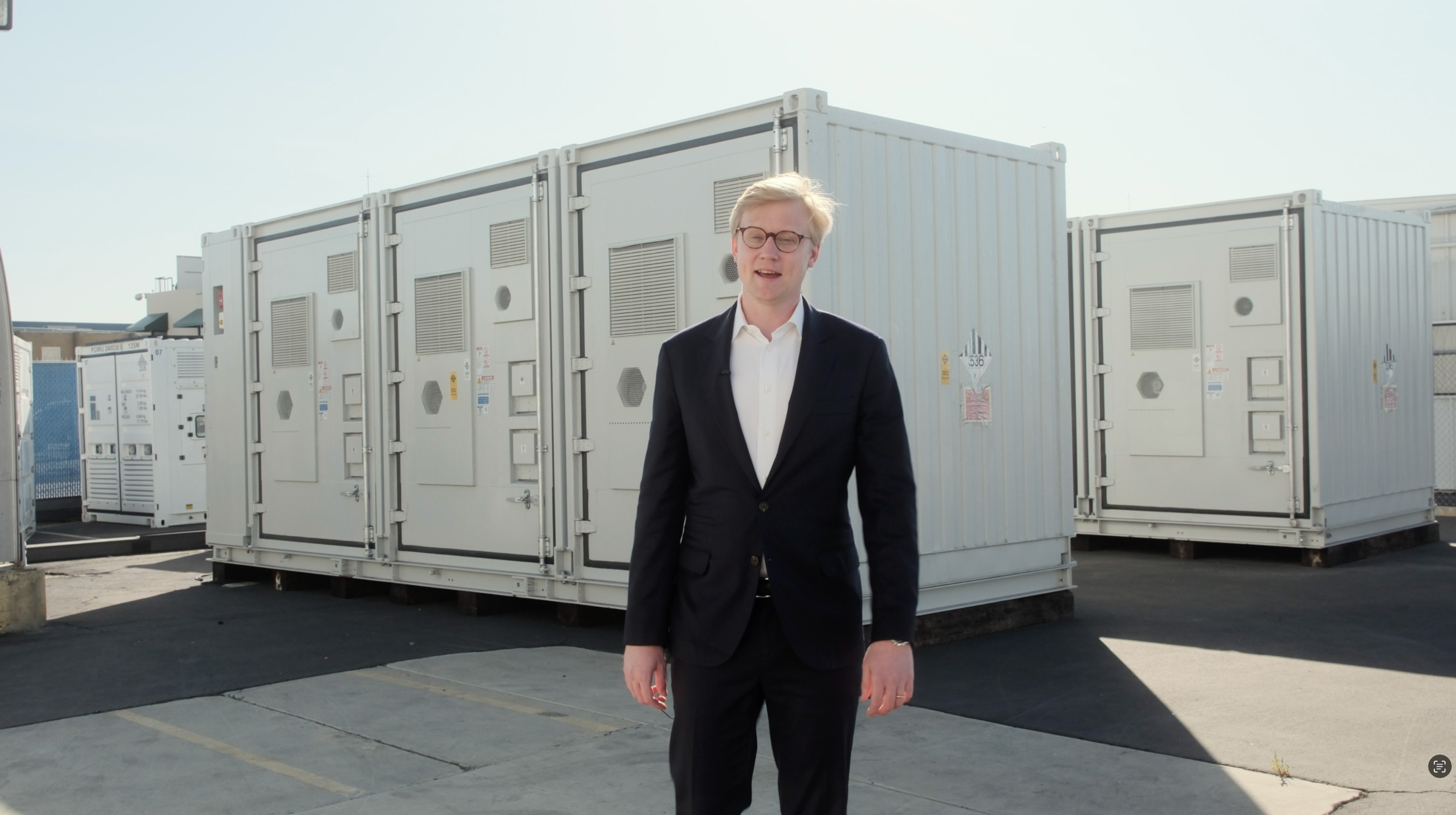
Both accounts come from companies that sell the detour. Hut8 is an energy infrastructure and compute platform [13]. Critical Loop sells behind-the-meter power, on-site storage and flexible microgrids [8]. Runware has announced the Sonic Inference Pod, a container-sized data centre that needs no grid interconnection at all [7]. That does not make the queue data wrong; Berkeley Lab is not selling anything. It does mean the interesting number is missing. The report gives no price, no lead time and no fuel source for any of these alternatives, and a pod that skips interconnection still has to be powered by something. Until those figures exist in public, "bypassing the queue" is a procurement conversation with only one side costed: the five years you avoid, not the premium you accept instead.
What to watch
- Whether the next Queued Up edition shows the 61-month average widening again, or the withdrawal rate climbing faster than the wait.
- Published price, lead time and fuel source for off-grid units such as Runware's Sonic Inference Pod, none of which the Forbes report provides.
- Whether any cloud or AI vendor names interconnection delay as a stated factor in a compute price increase, rather than leaving it upstream and unlabelled.