Invest3 publishers2 min readPublished Updated
JERA puts a $15 billion-plus AI campus behind the meter at its Chiba gas plant
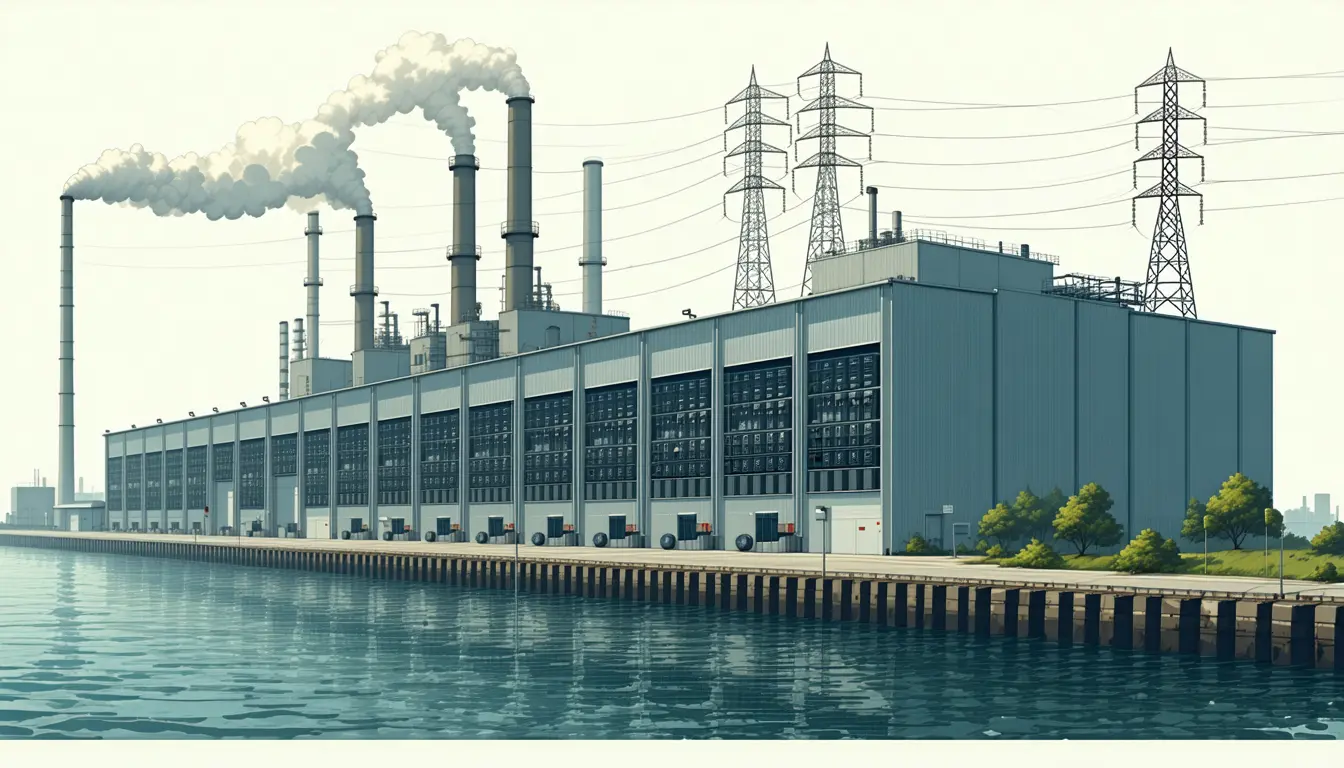
JERA will feed a 400-megawatt AI data center costing more than $15 billion directly from its Chiba gas plant, with Apollo lined up to finance it. A 15-to-25-year supply contract gives JERA a long-dated buyer while the developer and its backer carry the construction bill.
The Investor · Invest desk
What happened
- JERA, Dell and UK developer RHAELM signed a memorandum of understanding for a standard AI data center template, starting at JERA's Chiba Thermal Power Station.
- New grid connections in Tokyo can take five to 10 years, so the Chiba facility will draw its power directly from the plant.
- Operations are targeted to begin in phases around 2028, with the site reaching full capacity in 2029.
- If Chiba goes smoothly, JERA and RHAELM want to repeat the design at other JERA sites, aiming for multi-gigawatt AI capacity across Japan by the 2030s.
Compiled by The InvestorSomething wrong?How this is made
Why it matters
- constraint Hyperscalers that need Tokyo-area capacity before a new grid connection arrives have to deal with whoever owns existing generation, and JERA supplies nearly all of Greater Tokyo's electricity.
- cost The tenant commits its largest running cost to a single gas-fired plant for 15 to 25 years, so its power bill and JERA's fuel position stay tied together for that whole span.
- precedent Because the memorandum is written as a standard template, the Chiba split (land and power from JERA, capital from outside investors) becomes the opening offer for every other JERA plant site.
Spread over 400 megawatts and every phase of the build, the $15 billion-plus budget comes to at least $37.5 million per megawatt [3][4][1]. RHAELM will develop, build, operate and finance the data center, and Dell supplies the AI hardware [6]. JERA contributes the land and the power [7]. So a generator that produces roughly a third of Japan's electricity [8] is acting as landlord and supplier. The halls, and the capital tied up in them, sit with RHAELM and its backer [6][2].
JERA's prize is the contract. In Cryptopolitan's account, the 15-to-25-year supply deal fixes the largest single running cost for the operator and hands JERA a guaranteed buyer for years [5][9]. If the site ran at the full 400 megawatts for all 8,760 hours of a year, it would draw about 3.5 terawatt-hours [2], all of it sold to one customer next to the plant. Yukio Kani, JERA's global CEO and chair, pointed to the company's reach across the LNG value chain [18]. "JERA is uniquely positioned to power Japan's AI ambitions," he said [14].
Location follows from the grid. Cryptopolitan says the site choice comes down to electricity and how long it takes to get [12]. AWS, Microsoft and Oracle have already spread capacity across several regions to find power the Tokyo grid cannot supply [11]. A campus wired directly to an existing station skips the connection queue entirely [10].
The financing is less settled than the headline suggests. Apollo intends to act as RHAELM's strategic investment and financing partner on the first site, and the whole arrangement is a memorandum of understanding [2][1]. The source does not say how Apollo's role splits between debt and equity, or how much of the $15 billion Apollo would put in. Blackstone President Jonathan Gray said in June that his firm plans to invest $30 billion in Japanese AI data centers over three to five years [13]. One Chiba campus costs at least half that sum [3].
Replication raises the bill. If the multi-gigawatt ambition [15] means as little as 2 gigawatts, Chiba's cost per megawatt puts the program at $75 billion or more [4]. That is two and a half times Blackstone's entire Japan plan [5].
I think the evidence supports the location argument, and the claim that private credit is paying for this has not been shown yet. The location case would fail if a hyperscaler got several hundred megawatts of new Tokyo grid capacity within two or three years. The private-credit case would fail if Apollo's package turns out to be mostly equity, or if the debt rests on a JERA guarantee.
What to watch
- Whether Apollo's stated intention becomes a signed financing package, and how it divides between debt and equity.
- The price terms of JERA's 15-to-25-year supply contract, in particular who carries swings in LNG costs.
- A second JERA plant named for the template before Chiba's 2029 full-capacity target.