Product1 publisher2 min readPublished
Rune skips the transmission line by running 1,024 GPUs on solar DC at the plant
Rune says siting its RELIC module at a solar farm cuts auxiliary infrastructure cost by 85 percent. The saving covers the hardware around the servers, and the hours a plant can deliver are still the buyer's to work out.
The Product Desk · Product desk
What happened
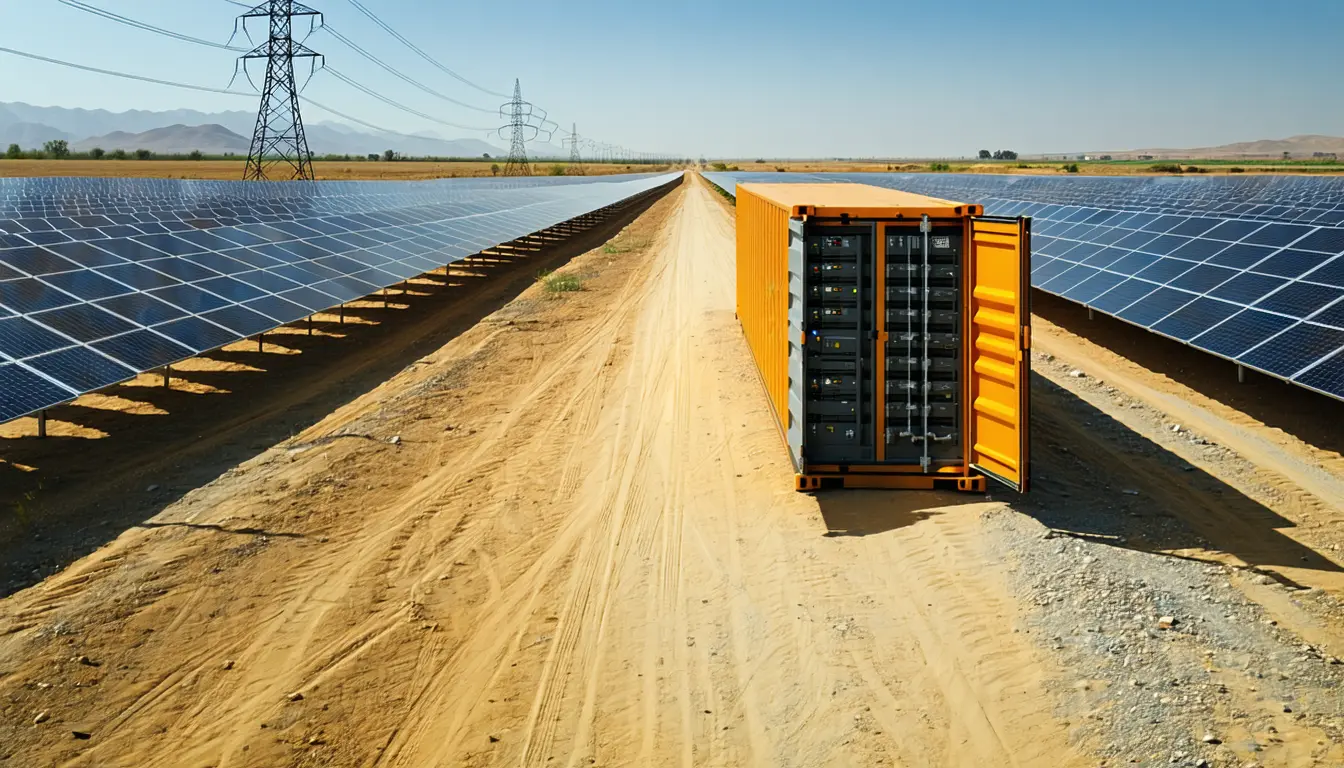
- Rune, incorporated as Liitto Technology Inc., closed a $40 million round led by Spark Capital and debuted RELIC, a compute module built to be installed on the premises of solar farms.
- Rune says RELIC cuts the cost of a large AI data center's auxiliary infrastructure by 85 percent, chiefly by dropping long-haul transmission cables and the transformers that feed them.
- Each module ships with up to 1,024 graphics cards plus cooling and custom power management, and Rune claims setup takes about an hour with workloads running within a few weeks.
- Rune says it has already deployed RELIC on the premises of a 200-megawatt solar facility in Texas.
- The company reportedly plans to take the same approach beyond solar plants to wind farms.
Compiled by The Product DeskSomething wrong?How this is made
Why it matters
- cost The 85 percent applies to the hardware around the servers, so GPU capital is untouched by it and earns only during the plant's producing hours.
- constraint The saving is bought by giving up grid firmness, so the tenant's schedule bends to the plant's output instead of the other way round.
- capability A plant owner gets a buyer for output the grid refused, and the compute tenant gets hours without waiting on an interconnection date.
The buyer for this is an infrastructure lead with graphics cards on order and nowhere to plug them in. Rune's chief executive speaks to that person directly. "Every solar plant is a latent data center," said William Layden, Rune co-founder and CEO [10]. "The power is already there, sitting idle while AI labs wait years for grid connections that may never come" [11].
Both savings Rune names sit at the interconnection. A solar plant generates direct current and routes it through transformers to make alternating current, because AC travels better on long lines, and at the far end an AI data center converts it back to DC for the servers [7]. Put the servers beside the panels and the line is unnecessary, and so are both conversions [5][8]. For the scale of the expense being skipped, SiliconANGLE reports that OpenAI expects to spend $4.2 billion on power transmission hardware in connection with its Ohio buildout [6].
Fifteen percent of the auxiliary infrastructure bill still remains on Rune's own numbers [16]. The report does not include a price for a module or the baseline the 85 percent is measured against [17]. A buyer with estimates in hand can still test it, because the two items are specific enough to appear as line items: the long-haul circuit and the transformers at each end of it.
Capital cost per installed GPU and cost per delivered GPU-hour are different numbers, and the second is the one that shows up in the training bill. Rune's other argument is curtailment. Utilities lower solar output when supply exceeds demand, and Rune says RELIC can harness that unused capacity for AI processing [9]. Curtailed output exists only while the plant is generating more than the grid wants, so the hours on offer follow the plant's production curve [18].
A workload sorts onto hardware like this if the job survives being stopped and resumed, and if nobody outside the company notices the pause. Checkpointed pretraining and overnight batch evaluation clear both. A production inference endpoint with a latency commitment clears neither, and no amount of setup speed changes that.
The number that decides this is cost per delivered GPU-hour. Count it across a full month of one plant's output, then set it against the same figure for a grid-connected site with a queue date attached.
What to watch
- Delivered GPU-hours per RELIC module over a full month at the Texas site, including hours with no generation.
- A published price for a module, and whether Rune sells hardware or sells compute capacity by the hour.
- Whether the wind farm expansion arrives with availability figures for a different generation pattern.