Invest1 publisher3 min readPublished
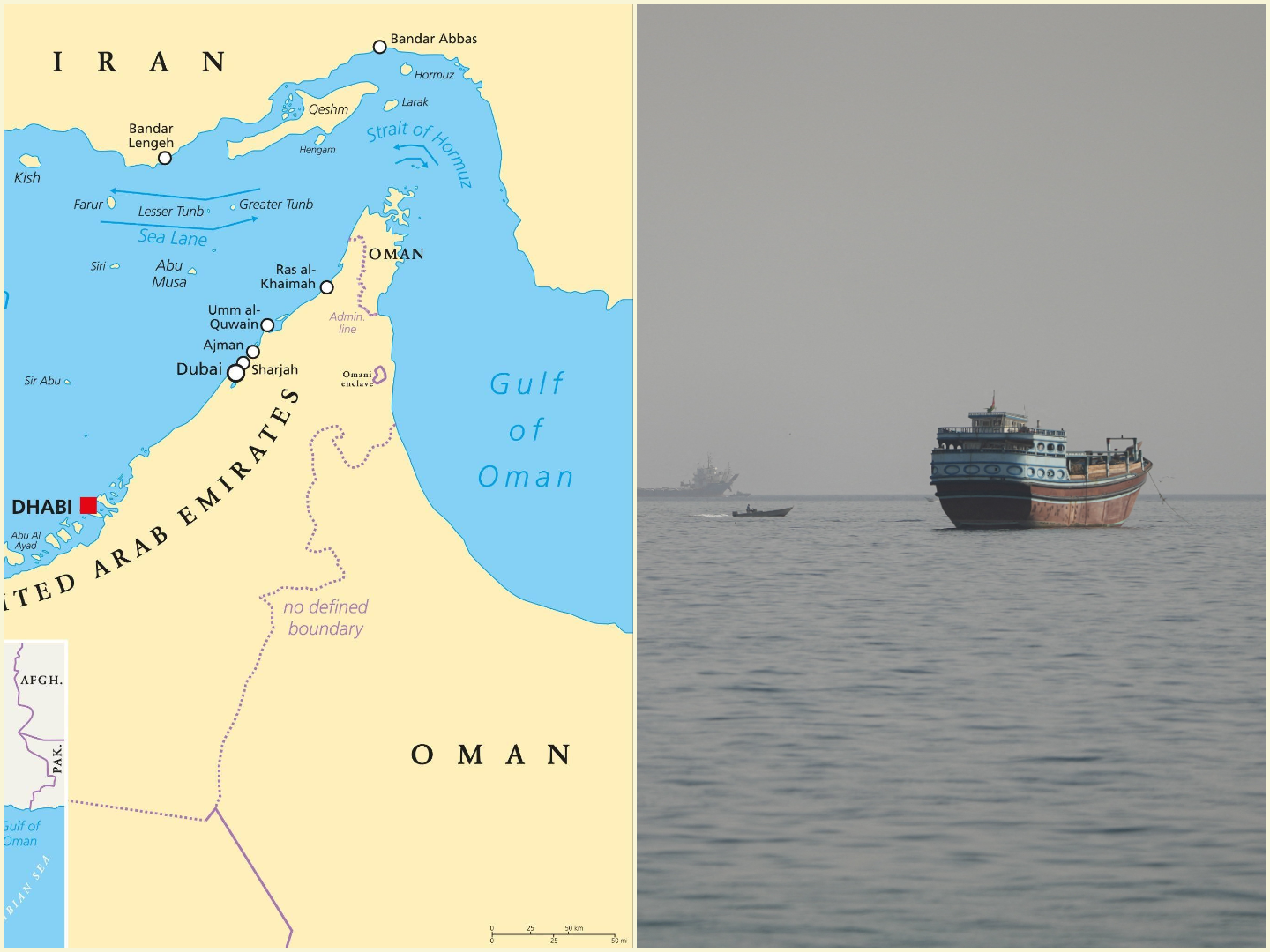
Hormuz is neither open nor closed, and that is the position you have to price
Flows through the strait have swung between 3.7 million and 6.4 million barrels a day since mid-July, against about 9 million before. The hedge is against variance, not closure.
The Investor · Invest desk
Drafted by a language model from the sources cited here and checked against its claim ledger before publication. How we use AISend a correction
What happened
- Oil flows through Hormuz were running at around 9 million barrels per day until the week ending July 13, according to Kpler data.
- Since the week ending July 13, Hormuz flows have fluctuated between 3.7 million and 6.4 million b/d as attacks on commercial vessels have intensified; the Semafor column is authored by Amena, who works at the energy research firm Kpler.
- Post-July-13 flows of 3.7 million to 6.4 million b/d equal roughly 41 percent to 71 percent of the prior 9 million b/d level.
- The gap between the low and high weekly flow readings is 2.7 million b/d.
- More than 170 days into the war between the US and Iran, Tehran is not prepared to let go of its leverage in the Strait of Hormuz.
Compiled by The InvestorSomething wrong?How this is made
Why it matters
Oil moving through the Strait of Hormuz ran at about 9 million barrels per day until the week ending July 13, and has since oscillated between 3.7 million and 6.4 million b/d as attacks on commercial vessels intensified, according to Kpler data published by Semafor in a column by Amena, an analyst at the firm [1][2]. That range, not the tail risk of a full closure, is the operative problem: the strait is functioning at somewhere between 41 and 71 percent of its recent throughput depending on the week, a spread of 2.7 million b/d [3][4].
The mechanism is repetitive. Since the war between the US and Iran began, more than 170 days ago, supply has come in bursts whenever there is a brief lull and contracted sharply when tensions return, per the same Kpler read [5][6]. President Trump has claimed the US controls the waterway; flows remain well below prewar levels and nowhere near consistent [7]. The column's argument is that the lack of transparency matters less than the possibility that this limbo hardens into the base case [8].
On cumulative damage, the column puts lost regional supply at about 2.5 billion barrels so far, with industry executives not expecting full recovery for at least 18 months [9][10]. Note the arithmetic: 2.5 billion barrels across 170-plus days averages roughly 14.7 million b/d, above the 9 million b/d that had been transiting Hormuz, so the figure is measuring regional supply loss broadly rather than the strait alone [11]. From an August 2026 vantage, "at least 18 months" means no clean run before early 2028 [12].
Demand forecasting has broken down in a way that should temper anyone's conviction. The IEA now sees global demand shrinking 1.5 million b/d this year to 103.3 million b/d; OPEC, having revised down, still expects growth of about 600,000 b/d [13][14]. That is a 2.1 million b/d disagreement about the current year [15]. For next year the three views converge: 2.4 million b/d of growth from the IEA, about 2.2 million from OPEC, around 2.1 million from Kpler [16].
The swing factor named in the column is China, which built reserves over the past 18 months, cut imports, drew down stocks, and has not used its leverage with Tehran to push for reopening [17]. Kpler estimates Chinese crude intake rises by almost 1 million b/d to 13.54 million b/d by October [18]. That increment is roughly 1.7 times OPEC's entire projected global demand growth for the year, which is the whole point: Beijing gets to choose the timing of a shock [19].
Two structural questions sit underneath. Most Gulf states reject an Iranian toll on transiting vessels, though the column argues that states without alternative export routes may be pushed to reconsider [20]. And Houthi attacks on Saudi vessels in Bab el-Mandeb have spread the risk beyond Hormuz [21]. Anwar Gargash, diplomatic adviser to the UAE president, posted last week that the region "cannot remain indefinitely in a state of neither war nor peace" [22].
Watch the weekly flow band rather than the headline: a floor that rises off 3.7 million b/d is the only evidence that the pattern is breaking. Watch whether any Gulf exporter without a pipeline alternative softens on the toll question, which would price transit risk explicitly. And watch Chinese import volumes around the US midterms, which the column flags as a deliberate signal if Beijing chooses to send one [23].