Build1 publisherNot yet confirmed elsewhere2 min readPublished
Gigaphoton brings neon recycling to ArF lasers at a 50% rate Cymer reached in 2015
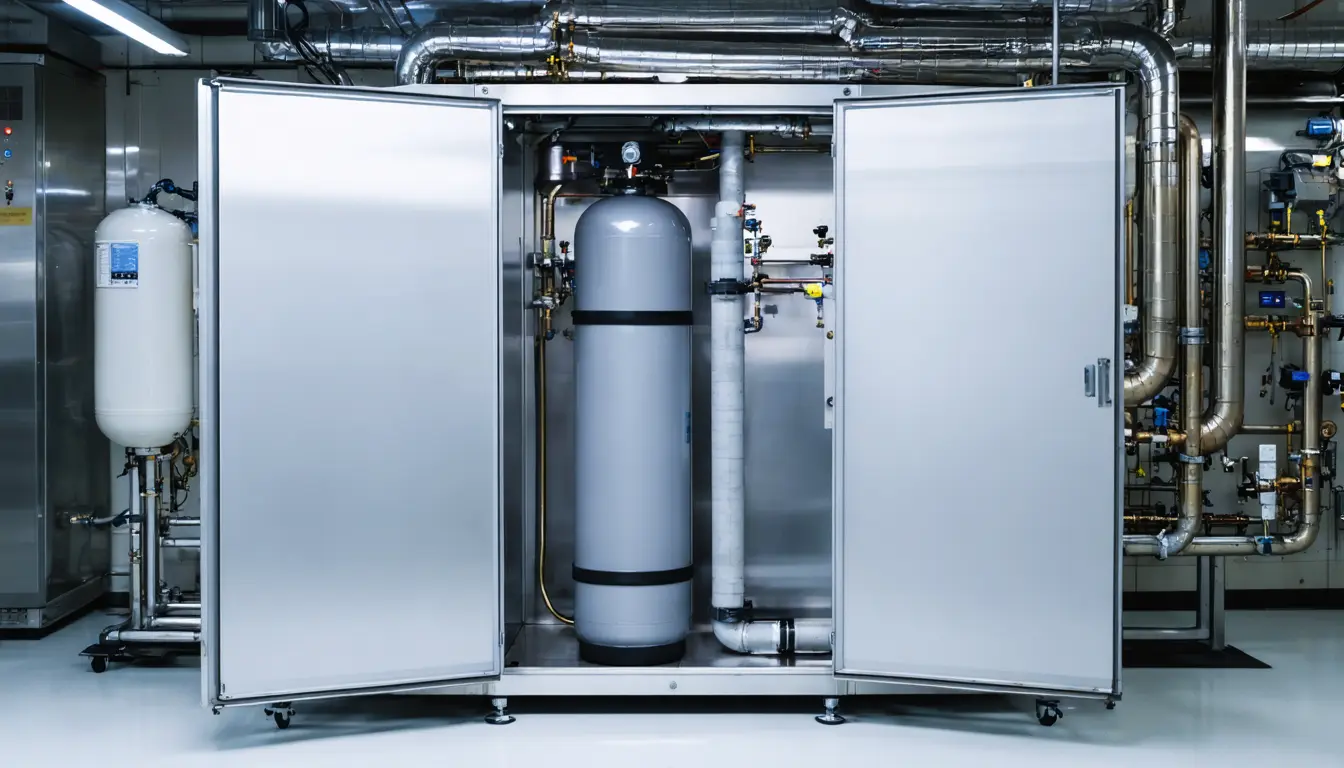
Gigaphoton says its hTGM system recovered 50% of the neon used by its ArF excimer lasers, extending recovery it already offered for its KrF tools. For DUV fabs seeking secure neon since Ukraine's refiners shut in 2022, the saving depends on how far production units climb past 50%.
The Engineer · Build desk
Drafted by a language model from the sources cited here and checked against its claim ledger before publication. How we use AISend a correction
What happened
- Gigaphoton claims one hTGM unit can cut an ArF laser's neon consumption by up to 470 kilolitres a year.
- Kanken Techno showed its own excimer-laser neon recycling system at SemiCon Taiwan in early September, with a recovery rate above 90%.
- The first neon recycling systems qualified for use on Cymer ArF excimer lasers arrived at the end of 2023.
- Samsung and SK Hynix became the first major memory makers to implement neon recycling, in 2024.
Compiled by The EngineerSomething wrong?How this is made
Why it matters
- decision Fabs running Gigaphoton ArF lasers now choose between installing a 50% unit and waiting for the higher-rate configurations the company says it hopes to reach.
- constraint US fabs cannot expect much new domestic neon soon, since Gulf-coast air-separation units are not expected to help until near the end of the decade, so in-fab recovery is the lever they control.
- exposure Neon exposure grows with DUV capacity, because lithography takes about 70% of global neon and EUV's tin-plasma source uses none of it.
- precedent If Cymer's path repeats, hTGM's demonstrated rate will take years to reach qualified production, since Cymer's 50% result came about eight years before the first qualified ArF recycling systems.
The 50% is a purchasing figure. Assume the rate is the share of a laser's spent neon that goes back into use. A laser at 50% then still buys half its gas fresh. At 90% it buys a tenth, so its fresh-neon order is one fifth the size [16]. The Tom's Hardware report draws on a Business Wire release and does not say how Gigaphoton measured the rate [3].
Gigaphoton's 470-kilolitre ceiling [5] also says something about the laser behind it. If that saving reflects the demonstrated 50% rate, the laser's baseline draw is about 940 kilolitres a year [18]. A laser that burns less gas saves less in absolute terms. The figure transfers only to fabs whose ArF lasers draw close to that baseline.
The rate itself is old. According to Tom's Hardware, Cymer's excimer-laser neon recovery system demonstrated the same 50% in 2015 [7]. I'd judge hTGM against Gigaphoton's own earlier work. Its 2017 testing suggested ArF recovery could peak above 90% [8].
Fabs want recovery because neon supply depends on other industries. The gas is cheapest to get as a byproduct of fractional distillation of super-cooled air [12]. For decades, air-separation units at Ukrainian steel mills made crude neon, and a pair of key companies refined it in-country [12]. Before 2022, Ukraine shipped up to half the chip industry's neon. Its major producers stopped exports after Russia's full-scale invasion [11].
Most replacement supply comes from the same kind of plant. Taiwan installed purification systems in existing blast-furnace air-separation units [13]. China paired neon purification with steel and petrochemical production [13]. South Korea accelerated domestic production and added a national initiative for in-fab recovery, according to SFA Oxford as cited by Tom's Hardware [15].
What to watch
- A published hTGM recovery rate for a production configuration, set against the above-90% ceiling Gigaphoton's 2017 ArF tests suggested.
- A named chipmaker qualifying hTGM on ArF lasers in a production line.
- Whether Kanken Techno's above-90% system is qualified for production excimer lasers, giving fabs a recovery option from outside the laser makers.