Science1 publisherNot yet confirmed elsewhere2 min readPublished
Yeast left by common fruit flies repels the spotted-wing drosophila in Rutgers lab tests
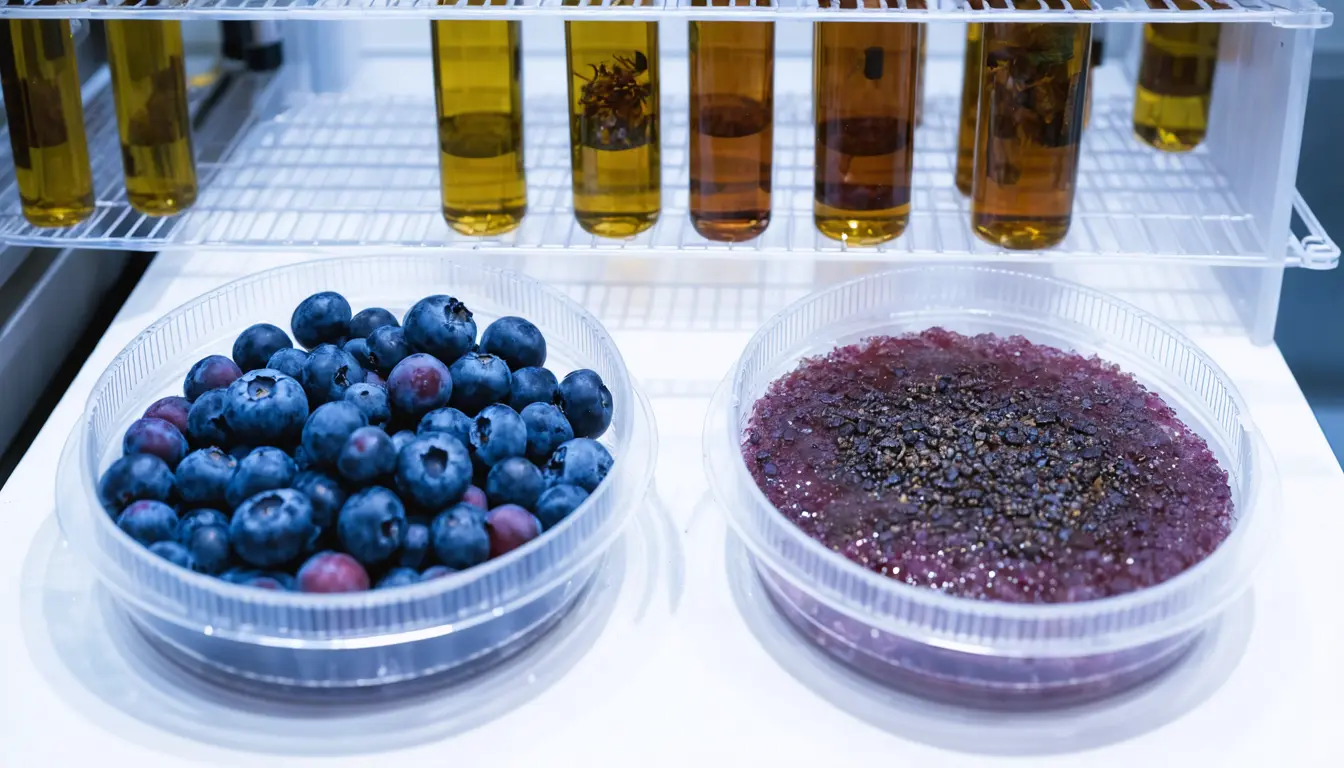
Rutgers lab tests found a yeast left by common fruit flies repels the spotted-wing drosophila and cuts its egg-laying. It gives blueberry growers a lead on a control that is not an insecticide, though field trials have not yet been run.
The Scientist · Science desk
What happened
- Nearly every summer, common fruit flies invaded the lab's spotted-wing colonies, which were kept near a kitchen, and the spotted-wing flies died off.
- Lead author Beth Ferguson swabbed a film that formed on the colony food and identified the yeast in it with James Polashock of the USDA.
- In tests by Jennifer Sun and Tia Hart, the yeast repelled spotted-wing flies but stayed attractive to the common fruit fly, Drosophila melanogaster.
Compiled by The ScientistSomething wrong?How this is made
Why it matters
- capability A cue that repels the spotted-wing fly while still drawing a related species points to a control aimed at one pest's egg-laying choice, in a market where current insecticides can harm nontarget organisms.
- constraint Growers cannot weigh the yeast against an insecticide program until field plantings produce egg counts, and Ferguson puts approval years out.
- cost Until a repellent clears field trials and regulators, soft-fruit growers keep paying heavily for insecticides that do not always give complete control.
On their own, the colony die-offs were a correlation in a crowded box. Thousands of flies shared each container, and Ferguson said even a skilled researcher cannot tell the two species apart by eye [8]. The colonies smelled different, though. Ferguson said they went from a cornmeal-like spotted-wing scent to "a very heavy vinegar decay odor, which is the telltale smell of melanogaster" [9].
The more useful observation was a film that built up on the flies' food as the vinegar smell grew [11]. According to the Rutgers account, fruit flies mark food and egg-laying sites by depositing fecal and gut fungi [11]. An organism scraped off the food could be tested on its own.
Jennifer Sun, an assistant professor of biochemistry and microbiology at Rutgers-New Brunswick and a co-author, ran those tests with undergraduate Tia Hart [13]. "Our first question was whether this is truly repulsive to spotted-wing," Sun said. "The answer came quick." [14] The study, led by postdoctoral researcher Beth Ferguson of the Marucci Center for Blueberry and Cranberry Research, appeared in Applied and Environmental Microbiology [2].
Egg-laying is the right endpoint for this pest. Most Drosophila lay their eggs on rotten fruit. The spotted-wing fly instead uses a sawlike tube to drill into intact, ripening fruit, and its larvae destroy the berry from inside [4]. A cue that changes where the female lays acts on the step that causes the loss. The split response is the control I'd want to see. A smell that drove off both species would say little. One that repels the pest and still draws its rotten-fruit relative looks like a signal the pest specifically responds to [15]. In nature the two species often avoid competing [10].
The account reports "far fewer eggs" without giving a count, and it does not name the yeast. The tests it describes measured repulsion and egg-laying, so the colony die-offs have not been tied to the yeast [15][16].
The fly was found in New Jersey in 2011 and is one of the biggest threats to soft-fruit production [3]. The $94 million figure is what New Jersey's 2025 blueberry crop was worth, about $2 a pound [18]. That is a crop value, not a measure of damage from the fly. The cost the pest imposes today is insecticide: growers spend heavily on chemicals that do not always give complete control and can harm nontarget organisms [6]. The report describes the field candidate as a "lab-produced compound" whose behaviour in nature still needs testing, and Ferguson said the path from discovery to regulatory approval can take years [17].
What to watch
- Field results showing whether the yeast, or a compound made from it, cuts spotted-wing egg-laying in blueberry plantings and not only in lab arenas.
- Egg counts and doses in the Applied and Environmental Microbiology paper, which would show how large 'far fewer eggs' actually is.
- Tests on pollinators and other nontarget insects, which would show whether the yeast avoids the side effects growers get from insecticides.