Science1 publisherNot yet confirmed elsewhere2 min readPublished
Fewer than a quarter of 327 studies on informal food vendors define what 'informal' means
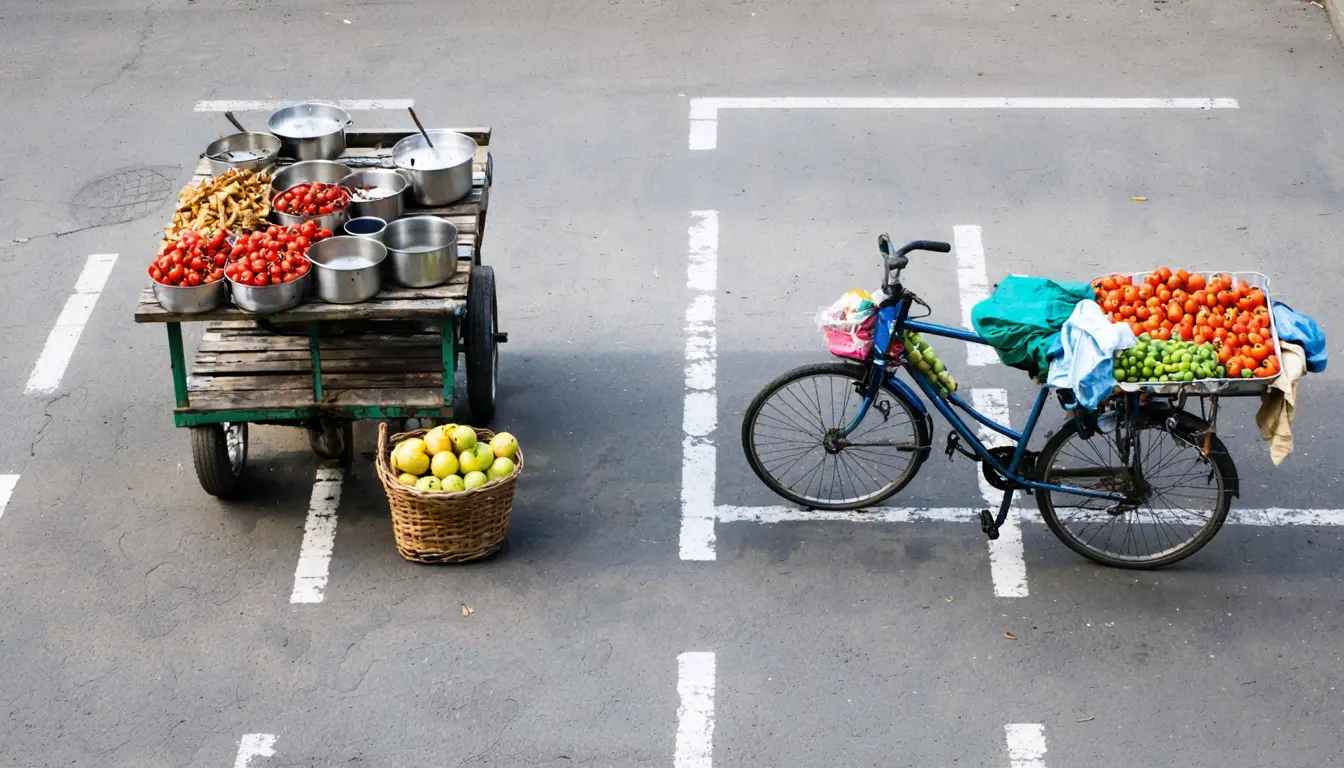
Ramya Ambikapathi's team screened 23,250 records for a Food Policy review and found research on informal food vendors scattered and loosely defined. The gaps matter because those vendors anchor food security and livelihoods for over a billion people in low- and middle-income countries, the Alliance of Bioversity International and CIAT says.
The Scientist · Science desk
What happened
- From those records, 327 studies published since 2000 across 64 countries made it into the analysis.
- Studies that did define informality used different tests, among them location, licensing and whether a vendor has a physical stall.
- Women make up the majority of informal food vendors and face gendered constraints, including segregated fish markets and exclusion from public space and credit.
- Among 214 studies offering policy advice, basic infrastructure such as water, electricity, vending zones and cold storage was the most common recommendation.
Compiled by The ScientistSomething wrong?How this is made
Why it matters
- constraint A ministry trying to size its informal food sector cannot yet add these studies together, because they disagree on who counts as informal.
- decision Cities choosing between licensing drives and spending on water, power and vending zones now have a review saying registration schemes have mostly failed when their costs ignore how informal work runs.
- exposure Financial-inclusion and social-protection schemes that are not designed for women will miss most of the people who sell informal food.
The 214 studies that gave policy advice are about 65 percent of the 327 analysed [12][18]. Counting how often they proposed water points or cold storage measures how far researchers agree [13]. Evidence of an effect on a vendor's income or a customer's diet would have to come from studies that measured those outcomes. The second of the review's three questions was how informality links to nutrition and food choice [5]. The write-up, provided to Phys.org by the Alliance of Bioversity International and CIAT, does not report those findings or how many studies measured diets [15].
At most 81 of the 327 studies said clearly who they were counting [17]. A vendor with a fixed stall and no licence is formal under a stall rule and informal under a licensing rule, so two studies of the same street can produce different counts of informal traders [6]. The write-up's headline scale figure is broad too. Its 1.23 billion is everyone employed in food systems worldwide, a majority of them informally [1]. That group is wider than the vendors the review studied.
Ramya Ambikapathi led the team, drawn from the Alliance, Cornell University, the Global Alliance for Improved Nutrition, Purdue University, the Kula Vyema Center of Food Economics and other institutions [14]. The authors argue that a definition steers policy. In their account, a location-based definition produces place-based policy, an infrastructure-based one produces market upgrades, and a licensing-based one produces formalisation drives [7]. Across the studies that made recommendations, the most consistent message was to drop the formal/informal binary and treat informality as a continuum [16].
The qualitative findings show why a binary fits badly. In Dhaka, researchers documented what they called 'quiet encroachment': male vendors ducked under tea tables when police approached, and their wives took over because officers were reluctant to arrest women [10]. The review files the ties that stabilise supply chains, share risk and lend legitimacy to unregistered work under the label 'social infrastructure' [11].
I think infrastructure is a sensible first bet, for a reason the tally does not capture. A water point or a cold-storage unit serves a vendor whether or not she holds a licence, so it does not have to wait for the field to agree on definitions. The view holds only if cities supply water and vending space without requiring a licence. A zone open only to registered vendors applies the licensing definition again.
What to watch
- Whether funders or national statistics offices adopt a shared, continuum-based definition of informal food vending, so that studies from different cities count the same people.
- A study comparing vendors who received water, power or cold storage with similar vendors who did not, measuring incomes and what customers eat.
Clarity's read
What the record supports and how the coverage leans. The claims behind it follow.
Reality
- Evidence45
- Adoption
- Insufficient
- Hype gap+15
- Incentives55
- Confidence50
Claim ledger
Ranked by verification strength, evidence, and original report placement.
- [1]
Food systems employ an estimated 1.23 billion people globally, and a majority of those jobs are informal: unlicensed, unregistered or otherwise outside formal regulation.
ReportedSupportedSource: Phys.org write-up provided by the Alliance of Bioversity International and CIATView cited source - [2]
In low- and middle-income countries, informal vendors are a linchpin of food security and livelihoods for over a billion people.
ReportedSupportedSource: Phys.org write-up provided by the Alliance of Bioversity International and CIATView cited source - [3]
The systematic scoping review published in Food Policy screened 23,250 records.
- [4]
The review analysed 327 studies published since 2000 across 64 countries.
- [5]
The review asked three questions: how informality is defined and studied in food environments; what is known about its links to nutrition and food choice; and what sociopolitical and livelihood factors shape the people who do this work.
- [6]
Fewer than a quarter of the studies reviewed clearly specified a definition of informality; among those that did, definitions varied, some based on location, some on licensing, some on whether a vendor has a physical stall.
- [7]
A location-based definition leads to place-based policy, an infrastructure-based one leads to market upgrades, and a licensing-based one leads to formalisation drives.
- [8]
Formalisation drives have mostly failed in practice because the costs of registration and compliance are rarely designed around how informal work actually functions.
- [9]
Women make up the majority of informal food vendors, and the review found gender-specific patterns in who sells what, where and under what constraints, including spatial segregation in fish markets and exclusion from public space and credit.
- [10]
In Dhaka, researchers documented vendors using 'quiet encroachment' tactics: male vendors would duck under tea tables when police approached while their wives took over, because officers were reluctant to arrest women.
- [11]
Researchers call the informal ties that stabilise supply chains, share risk and confer legitimacy on work that has none on paper 'social infrastructure'.
- [12]
214 of the studies offered policy recommendations, across more than 40 countries.
- [13]
Basic infrastructure (water, electricity, designated vending zones, cold storage) was the single most common policy recommendation, followed by gender-responsive financial inclusion and social protections for informal workers.
- [14]
The study, by Ramya Ambikapathi et al, comes from a team spanning the Alliance of Bioversity International and CIAT, Cornell University, the Global Alliance for Improved Nutrition (GAIN), Purdue University, Kula Vyema Center of Food Economics and collaborators at several other institutions; it was published in Food Policy in 2026.
- [15]
The Phys.org article was provided by the Alliance of Bioversity International and the International Center for Tropical Agriculture.
- [16]
Among the policy-recommending studies, the clearest and most consistent message was to move beyond the formal/informal binary; informality sits on a continuum.
- [17]
Fewer than a quarter of 327 studies means at most 81 studies clearly specified a definition of informality.
- [18]
The 214 studies offering policy recommendations are about 65 percent of the 327 studies analysed.
Sources
1 independent publisher whose own reporting we read for this story.
- phys.orgInformal food vendors: The invisible backbone of the world's food system
1 article · October 8, 2026
Topics and entities
Follow any of these and your For You feed starts watching them — no settings page required.
Topics
- Food policyFollow
- Food SecurityFollow
- Gender and informal workFollow
- Informal food economyFollow
Entities
- Alliance of Bioversity International and CIATFollow
- Ramya AmbikapathiFollow
- Cornell UniversityFollow
- Global Alliance for Improved NutritionFollow
- Purdue UniversityFollow
- Kula Vyema Center of Food EconomicsFollow
- Food PolicyFollow