Currencies of heavy US exporters react most when presidential debates turn protectionist
Bochum economist Jantke de Boer finds currencies move during US presidential debates as protectionist odds rise, with several emerging markets hit harder. Firms with exposure to the US meet that repricing before any tariff is enacted.
The Scientist · Science desk
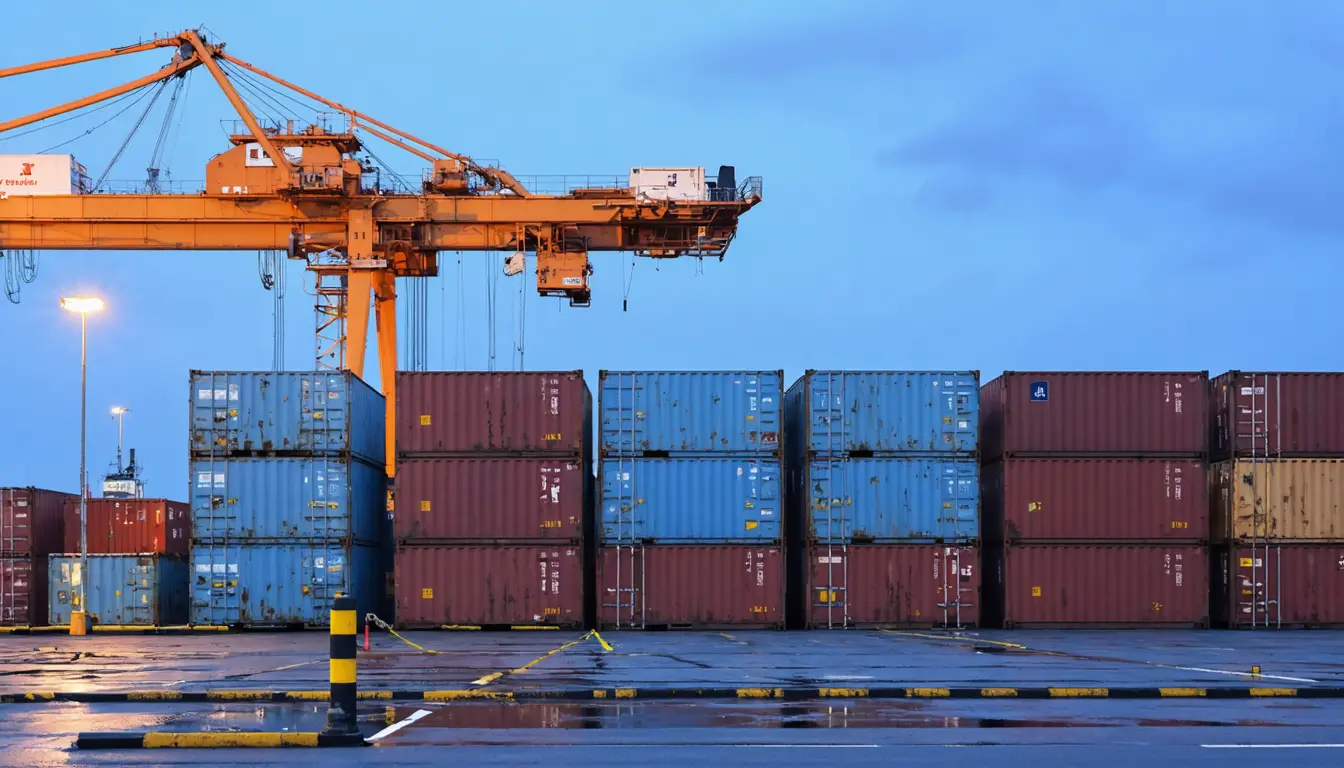
Heavy US exporters: the more they export to the US, the more their currency reacts. Several emerging countries: currencies depreciate more. Mexico: a falling peso makes US imports more expensive. Brazil: a liquid market can better cushion outflows. Other market news is not ruled out.
- Who's exposed exposure Heavy exporters to the US The more a country exports to the US, the more strongly its currency reacts, de Boer says, claim 8
- Who's exposed exposure Several emerging countries Currencies depreciate more than others on protectionist expectations, claim 4
- What it costs cost Mexico Peso falls on protectionist announcements, making US imports such as machinery more expensive, claim 9
- What's now possible capability Brazil A liquid market can better cushion capital outflows; reserves let central banks support the currency, de Boer says, claim 11
- What it limits constraint The debate-window test The short window narrows the analysis but does not rule out other market-moving news, claim 7
| Who | How | Kind | Claim |
|---|---|---|---|
| Heavy exporters to the US | The more a country exports to the US, the more strongly its currency reacts, de Boer says | exposure | 8 |
| Several emerging countries | Currencies depreciate more than others on protectionist expectations | exposure | 4 |
| Mexico | Peso falls on protectionist announcements, making US imports such as machinery more expensive | cost | 9 |
| Brazil | A liquid market can better cushion capital outflows; reserves let central banks support the currency, de Boer says | capability | 11 |
| The debate-window test | The short window narrows the analysis but does not rule out other market-moving news | constraint | 7 |
What happened
- De Boer used live broadcasts of past US presidential debates, which always aired between 9 and 10:30 p.m. Eastern time, as her test windows.
- She paired the broadcasts with prediction-market data, where betting odds track in real time how a candidate's protectionist stance is being assessed.
- The reaction scales with trade ties: the more a country exports to the US, the more strongly its currency moves.
Why it matters
- Who has to decide decision A firm that waits for a tariff to be enacted would hedge at rates that already carry the threat, so the review point moves to the rhetoric.
- What doesn't add up contradiction The emerging-market label overstates the risk for markets with deep liquidity and large reserves, such as Brazil, so a blanket emerging-market hedge policy would mis-size cover.
- What it limits constraint The narrow window cannot exclude other market news, which limits how much of any measured move can be pinned on debate rhetoric.
- Who's exposed exposure Importers in export-dependent economies, such as Mexican industry buying US machinery, pay for a protectionist-driven currency fall in higher import prices.
The 90-minute broadcast slot [12] narrows the analysis, but it leaves room for other explanations. The source notes that even with major stock exchanges closed, other news that moves markets, or other causes of the currency moves, cannot be excluded [7]. The design pairs a fixed debate window [5] with betting odds on a candidate's protectionist stance [6], and the paper appeared in Emerging Markets Review as "Protectionist U.S. trade policies and the cross-section of emerging market currency returns" [2]. The Phys.org summary does not give the number of debates, the countries covered, the size of the moves or whether they persisted.
Markets price expectations. "Financial markets do not wait for a political decision to be implemented. They try to anticipate future developments. If it seems more likely that the U.S. will impose higher tariffs in the future, this can immediately be reflected in the exchange rates," de Boer said [3].
For a treasurer, the spread across countries matters more than the average. Several emerging countries are particularly negatively affected [4], yet some are especially vulnerable and others much more resistant [10]. De Boer said: "A liquid financial market such as Brazil's can better cushion capital outflows, and foreign exchange reserves enable central banks to support their currency" [11]. In our view, a firm's link to US demand is the better first screen, because the reaction scales with exports to the US [8] and the emerging-market label alone covers both fragile and resilient markets. That ordering is our judgement. The summary does not weigh export share against market depth.
Whether hedging early pays is a separate question. The paper's subject is currency returns [2], so firm outcomes, hedge costs and the chance that a threat is later dropped all sit outside it.
The timing result is narrower, and it is firm. If the repricing happens while a candidate is speaking [3], a hedge placed after a tariff is enacted is bought after the move. We think firms with large US-linked revenue or dollar-priced inputs should treat the rhetoric as the trigger for a hedging review. The condition is that the cost of cover has to be weighed against the chance that the threat never becomes policy.
What to watch
- The full paper (DOI 10.1016/j.ememar.2026.101527) for the number of debates, countries covered, size of the moves and whether they persisted.
- Whether the next debate season shows the same pattern in currencies of high-export-share countries such as Mexico's peso.
- Any follow-up that tests hedging outcomes at the firm level, which this currency-returns study does not.
Clarity's read
What the record supports and how the coverage leans. The claims behind it follow.
Reality
- Evidence50
- Adoption
- Not scored
- Hype gap+10
- Incentives
- Not scored
- Confidence50
Claim ledger
Ranked by verification strength, evidence, and original report placement.
- [1]
Jantke de Boer, junior professor of international monetary macroeconomics at Ruhr University Bochum, examined how expectations of future protectionist measures influence exchange rates.
- [2]
The paper, Jantke de Boer et al., 'Protectionist U.S. trade policies and the cross-section of emerging market currency returns', was published in Emerging Markets Review (2026), DOI 10.1016/j.ememar.2026.101527.
- [3]
"Financial markets do not wait for a political decision to be implemented. They try to anticipate future developments. If it seems more likely that the U.S. will impose higher tariffs in the future, this can immediately be reflected in the exchange rates," de Boer said.
- [4]
Several emerging countries are particularly negatively affected by protectionist expectations; their currencies depreciate more than others.
- [5]
De Boer analyzed how announcements of protectionist measures in US presidential debates affect exchange rates, using live broadcasts of past debates that always aired between 9 and 10:30 p.m. Eastern time.
- [6]
De Boer also evaluated prediction-market data in which people bet on the election outcome; the betting odds show in real time how the assessment of a candidate's protectionist stance changes during the debate.
- [7]
The short time window helps narrow the analysis, but the closure of major stock exchanges does not rule out other market-moving news or alternative explanations for exchange-rate movements.
- [8]
The more heavily a country exports to the U.S., the more strongly its currency reacts, according to de Boer.
- [9]
Mexico, which is highly dependent on exports to the U.S., sees the value of the peso fall in response to protectionist announcements, which makes imports from the U.S., such as machinery for the nation's industry, more expensive.
- [10]
Some emerging nations are especially vulnerable to such shocks, and others are much more resistant.
- [11]
"A liquid financial market such as Brazil's can better cushion capital outflows, and foreign exchange reserves enable central banks to support their currency," de Boer said.
- [12]
The debate broadcast window of 9 p.m. to 10:30 p.m. Eastern time is 90 minutes long.
Get this ledger inside ChatGPT. Ask about any of our stories and the answer brings its figure, each claim’s verdict and the sources. Free, no account.
Sources
1 independent publisher whose own reporting we read for this story.
- phys.orgExchange rates react immediately to the threat of tariffs
1 article · October 16, 2026
Topics and entities
Follow any of these and your For You feed starts watching them — no settings page required.
Topics
- Prediction MarketsFollow
- Emerging-Market CurrenciesFollow
- Tariffs and Trade PolicyFollow