Science1 publisher2 min readPublished
Conservationists dispute that lab-made copies of endangered plant scents will protect wild trees
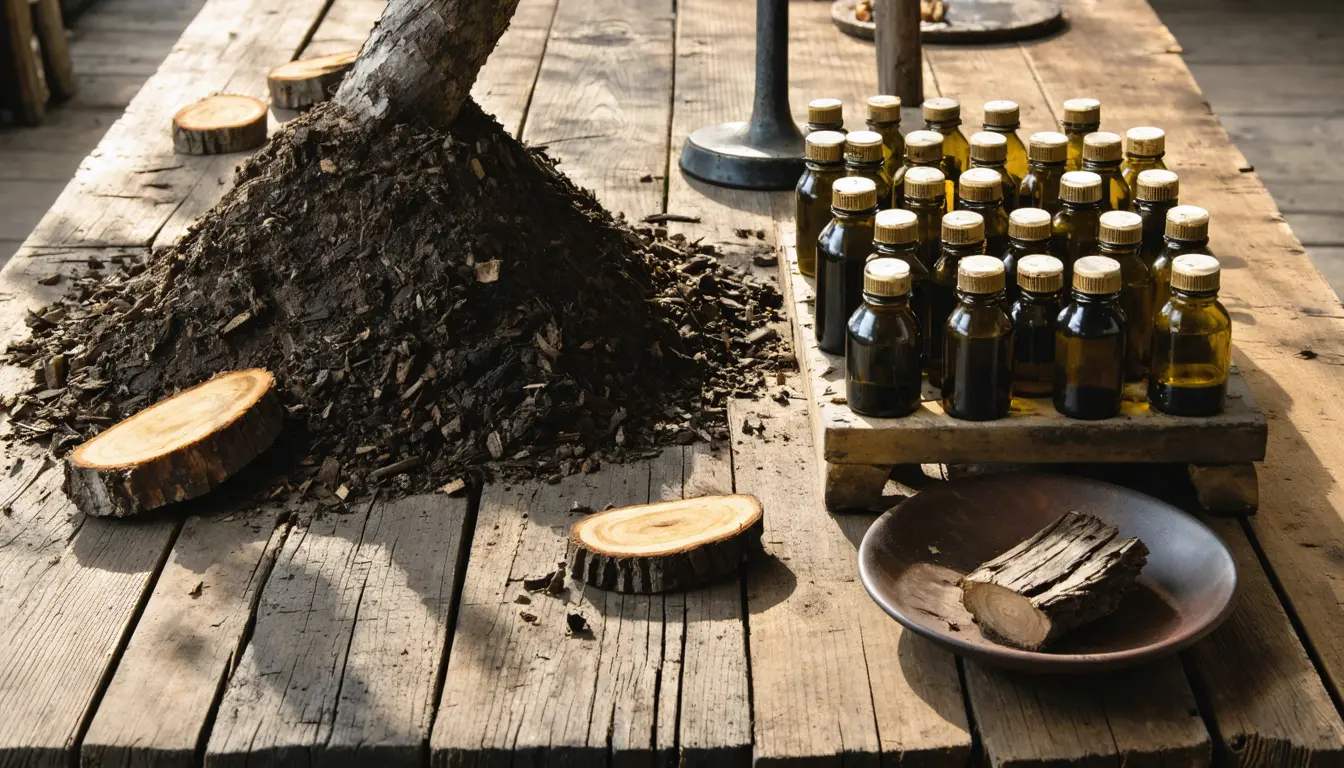
Osmo, a Google Brain spin-off that has raised $130m, says its AI recreated a rare tree's scent from a piece of bark the size of a finger. A Kew botanist says such copies do not completely take the pressure off wild species, because buyers still prize wild-sourced agarwood.
The Scientist · Science desk
Drafted by a language model from the sources cited here and checked against its claim ledger before publication. How we use AISend a correction
What happened
- BioHarvest Sciences has an agreement anticipating 20 tonnes of fragrance from cell cultures of an unnamed endangered south-east Asian plant, with limited output possibly starting next year.
- Osmo founder Alex Wiltschko said the company trained its AI on more than 5m human responses to smells, so it can predict how mixtures of molecules will be perceived.
- Wild Aquilaria populations, the trees that yield agarwood resin, have been devastated by illegal felling for that resin.
- Natural perfumer Mandy Aftel said that calling synthetic versions of endangered plants' smells conservation is greenwashing.
- Christina Agapakis, who reconstructed scent genes from preserved flowers, called the smell she got a ghostly fragment of what had been lost.
Compiled by The ScientistSomething wrong?How this is made
Why it matters
- contradiction Osmo's founder pitches endangered-scent copies as an environmental win while saying conservation is not an explicit company priority, so the green benefit is being claimed by a firm that is not designing for it.
- constraint A copy adds supply without retiring demand for wild-sourced oudh, so lab production on its own cannot end the illegal felling of Aquilaria.
- exposure Brands that market these copies as conservation leave themselves open to greenwashing charges from the natural-perfume community.
- capability Cell culture would let brands buy an endangered plant's own compounds with no harvest at all, a supply route that an AI-predicted reconstruction does not provide.
By Wiltschko's own account, only one step in Osmo's bark result is new. A spectrometer analysed the sample, the company's AI reconstructed the chemical formula, and the scent was then reproduced in its laboratory [14]. Synthetic ingredients have been part of perfumery for over a hundred years, and identifying the molecules in a scent by machine is not new either [5]. "What's changed is what happens after the data comes off the machine," Wiltschko said. "What's new is prediction" [16].
So the claim rests on the model. The published account of the result does not name the tree, describe how the copy was judged against the bark, or say how many people and molecules sit behind the training responses [14][15]. The obvious control would be a blinded panel smelling bark and copy side by side.
The target is also harder than one sample suggests. A flower's scent can contain hundreds of molecules, and the mix changes with the part of the plant it comes from and the conditions it grew in [8]. Agapakis's gene work did produce compounds that perfumers can use [9]. She also said the living organism was beyond recreating, as were the soil, climate, ecology and season that gave it its scent [10].
BioHarvest Sciences skips the prediction step. It says its stable cell culture lets the plant's own compounds be made without anyone cultivating or harvesting the plant [17]. Its volumes so far exist on paper, in a supply agreement [7]. "The challenge is that human demand can be effectively unlimited while biological supply is not," said Zaki Rakib, its chief executive [18].
Whether that helps a wild species is a causal question. Extra supply protects Aquilaria only if people who now pay for wild resin switch to the copy [1]. Rhian Smith of the Royal Botanic Gardens, Kew, said AI could help design an alternative to oudh, but that wild-sourced material remained highly prized [13]. Aftel said a substitute did not stop people buying the original, and did not address the other causes of a species' decline [12].
Wiltschko called the ability to recreate an endangered plant's scent "a huge win for both the environment but also the brands" [4]. I think the chemistry is real. The conservation benefit is still a hypothesis. Before calling it conservation, I'd want to see wild-harvest figures for a species such as Aquilaria fall after copies reach the market.
What to watch
- Whether BioHarvest's limited production actually starts next year as its agreement anticipates, and whether it names the plant so botanists can follow that species' wild trade.
- Whether Osmo identifies the tree behind its bark result and publishes how the copy was compared with the original, ideally in a blinded smell test.