Science1 publisher2 min readPublished
A 50-tree ash pangenome places 16 of its 211 dieback-resistance candidates in dispensable genes
Kew and Forest Research built the first European ash pangenome from 50 trees, then screened more than 1,000 for dieback resistance and found 211 candidate genes, 16 of them in DNA that only some ash carry.
The Scientist · Science desk
What happened
- Researchers from Kew, Forest Research and collaborating organizations published the first European ash pangenome in Nature Communications, assembled from 50 trees of diverse origin.
- Screening a genomic dataset from more than 1,000 trees produced 211 genes with possible links to ash dieback resistance, 16 of them dispensable and so absent from some individual trees.
- Ash dieback, caused by the fungus Hymenoscyphus fraxineus, has killed millions of British trees since it was first detected in the UK in 2012.
Compiled by The ScientistSomething wrong?How this is made
Why it matters
- capability Choosing parents from genetic code alone would let a breeding programme select trees without first exposing a stand for years and counting which ones are still healthy.
- constraint The 211 genes are described as possible links, so a programme that selects on them is selecting on candidates and needs validation before the choice can be defended to a funder.
- precedent With the reference built, the next question about ash costs genotyping rather than assembly, and Wood names environmental resilience and emerald ash borer resistance as the traits it can be pointed at.
Sixteen of 211 is 7.6 percent of the candidate list [1]. Across the trees sampled, dispensable genes account for 9 percent of all ash genes [7]. Candidate resistance genes therefore appear in the variable part of the genome at about the background rate, and 195 of the 211 sit in genes the whole species carries [2][3]. What the pangenome added is those 16 entries, which an assembly from one individual had no way to list [6].
That limit is a property of how reference genomes are built. A conventional assembly describes the gene content of a single tree [6]. Genes that tree happens to lack are missing from the reference, and any scan run against it inherits the gap [6]. Assembling from 50 trees of diverse origin [2] produced a pangenome 22 percent larger than a high-quality genome from one ash, once dispensable sequence was counted [8]. If the 3,400-plus dispensable genes are 9 percent of the total [7], ash carries somewhere near 38,000 genes [4].
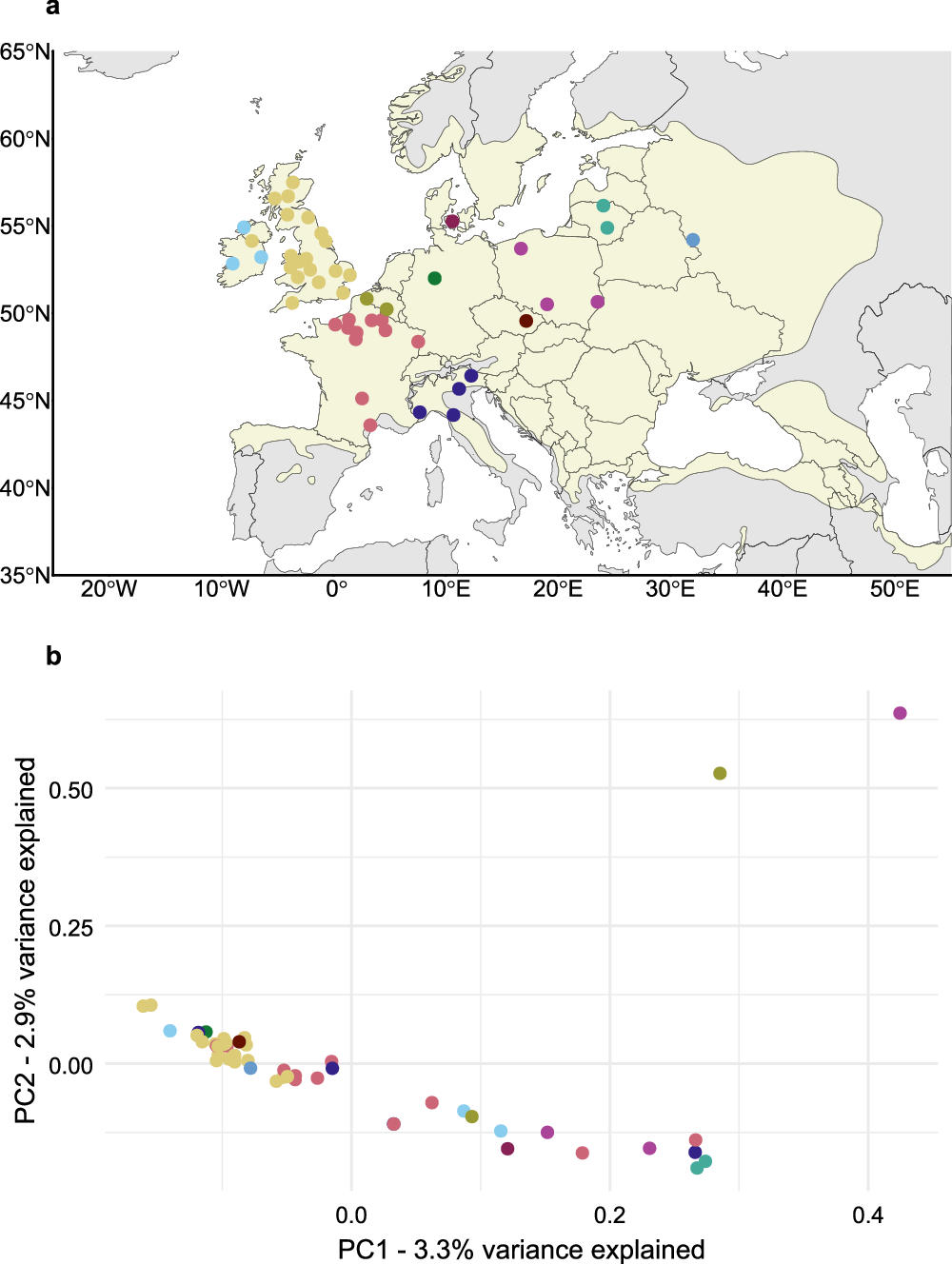
The sampling is worth reading closely. The 50 trees include a young ash growing at Kew Gardens in London, trees from a Forest Research trial site outside Norwich, trees on private land, and trees at Paradise Wood in Oxfordshire, a site owned by the charity Earth Trust [18]. Every tree of non-UK provenance was grown at Paradise Wood from seed collected across Europe for the Realizing Ash's Potential Trial [19]. That puts continental genetic diversity on one site, with soil and climate held roughly constant.
Daniel Wood, the Kew research fellow who is first author, said: "Using the total catalog of genetic sequences, represented in the pangenome, we identified genes potentially associated with resistance to ash dieback" [14][16]. The associations come from a genomic dataset spanning more than 1,000 trees [3], and the Kew summary does not say how resistance was scored in them. An association with survival is not a demonstration that a gene causes it.
Only 0.5 percent of ash remain healthy after long-term exposure to the disease, about one tree in 200 [11][5]. Against that base rate, the appeal of the resource is prediction: Kew says the pangenome could help identify which trees are genetically shielded and pick the most promising parents from their genetic code alone [12]. Laura Kelly, the senior author and a research leader at Kew, said: "The pangenome provides a powerful new tool in the continued fight against ash dieback, and in the response to the ever-growing threat from the emerald ash borer as its invasion advances across Europe" [15][17].
What to watch
- Whether inoculation or field-exposure work confirms any of the 16 dispensable candidate genes.
- Whether the team publishes genomic prediction accuracy for survival in stands already exposed to the fungus.
- Whether breeding programmes for other tree species swap single reference genomes for pangenomes in pathogen work.