Science1 publisherNot yet confirmed elsewhere3 min readPublished
Congo's Ebola contact tracing is missing most new cases, Africa CDC chief says
More than 70% of new Ebola cases in Congo arise outside known contact lists, Africa CDC chief Jean Kaseya told the AP. With 23% of expected contacts traced, Congo's count of more than 8,500 Bundibugyo cases covers only what surveillance can still reach.
The Scientist · Science desk
What happened
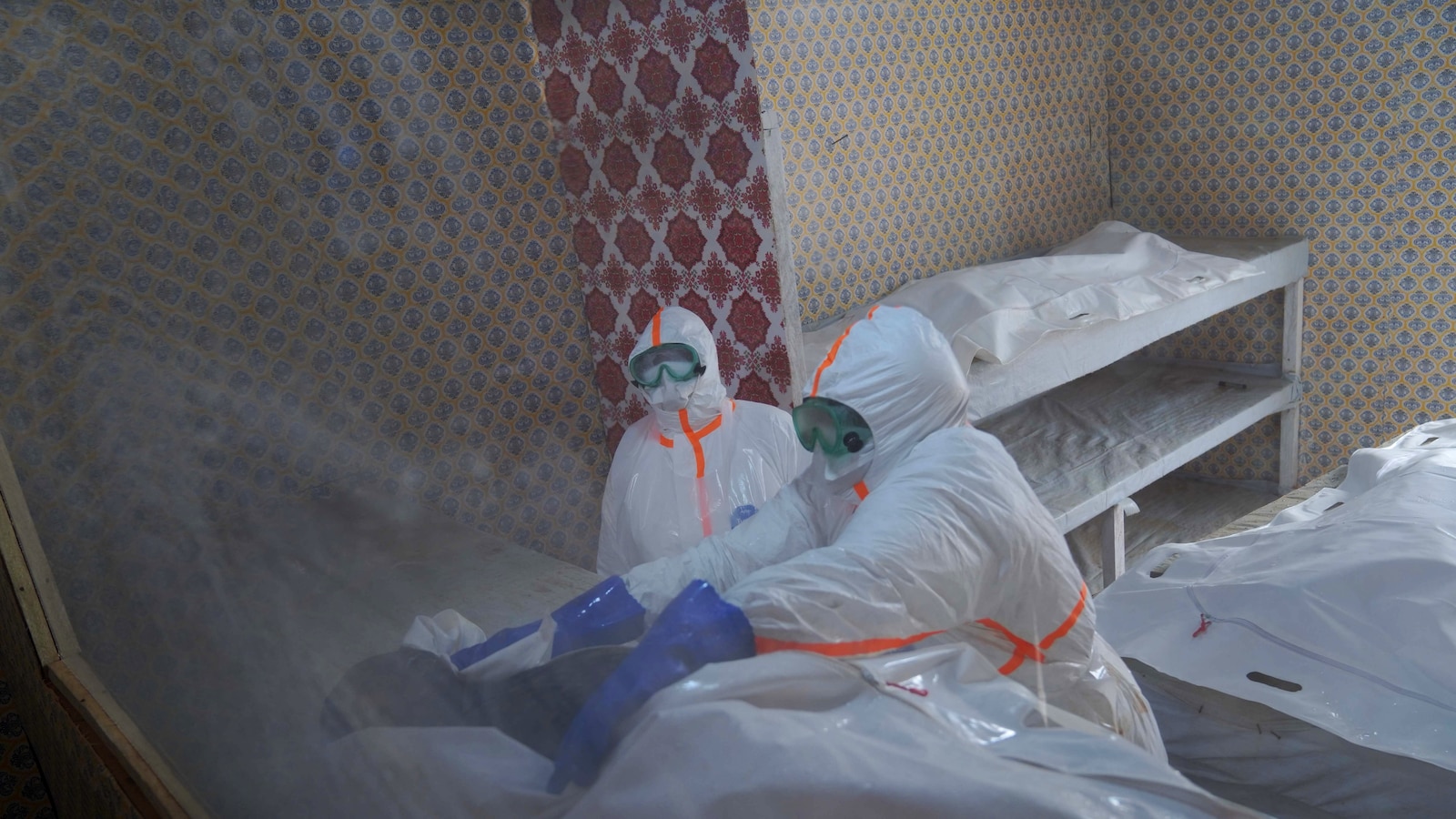
- At least 60% of deaths in the outbreak are happening outside Ebola treatment centres, according to Kaseya.
- North Kivu, a remote and conflict-hit province, now accounts for about 40% of newly confirmed cases, up from 24% at the end of August.
- North Kivu's case fatality rate of 58% is the highest of the seven Congolese provinces the virus has reached.
- Kenya reported its first Ebola case on Tuesday, a man who had arrived from Congo and died while receiving treatment.
Compiled by The ScientistSomething wrong?How this is made
Why it matters
- constraint Bundibugyo has no approved vaccine or drug, so tracing and isolation are the main brakes on spread. A tracing system that misses most new chains leaves responders reacting to illness and death after they happen.
- constraint North Kivu's rising share and high fatality rate partly track where testing still reaches. That makes them weaker guides than they look for deciding where staff and supplies should go.
- exposure Staff at ordinary North Kivu clinics now take on the infection risk of treating Ebola patients who cannot get into, or reach, a treatment centre.
- decision Responders now have to decide whether to hand tracing, burials and isolation to villages and local leaders. Kaseya will not give an end date without that step.
Set the government's count of more than 8,500 recorded cases [9] against more than 4,000 deaths [1] and you get a crude ratio of about 47 deaths per 100 cases [24]. Both inputs are lower bounds. The ratio also lumps finished cases in with cases whose outcome is still unknown, so it is a rough guide. Kaseya described the people missing from both counts. "There are so many other people who are becoming sick, who are not tested, treated, or listed," he said [4].
Contact tracing exists to find exposed people before they fall ill. Kaseya called it the biggest challenge to date [11]. The traced figure leaves about 77% of expected contacts unaccounted for [26]. But "expected" is an estimate of how many people each patient exposed, so part of that gap comes from a model. The share of new cases that were never on a contact list is counted directly [2], and it points the same way. The tracing is happening in a region with heavy population movement from trade, conflict displacement and mining, and with deep mistrust of the government and misinformation about the virus [22].
Bundibugyo has no approved vaccine or treatment [8]. Containment rests on tracing, isolation and burials, the tasks Kaseya wants villages and local leaders to take on [13]. Burials are where the record is thinnest. Some residents still have "a hard time believing the disease exists," said Michel Ngimba of the National Institute of Biomedical Research in Butembo [19]. He described families reluctant to report a death, or to let a sample be collected from a relative who had Ebola symptoms when they died [20]. Other families "want to arrange the funeral quickly," Ngimba said, and because Ebola bodies are highly contagious, a quick funeral can start a new chain of transmission [23]. "The situation has become more difficult to monitor (and) surveillance has to deal with situations that are highly fluid and sometimes difficult to document," he said [21].
Those reporting gaps flow straight into the North Kivu figures. The province's share of new confirmed cases has risen 16 percentage points since the end of August [25]. The virus has reached 17 of its 34 health zones, and in nine of them more than half of patients with confirmed infections have died, according to Health Ministry data [16]. The WHO has said shortages of health workers and supplies at treatment centres there are contributing to more deaths [14]. The thing these figures do not tell you is how much of the province's 58% fatality rate [15] comes from gaps in care and how much from who gets tested. Refused post-mortem samples would push a measured rate down [20]. Testing that misses milder cases would push it up.
Stephanie Hoffmann, who coordinates MSF's Ebola treatment centre in Butembo, called the response "chaotic" [6]. "There is a lack of coordination and organization, but there's certainly a lack of actors present here," she told the AP [7]. In parts of North Kivu, patients have turned to regular health facilities, according to MSF [17]. "Local healthcare workers are the ones feeling this the most because they have to make the decision between sending their community members home to potentially die by themselves or putting themselves at risk to help treat them in their health center," Hoffmann said [18].
Kaseya made any end date conditional on changing the method. "I'm unable to tell you when we can stop this outbreak unless we implement the village-centered approach," he said [12].
What to watch
- The share of new cases arising outside known contacts: a fall well below 70% would be the first sign that tracing is catching up with transmission.
- Further imported cases in Kenya or other neighbouring countries after the first one reported on Tuesday.
- Whether staff and supplies reach North Kivu's treatment centres, and whether the share of deaths outside them falls from at least 60%.