Product1 publisherNot yet confirmed elsewhere3 min readPublished
Co-packaged optics asks switch buyers to give up choosing their own optics suppliers
Co-packaged optics, shrugged off when Cisco showed it on a 3.2TB switch at OFC 2023, now has the industry's attention, DatacenterDynamics reports. Operators have to decide whether its promised power savings are worth giving up the many pluggable suppliers that give them negotiating leverage.
The Product Desk
What happened
- Customers in 2023 feared the technology would push them into an all-Cisco or all-Broadcom world, according to Cisco optics executive Bill Gartner.
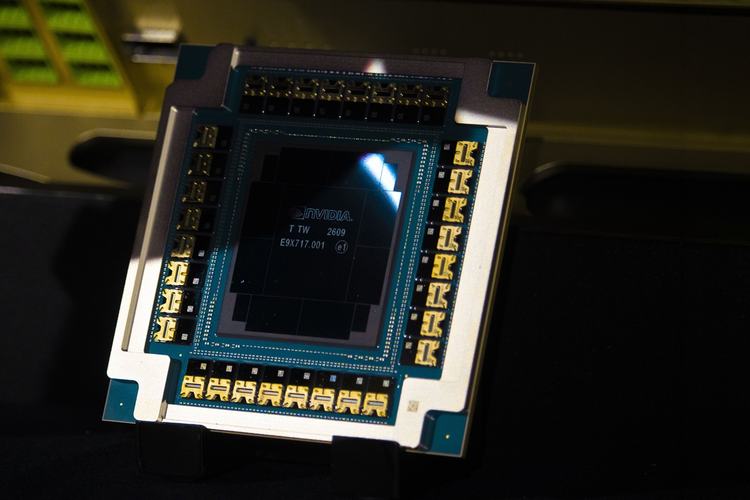
- Co-packaged optics puts optical engines and switching ASICs on a single packaged substrate, where pluggables keep the transceiver separate from the main chips.
- Most electrical-to-optical conversion in data centers now happens in pluggable transceivers, which DatacenterDynamics describes as expensive and power hungry.
- Early doubts covered cost and reliability, including customer questions about how a laser built into the package would be replaced.
- Three years on, DatacenterDynamics says vendor lock-in is still an issue co-packaged optics has not fully resolved.
Compiled by The Product DeskSomething wrong?How this is made
Why it matters
- decision Procurement teams that bid optics separately today would have to fold that budget into the switch contract, because a co-packaged design leaves no separate optic to buy.
- exposure A switch whose optics come from one source puts every port's supply and price on that one supplier, the single-source position Gartner says customers buy multi-vendor to avoid.
- constraint Operations teams cannot plan spares for co-packaged lasers the way they stock faceplate optics until vendors say how a laser is replaced.
Bill Gartner, who runs optical systems and optics at Cisco, said the industry's response to the 2023 demo "ranged from indifference or a yawn to fairly negative" [1][2]. He explains the objection by starting at the front of the box. "There's a switch, which makes up the bulk of the router and its costs, and then there are ports on the face plate into which you plug these pluggable optics," he told DatacenterDynamics (DCD) [5]. "But a customer has a choice of which pluggable optic they want to use, and there are many providers of pluggable optics. That gives them negotiating leverage and the ability to make sure that they've got supply chain diversity, which gives them a lot of benefit." [4]
Buyers treat that port as a second purchase, with its own competition and its own backup supplier [4]. "Multi-vendor gives customers leverage, and customers like that leverage," Gartner said. "It gives them peace and comfort that they're not going to be held hostage by a single source." [6]
The case for the change is power. "What co-packaged optics does is move the conversion onto the actual silicon itself. It moves those lasers onto the silicon, eliminating the need for any external units," said Roy Chua, founder and industry analyst at AvidThink [12]. Co-packaging, he said, "allows for more consolidation while lowering costs and energy use" [13]. Chua does not put a number on the saving in those remarks.
What changes on the purchase order is who supplies the optics. Gartner's company is on both sides of that question: Cisco sells pluggables, and he said it is not in the habit of forcing customers to buy Cisco [7].
DCD wrote that the old indifference has vanished, "replaced by an industry ready to shrug off all concerns and welcome the technology with open arms" [17]. The same article says lock-in is still unresolved [8]. Chua listed the other early doubts. Manufacturing is complicated because the wave guides and modulators have to be made together, and "people felt it would not be sufficiently reliable and cost-effective enough to produce and take to market" [14][15]. I'd expect the team that negotiates optics contracts to be the last group to shrug.
I'd sort a co-packaged optics decision on two axes. The first is whether switch power and bandwidth is the limit your network actually hits. That is the bottleneck the concept was built around at the start of the decade [9]. The second is how much you get today from bidding optics across suppliers and holding a second source [4].
Where power binds and you already buy optics from one vendor, co-packaging costs little leverage and is an ordinary evaluation. Where power binds and your optics bids are competitive, the decision is hard. It turns on the vendor's written answer to two things: how a laser is replaced, and who else can supply the package [16][3]. A network that is not power-bound and saves money on optics bids should stay pluggable. One that fits neither description has no case for moving first.
What to watch
- Any co-packaged switch whose lasers or optical engines can come from a second supplier; that would address the 2023 all-Cisco or all-Broadcom fear directly.
- A published field-replacement procedure for a co-packaged laser, and its downtime compared with swapping a pluggable.
- Measured power-per-port figures from a vendor or an operator, to put a size on the saving Chua describes.
Clarity's read
What the record supports and how the coverage leans. The claims behind it follow.
Reality
- Evidence40
- Adoption30
- Hype gap+30
- Incentives60
- Confidence45
Claim ledger
Ranked by verification strength, evidence, and original report placement.
- [1]
Cisco demonstrated co-packaged optics (CPO) on a 3.2TB switch at the Optical Fiber Conference (OFC) 2023, and the technology did not receive a rapturous reception.
- [2]
"I would say the industry response at that time ranged from indifference or a yawn to fairly negative."
ReportedSupportedSource: Bill Gartner, SVP & GM, optical systems and optics at Cisco, to DatacenterDynamicsView cited source - [3]
One 2023 concern was that CPO would introduce vendor lock-in to an environment that traditionally allowed a multi-vendor approach; customers feared it would force them into an all-Cisco or all-Broadcom world.
- [4]
"But a customer has a choice of which pluggable optic they want to use, and there are many providers of pluggable optics. That gives them negotiating leverage and the ability to make sure that they've got supply chain diversity, which gives them a lot of benefit."
- [5]
"There's a switch, which makes up the bulk of the router and its costs, and then there are ports on the face plate into which you plug these pluggable optics."
- [6]
"Multi-vendor gives customers leverage, and customers like that leverage. It gives them peace and comfort that they're not going to be held hostage by a single source."
- [7]
Gartner stressed that Cisco is one of the providers of pluggable optics but is not in the habit of forcing its customers to buy Cisco.
- [8]
Vendor lock-in remains an issue that CPO has yet to fully resolve three years after the 2023 demo.
- [9]
Co-packaged optics emerged as a concept around the start of the decade, when the data center industry began discussing the need for a solution to power and bandwidth bottlenecks.
- [10]
Most electrical-to-optical conversions in data centers take place via pluggable optical transceivers, which are expensive and power hungry.
- [11]
Unlike pluggable optics, where transceivers are kept separate from the main chips, CPO integrates optical and electrical components, such as optical engines and switching ASICs, on a single packaged substrate.
- [12]
"What co-packaged optics does is move the conversion onto the actual silicon itself. It moves those lasers onto the silicon, eliminating the need for any external units."
ReportedSupportedSource: Roy Chua, founder and industry analyst at AvidThink, to DatacenterDynamicsView cited source - [13]
"By co-packaging these elements, it allows for more consolidation while lowering costs and energy use."
- [14]
"manufacturing of co-packaged optics can be complicated because you have to manufacture everything" - wave guides and modulators - all together.
- [15]
"people felt it would not be sufficiently reliable and cost-effective enough to produce and take to market"
- [16]
Customers have scrutinized CPO's reliability, with questions arising about how to go about replacing a laser.
- [17]
The indifference Gartner witnessed has vanished, "replaced by an industry ready to shrug off all concerns and welcome the technology with open arms."
ReportedInsufficientSource: DatacenterDynamics analysis2 sources— create a free account to open themView cited source
Sources
1 independent publisher whose own reporting we read for this story.
Topics and entities
Follow any of these and your For You feed starts watching them — no settings page required.