Chip-scale ring-laser gyroscope from UCSB and Caltech senses rotation at 37 degrees per hour
UCSB and Caltech researchers built a CMOS-compatible ring-laser gyroscope on a chip that senses rotation as slow as 37 degrees per hour. It uses milliwatts of optical power and could eventually serve navigation where GPS is unavailable, the report says.
The Scientist · Science desk
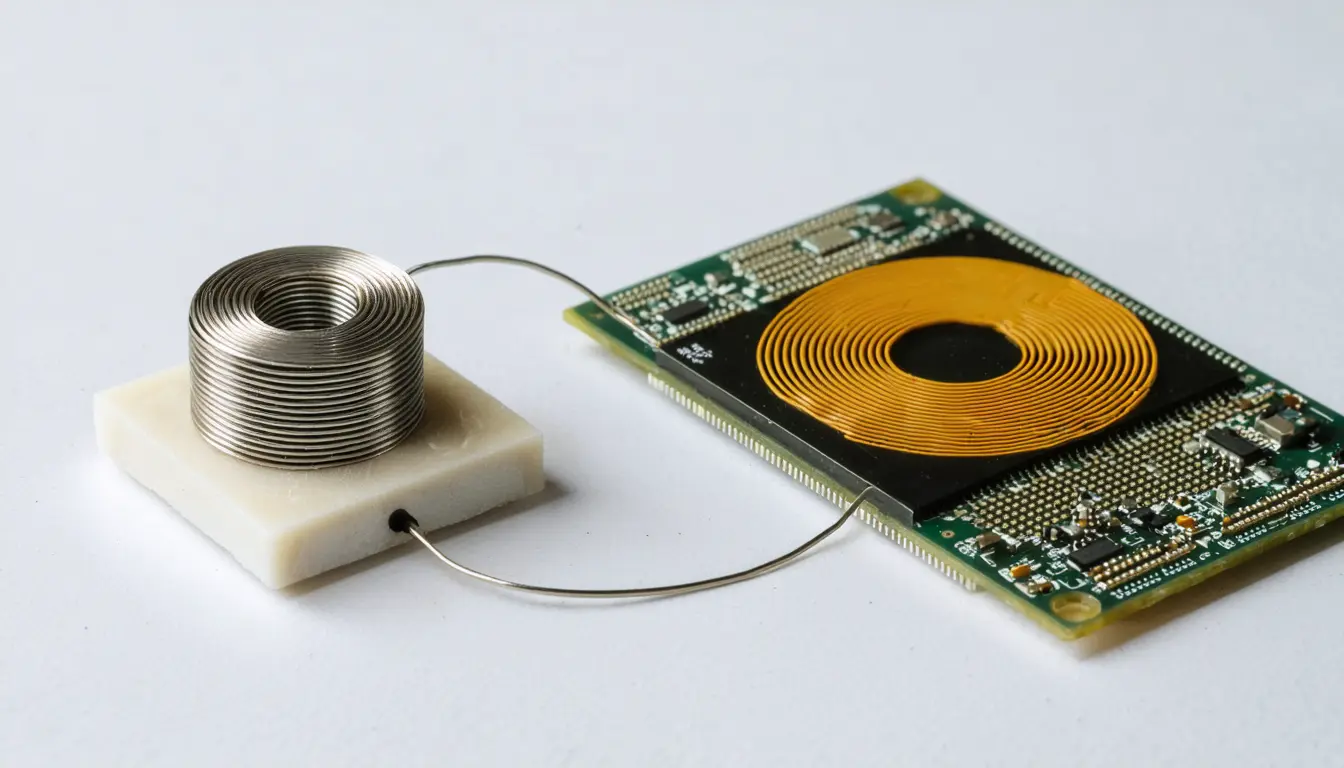
Three figures in degrees per hour: the new chip-scale ring-laser gyroscope can measure rotation as slow as 37; the researchers' earlier silicon nitride Brillouin gyroscope measured 72,000; Earth's rotation rate is 15, per the report.
| Figure | Value | Note | Claim |
|---|---|---|---|
| Slowest rotation the chip-scale gyroscope can measure | 37 degrees/hour | 1 | |
| Earlier silicon nitride Brillouin gyroscope | 72,000 degrees/hour | the researchers' earlier device | 5 |
| Earth's rotation rate, per the report | 15 degrees/hour | the report's reference figure | 16 |
What happened
- The device pairs Vahala's Brillouin laser gyroscope approach with Blumenthal's group's silicon nitride Brillouin laser-on-a-chip, developed with the Air Force Research Laboratory.
- Two semiconductor lasers send light around a ring about 24 millimeters across in opposite directions, producing two Brillouin laser signals.
- Rotation opens a tiny frequency difference between the two signals, and the chip reads that difference as the rotation rate.
- The result is a nearly 2,000-fold improvement on the group's earlier silicon nitride Brillouin gyroscope, which measured 72,000 degrees per hour.
- The work appears in Optics Letters and rests on a low-noise laser built as a photonic integrated circuit of silicon nitride waveguides.
Why it matters
- constraint Sensitivity grows with the area inside the ring, so a smaller ring would, other things equal, give up part of the sensitivity this one reached.
- capability If the design scales, silicon nitride circuits suited to CMOS manufacturing give Vahala a route to a mass-manufacturable, rugged gyroscope for cars, aircraft and spacecraft.
- contradiction The report calls 37 degrees per hour a record, yet says both teams' earlier devices detected Earth's rotation at 15; comparing the two claims would take the measurement conditions behind each.
- decision Anyone planning GPS-free navigation has a laboratory result to track; Vahala himself says "with more development" and "eventually".
Earth turns at 15 degrees per hour, according to the report [16]. The chip's smallest detected rotation is 37 degrees per hour [1], about 2.5 times that [20]. The report says the sensitivity approaches Earth's rotation rate, which is the same order of magnitude but not Earth rate itself. Blumenthal's own claim is narrower. He said the combined approach "made it possible to measure much slower rotation than has been done before with integrated technologies" [8].
The 2,000-fold gain is measured against the group's own earlier device. Dividing that device's 72,000 degrees per hour [5] by 37 gives about 1,950 [15]. The comparison is a before-and-after on one platform. The optical gyroscopes that are sensitive enough for aircraft navigation [13] are not part of it.
Chip-based gyroscopes in smartphones tend to have limited sensitivity [12]. Optical gyroscopes on a chip are meant to close that gap [13], and the report says this one could eventually be useful for precision navigation where GPS is unavailable [18].
The report did not disclose how long the chip was observed or how steady its output is. We'd expect a GPS-free navigator to be judged on stability over long runs. A single minimum-detectable-rate figure measures something else.
Blumenthal's own description of the payoff is conditional. "A fully integrated optical gyroscope would not only be smaller than today's systems but also have no moving parts and thus be very resilient to vibrations and shocks," he said [3]. The device in the paper is a step toward that design [8].
What to watch
- Whether the team reports the chip's output stability over longer runs, since a navigation unit depends on it.
- Whether a fully integrated version, with lasers and ring on one chip, is demonstrated.
- Whether a follow-up compares the chip's rate figure directly with optical gyroscopes used in aircraft navigation.
Clarity's read
What the record supports and how the coverage leans. The claims behind it follow.
Reality
- Evidence62
- Adoption
- Insufficient
- Hype gap+25
- Incentives
- Insufficient
- Confidence58
Claim ledger
Ranked by verification strength, evidence, and original report placement.
- [1]
Researchers developed a chip-scale optical ring-laser gyroscope that can measure rotation as slow as 37 degrees per hour.
- [2]
Blumenthal said the gyroscope combines several advanced technologies for high sensitivity in a format that can be made with standard CMOS chip-processing methods and uses just milliwatts of optical power.
- [3]
"A fully integrated optical gyroscope would not only be smaller than today's systems but also have no moving parts and thus be very resilient to vibrations and shocks," Blumenthal said.
- [4]
The researchers describe the device in Optics Letters; it is based on a low-noise laser made using a photonic integrated circuit of silicon nitride waveguides.
- [5]
The sensitivity is a nearly 2,000-fold improvement over the researchers' earlier silicon nitride Brillouin gyroscope, which measured rotation at 72,000 degrees per hour.
- [6]
The researchers combined a Brillouin laser gyroscope approach developed by Vahala's team with a silicon nitride Brillouin laser-on-a-chip developed by Blumenthal's group, working with the Air Force Research Laboratory.
- [7]
Vahala's team demonstrated its technology in 2017 and later used a tiny silica optical resonator to detect the rotation of Earth; Blumenthal's group used its technology to measure the Earth's rotation in 2019.
- [8]
Blumenthal said: "Combining these two approaches made it possible to measure much slower rotation than has been done before with integrated technologies and move toward a fully integrated laser optical gyroscope."
- [9]
The sensing ring is about 24 millimeters across; two semiconductor lasers send light into it in opposite directions, producing two highly stable Brillouin laser signals that travel around the ring.
- [10]
Optical gyroscopes become more sensitive as the area enclosed by the ring increases, which is why the relatively large ring is important.
- [11]
When the chip rotates, the rotation causes a tiny difference between the frequencies of the two light signals; the chip detects that difference and uses it to determine how fast it is rotating.
- [12]
Chip-based gyroscopes in smartphones and other everyday devices tend to have limited sensitivity, making them unsuitable for some demanding applications.
- [13]
Limited chip gyroscope sensitivity has driven scientists to develop chip-based versions of optical gyroscopes, which are sensitive enough for applications such as aircraft navigation.
- [14]
The silicon nitride circuits are compatible with standard CMOS chip-manufacturing methods, offering a path to making the technology smaller and easier to manufacture.
- [15]
Dividing the earlier device's 72,000 degrees per hour by the new device's 37 degrees per hour gives a factor of about 1,950.
- [16]
The report calls the 37 degrees per hour figure a record sensitivity, approaching Earth's rotation rate of 15 degrees per hour.
- [17]
Vahala said: "With more development, this type of optical gyroscope could eventually bring the high-precision sensing of optical gyroscopes to compact, chip-based devices."
- [18]
The report says the sensitivity could eventually be useful for precision navigation and orientation systems, particularly where GPS is unavailable.
- [19]
Vahala said a chip-based optical gyroscope "could offer a more mass-manufacturable and rugged device for application in cars, aircraft and spacecraft."
- [20]
The 37 degrees per hour detection floor is about 2.5 times Earth's rotation rate of 15 degrees per hour.
Get this ledger inside ChatGPT. Ask about any of our stories and the answer brings its figure, each claim’s verdict and the sources. Free, no account.
Sources
1 independent publisher whose own reporting we read for this story.
- phys.orgNew chip-scale gyroscope measures rotation with unprecedented sensitivity
1 article · October 14, 2026
Topics and entities
Follow any of these and your For You feed starts watching them — no settings page required.
Topics
- Inertial sensing and navigationFollow
- Optical gyroscopesFollow
- Integrated photonicsFollow
Entities
- University of California, Santa BarbaraFollow
- California Institute of TechnologyFollow
- Optics LettersFollow
- Air Force Research LaboratoryFollow
- Daniel J. BlumenthalFollow
- Kerry VahalaFollow