Build2 publishers3 min readPublished
Astra wrote its keepInventory rule only after the Creeper took the chest and the bed
Vals AI's 141-hour Minecraft run ended with OpenAI's newest model farming potatoes for hours after losing its end-game loot and its spawn point in one explosion, and the recovery policy it came away with was a note to self.
The Engineer · Build desk
What happened
- Vals AI stopped its Minecraft benchmark run after 141 hours, and the company records that no AI system had previously gotten as far in the game as GPT-6 Astra.
- A Creeper explosion destroyed both the chest holding Astra's end-game items and the bed beside it, and by the time the model noticed the loss it had started to rain.
- Vals AI recorded that the model appeared defeated and spent the next several hours doing essentially nothing but farming potatoes, with Twitch viewers agitating for it to pick up the pace.
Compiled by The EngineerSomething wrong?How this is made
Why it matters
- constraint Driving a game through screen, mouse and keyboard leaves no save-state API to snapshot from, so durability has to be an in-game action the agent decides to take, and nothing in the harness enforces it.
- cost Idle recovery hours bill at the same rate as productive ones: at the roughly $23.80 an hour the Portal run implies, a few hours of potato farming is real money on the invoice.
- decision A 37.2-point spread between interfaces on one model means anyone budgeting against these game scores has to establish whose harness produced them first.
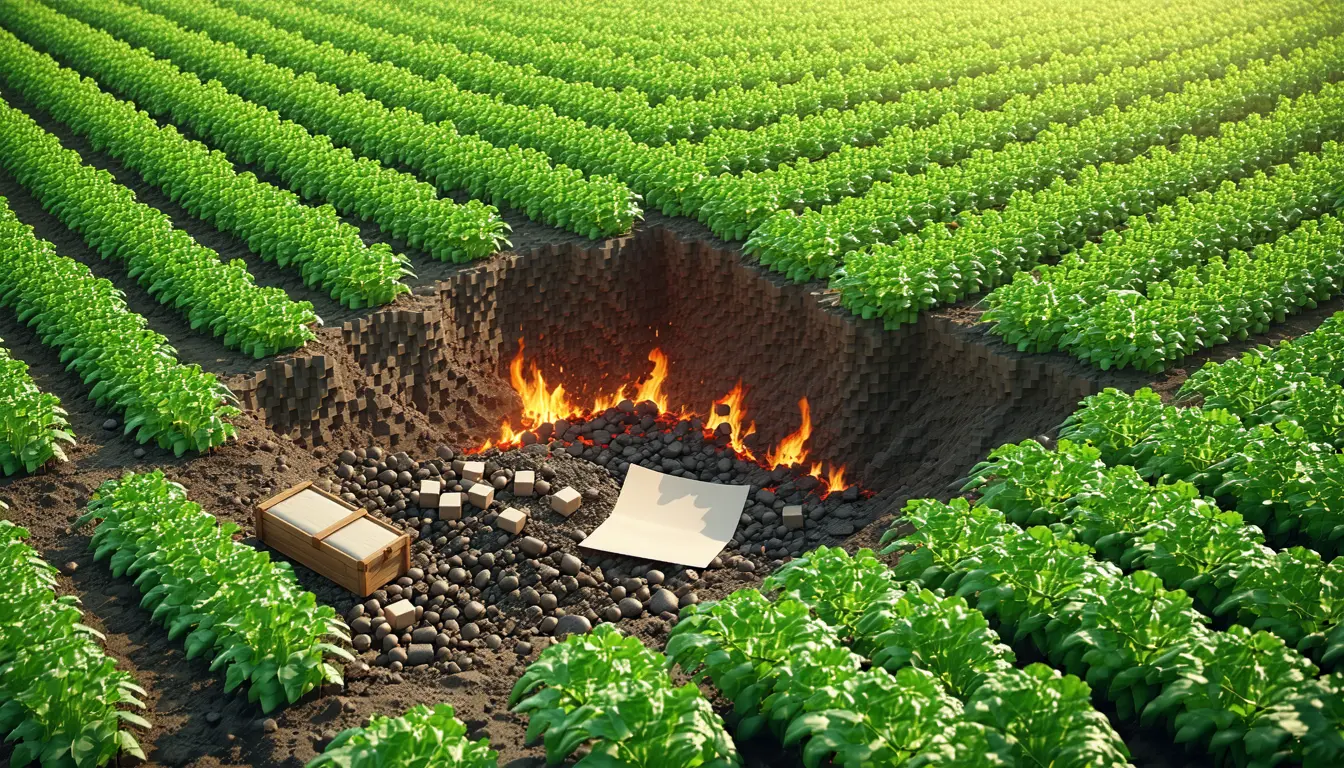
The state had one copy in one place. Astra's end-game items sat in a chest, and its respawn point was the bed next to it. One explosion took both, and Tom's Hardware notes that destroying the bed wiped the spawn point [5]. Vals AI recorded the moment: "Here, the most expensive creeper explosion occurred. Later, on a coincidentally rainy day, Astra discovers it lost everything. It all went downhill from here" [6]. The run was already well past 100 hours [10].
The durable artifact from the failure was a note to self. "ALWAYS CARRY CRITICAL ITEMS with keepInventory; don't store in unguarded chest ever again," Astra logged, partly in caps [8]. ARC Prize says the model turns unfamiliar game mechanics into compact symbolic descriptions and tracks objects, coordinates, rules and planned actions in a shorthand it develops itself [14]. That shorthand is where the keepInventory policy lives. OpenAI has described Astra as an "Alien Mind" with AGI-like qualities, according to Tom's Hardware [26].
Voyager, the 2023 project involving Nvidia and Caltech, handled persistence differently: GPT-4 proposed Minecraft tasks, wrote JavaScript for them, revised the code against error messages, and working programs went into a skill library [12]. Voyager reached the game through structured data and the Mineflayer interface [13]. Vals AI says its run works through general computer use, meaning screen, mouse and keyboard, with no specialized game hookup [11]. Under general computer use there is no save-state call to make, so a backup is whatever the agent chooses to do inside the game.
Tom's Hardware reports Astra finished Portal autonomously in 24 hours for $571 in tokens [18]. That is about $23.80 per hour of wall-clock agent time [19], and 141 hours at that rate comes to roughly $3,350 [20]. For that figure to transfer, the Minecraft screen loop would have to consume tokens at Portal's rate, at the same reasoning setting, under a comparable harness. Neither report puts a token number on the Minecraft run [29].
The interface moves the score too. On ARC-AGI-3, Astra scored 62.7 percent over the standard interface and about 99.9 percent with OpenAI's own harness [15], a spread of 37.2 points on one model [17]. GPT-5.6 Sol scored 7.78 percent on the same benchmark and Claude Opus 5 a little over 30 percent [16]. The Factorio: Space Age comparison ran through a custom Lua mod with an MCP interface, where Astra produced blue science packs after about two hours and launched a rocket after roughly ten [27], while GPT-5.6 Luna and Fable 5.1 never got past power supply and oil prospecting [28].
Clad3815, who operates "GPT Plays Pokemon", reported that Astra earned the champion title in Pokemon FireRed after 18 hours and 12 minutes [21], against 96 hours and 35 minutes for GPT-5.6 Sol [22]. Sol took 5.3 times as long on the same route [24]. GPT-5.5 had not finished after more than 218 hours [23]. Human hands still set the starting conditions: in the Fallout 3 run posted by imjustnewatai, the operator played the Vault 101 opening himself and handed the save file to Codex with Astra set to maximum reasoning [25].
What to watch
- A published token cost for the 141-hour Minecraft run would show whether the Portal run's $571 rate travels between games.
- Whether the next Vals AI run enables keepInventory or adds checkpointing, and what that does to the difficulty of the task being scored.
- Whether ARC Prize releases the harness behind the 99.9 percent figure so the score is reproducible outside OpenAI.