Broadcom's HyperArmor gives ESX admins more time to test patches
Broadcom introduced VMware HyperArmor in Frankfurt, adding virtual patching, script controls and multifactor login to ESX hosts. The stated aim is a longer window to test official patches, aimed at stolen root credentials and unpatched vulnerabilities.
The Product Desk
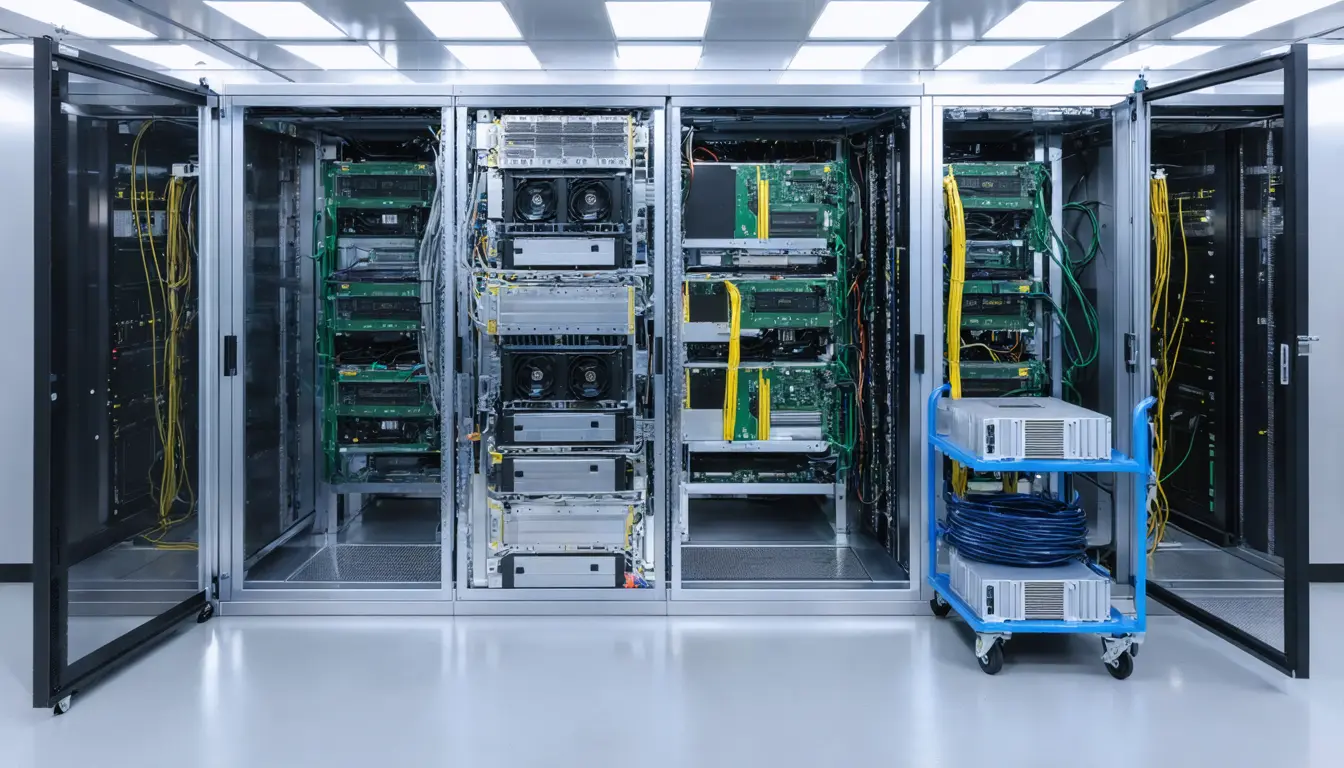
How HyperArmor reaches each party. Without a second factor, a root password cannot reach the ESX command line, per Broadcom. Administrators get host protection while preparing patches. New scripts need approval. Virtual patching needs no host reboot. Cloud Foundation has live patching.
- constraint Someone with a root password Cannot reach the ESX command line without the one-time password second factor, Broadcom said, claim 6
- capability Administrators Get controls intended to protect the host while they prepare software patches, claim 14
- constraint New scripts on ESX hosts Need administrator approval; unauthorized executables and scripts are blocked by default, claim 5
- capability Hosts with vulnerabilities Virtual patching blocks malicious actions with no host reboot or software upgrade, Broadcom said, claim 4
- precedent VMware Cloud Foundation Already includes live patching of critical hypervisor updates without taking workloads offline, claim 13
| Who | How | Kind | Claim |
|---|---|---|---|
| Someone with a root password | Cannot reach the ESX command line without the one-time password second factor, Broadcom said | constraint | 6 |
| Administrators | Get controls intended to protect the host while they prepare software patches | capability | 14 |
| New scripts on ESX hosts | Need administrator approval; unauthorized executables and scripts are blocked by default | constraint | 5 |
| Hosts with vulnerabilities | Virtual patching blocks malicious actions with no host reboot or software upgrade, Broadcom said | capability | 4 |
| VMware Cloud Foundation | Already includes live patching of critical hypervisor updates without taking workloads offline | precedent | 13 |
What happened
- Virtual patching is built to detect and block malicious actions on the host, and Broadcom says it needs no host reboot and no software upgrade.
- Because ESX hosts run a small, fixed set of processes, HyperArmor inventories existing scripts, requires approval for new ones, and blocks unauthorized executables and scripts by default.
- With HyperArmor, an ESX SSH login needs standard credentials plus a time-based one-time password tied to a separate identity. A stolen root password alone does not reach the command line.
- Broadcom says the product monitors host processes continuously with minimal performance overhead and needs no security agents inside guest virtual machines.
Why it matters
- decision Cloud Foundation customers now have two ways to cover a critical hypervisor flaw: the live patching already included and the new virtual patching. Someone has to decide which one a given flaw gets.
- constraint Broadcom lists ESX 8.x and later. A host on an older release gets none of this cover, and its upgrade has to come first.
- cost Broadcom disclosed no price. A team weighing HyperArmor against the upkeep of its own host controls has no figure to set beside those hours.
Some VMware customers tried to build their own hypervisor protections and struggled to keep them going, according to Broadcom distinguished engineer Eric Chen [12]. He added that customers face a steady flow of patches and want less pressure to deploy each update immediately [11].
The pitch is speed. Broadcom marketing executive Prashanth Shenoy said, "You don't have enough time to triage a single alert, and you can't apply patches at machine speed" [9]. As Chen describes it, the product delays the patch work without removing it. We think the risk with any stopgap is that it becomes the schedule, because a mitigation already running makes the patch feel less urgent. Chen was direct on the point. "We always still want you to patch; that is the right thing to do, but this basically buys you time," he said [10].
Both statements come from Broadcom staff, and SiliconANGLE's report includes no customer deployment results or independent testing [15].
For Monday, sort clusters on two facts: whether they run ESX 8.x or later [7], and whether the team already maintains its own host controls [12]. Four cases follow.
- ESX 8.x or later, own controls: put Broadcom's price next to the hours spent keeping the homegrown version alive. - ESX 8.x or later, no controls: pilot first, since there is nothing to displace. - Older release, own controls: keep them, and treat the upgrade as the gate. - Older release, no controls: patch cadence is the only control. Move the upgrade up.
In any of the four, we'd put an expiry date on every virtual patch and name the person who signs off the official one. The tradeoff is that a dated exception shortens the window the product creates; an undated one leaves nobody responsible for the patch.
What to watch
- Broadcom publishing a price for HyperArmor.
- Customer or independent test results showing virtual patches blocking real ESX exploits.
- Whether Broadcom extends HyperArmor below ESX 8.x, the oldest release it lists.
Clarity's read
What the record supports and how the coverage leans. The claims behind it follow.
Reality
- Evidence25
- Adoption
- Insufficient
- Hype gap+15
- Incentives70
- Confidence55
Claim ledger
Ranked by verification strength, evidence, and original report placement.
- [1]
Broadcom introduced VMware HyperArmor at VMware Explore in Frankfurt.
- [2]
HyperArmor targets two common routes into virtualized infrastructure: stolen root credentials and unpatched vulnerabilities.
- [3]
HyperArmor combines host-level virtual patching, controls on executable programs and scripts, and multifactor authentication for remote access to VMware ESX hosts.
- [4]
The virtual patching capability is designed to detect and block malicious actions without modifying the underlying infrastructure software; Broadcom said it requires neither host reboots nor software upgrades to mitigate vulnerabilities.
- [5]
HyperArmor establishes a baseline of permitted activity on ESX hosts, which run a relatively small, fixed collection of processes; it inventories existing scripts and runs them automatically, requires administrators to approve new scripts, and blocks unauthorized executables and scripts by default.
- [6]
HyperArmor integrates multifactor authentication into the ESX Secure Shell login process: users must provide standard SSH credentials and then complete a time-based one-time password challenge tied to a separate identity, which Broadcom said prevents someone who obtains a root password from reaching the command line without the second factor.
- [7]
HyperArmor supports ESX 8.x and later releases.
- [8]
Pricing for HyperArmor was not disclosed.
- [9]
"You don't have enough time to triage a single alert, and you can't apply patches at machine speed," said Prashanth Shenoy, chief marketing officer and vice president of marketing for cloud platform, infrastructure and solutions at Broadcom.
- [10]
"We always still want you to patch; that is the right thing to do, but this basically buys you time," said Eric Chen, a Broadcom distinguished engineer who was involved in building HyperArmor.
- [11]
Chen said customers face a steady flow of patches across their environments and want help reducing the pressure to deploy each update immediately.
- [12]
Chen said HyperArmor emerged from conversations with customers who were attempting to build their own hypervisor protections and struggling to sustain the effort.
- [13]
VMware Cloud Foundation already includes centralized identity management, encryption and live patching that applies critical hypervisor updates without taking workloads offline or putting hosts into maintenance mode.
- [14]
HyperArmor adds controls intended to protect the host while administrators prepare software patches.
- [15]
The SiliconANGLE report quotes Broadcom executives and an engineer and does not include customer deployment results or independent testing of HyperArmor.
- [16]
Broadcom said the product continuously monitors host processes and behavior with minimal performance overhead and does not require security agents inside individual guest virtual machines.
Get this ledger inside ChatGPT. Ask about any of our stories and the answer brings its figure, each claim’s verdict and the sources. Free, no account.
Sources
1 independent publisher whose own reporting we read for this story.
- siliconangle.comBroadcom adds hypervisor protection to VMware
1 article · October 13, 2026
Topics and entities
Follow any of these and your For You feed starts watching them — no settings page required.
Topics
- Hypervisor and virtualization securityFollow
- Enterprise Virtualization PlatformsFollow
- Virtual patchingFollow
Entities
- VMware Cloud FoundationFollow
- VMware vDefendFollow
- SiliconANGLEFollow
- BroadcomFollow
- VMware ESXFollow
- VMware HyperArmorFollow