Product1 publisher3 min readPublished
Boeing locks in seven years of SM-3 parts before anyone commits to a missile count
Framework agreements with Raytheon and the Department of War cover avionics and ejector assemblies for SM-3 Block IB and IIA. The interceptor quantity talks come later.
The Product Desk · Product desk
Drafted by a language model from the sources cited here and checked against its claim ledger before publication. How we use AISend a correction
What happened
- Boeing will increase production of key components for the U.S. Navy's SM-3 missile after signing new seven-year framework agreements with the Department of War and Raytheon; the agreements cover avionics and ejector assemblies used on the SM-3 Block IB and Block IIA interceptors.
- The framework agreements are between Boeing, Raytheon and the Department of War, with Boeing supplying avionics and ejector assemblies for the SM-3.
- Boeing, Raytheon and the Department of War will increase production before negotiating a multiyear procurement award, a process that could give the industrial base a clearer path toward sustained SM-3 deliveries.
- The arrangement does not disclose a specific number of additional interceptors; it instead establishes a longer-term production framework as the government and contractors work toward a multiyear procurement agreement.
- Boeing vice president Bob Ciesla said the agreements provide clearer demand for higher SM-3 production and said "The SM-3 is an essential part" of layered missile defense.
Compiled by The Product DeskSomething wrong?How this is made
Why it matters
Boeing has signed seven-year framework agreements with the Department of War and Raytheon to raise output of avionics and ejector assemblies for the SM-3 interceptor, covering both the Block IB and Block IIA variants [1][2]. The sequencing is the story: the three parties will increase production first and negotiate a multiyear procurement award afterwards [3].
That order of operations is unusual enough to be worth naming. The normal complaint about interceptor stockpiles is that primes cannot expand capacity without a signed quantity, and the government cannot sign a quantity without knowing whether the base can deliver. Here the second tier moves first. Boeing is not the SM-3 prime, Raytheon is [2]; what Boeing supplies is a subassembly set inside somebody else's missile, and the agreement runs from the component supplier through the prime to the customer at the same time.
Nothing in the arrangement discloses a specific number of additional interceptors [4]. What it establishes is a longer-term production framework while the government and contractors work toward a multiyear procurement agreement [4]. So the commitment on the table is capacity, not units: tooling, staffing and long-lead parts sized to a seven-year horizon rather than to an order book [11]. Boeing vice president Bob Ciesla said the agreements provide clearer demand for higher SM-3 production, and called the SM-3 "an essential part" of layered missile defense [5].
The two variants named cover the fielded end of the line. Block IB brought a two-color seeker, improved signal processing and an upgraded divert system for closer-in maneuvering [8]. Block IIA, developed with Japan for medium- and intermediate-range threats, uses a 21-inch body whose extra internal volume supports higher burnout velocity and a larger defended area, and launches from Aegis warships and Aegis Ashore sites [9]. Both are inside the framework [1], which means the component agreements touch the whole active SM-3 line as the source describes it [12].
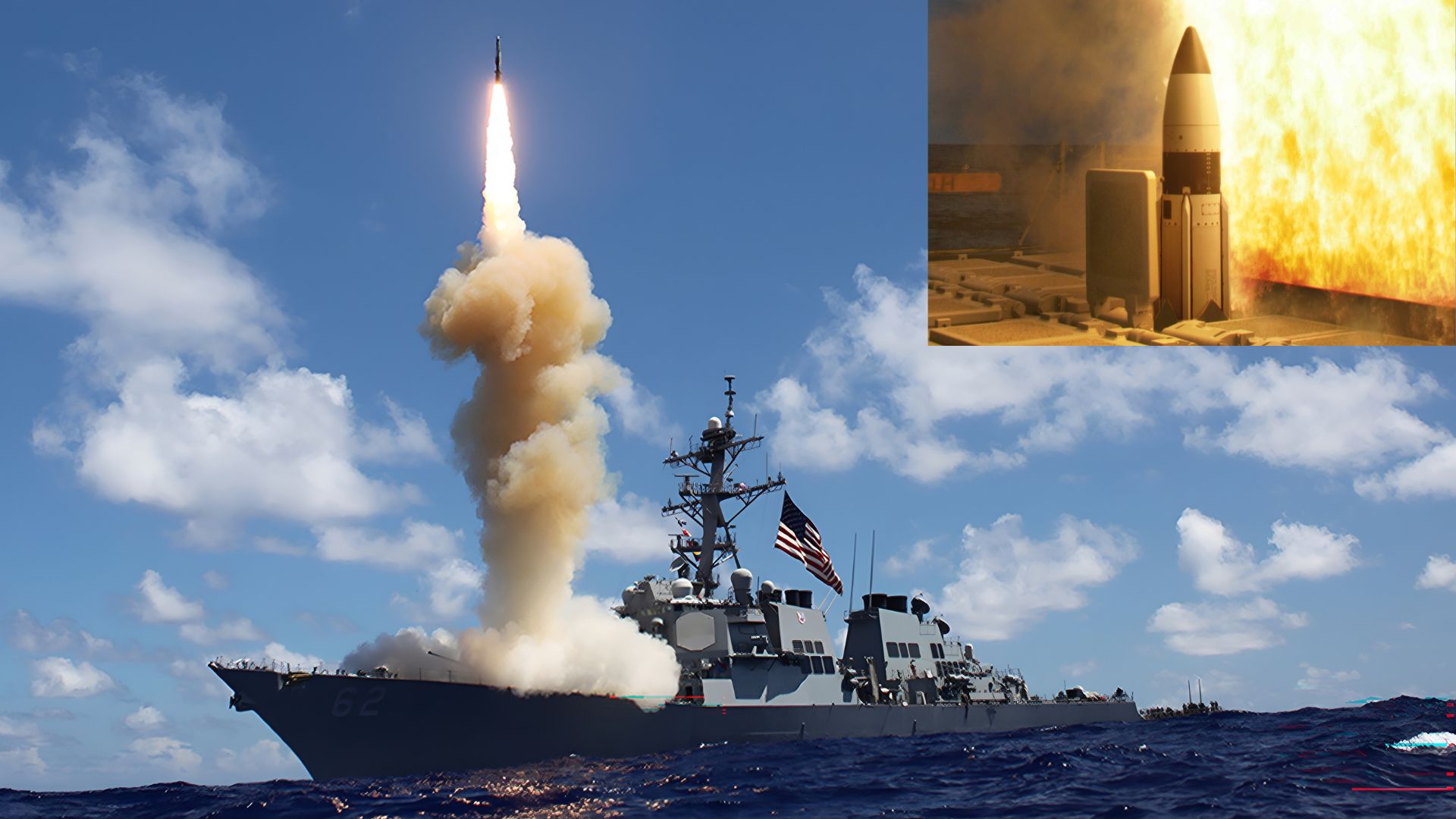
Why avionics and ejectors specifically matter is a function of how the weapon works. The SM-3 intercepts outside the atmosphere during midcourse flight, carries no high-explosive warhead, and destroys the target by direct collision using a kinetic kill vehicle [6]. That kill vehicle separates after a three-stage solid-fuel boost stack finishes, then uses an infrared seeker plus divert and attitude control to close [7]. The missile launches from Mk 41 vertical cells on Aegis ships, with shipboard sensors generating the track before the combat system builds a firing solution [10]. Components that eject stages and run guidance electronics sit on the critical path of that chain, not off to the side of it.
There is a precedent for the model. Boeing previously reached an agreement involving the Department of War and Lockheed Martin to raise production of PAC-3 MSE seekers [13], which suggests the Pentagon is treating component-tier framework deals as a repeatable instrument rather than a one-off.
What to watch: whether the multiyear procurement award actually follows, and at what quantity, since the framework does not carry one [4]; whether Boeing's avionics and ejector rates rise before that award is signed or only after; and whether a third component-tier deal appears on another interceptor program, which would confirm the pattern set by SM-3 and PAC-3 MSE [13].