Science1 publisherNot yet confirmed elsewhere2 min readPublished
Biologists recast the honey bee colony as a single animal with a lifespan of a few years
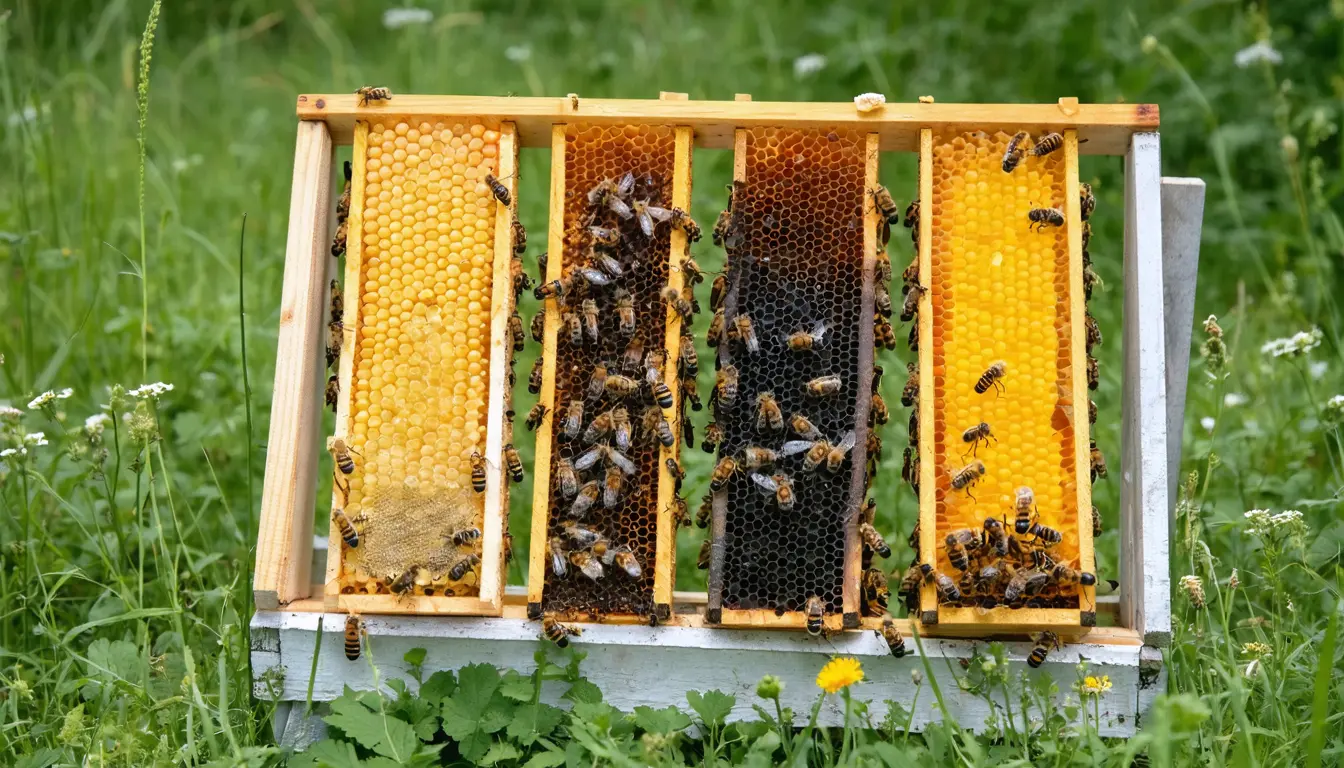
Lund and Oulu biologists argue in Insectes Sociaux that a honey bee colony of tens of thousands of bees is one animal, made of bees as a body is made of cells. Lead author Hannes Bonhoff says that view should change how beekeepers manage queens, swarms and varroa mites.
The Scientist · Science desk
Drafted by a language model from the sources cited here and checked against its claim ledger before publication. How we use AISend a correction
What happened
- Bonhoff likens each colony generation to a mammal: it grows from a single bee through embryo, fetus, juvenile and adult stages, then ages and dies after a few years.
- In a swarm, the queen and half the colony fly off to find a new home, while a new queen stays behind and founds the daughter colony in the old hive.
- Lund professor Niklas Wahlberg says the superorganism concept is long-standing but has now been applied in a genuine biological context for the first time.
Compiled by The ScientistSomething wrong?How this is made
Why it matters
- decision Beekeepers who requeen or suppress swarms on schedule now face a published case that those routines work against colony reproduction and mite resistance, and have to weigh it without outcome data.
- cost Each swarm the authors would let happen takes a hive's queen and half its bees, a loss any change in practice would have to recover through fewer mite deaths or colony collapses.
- constraint If colonies age and die within a few years as part of their biology, colony-loss statistics would need to separate old age from disease and varroa before they can be read as a health measure.
The paper's evidence is the honey bee's own life cycle, reread as the life history of a single animal [1]. The account it argues against counts a colony as a queen, 200 to 300 drones and tens of thousands of workers, each with its own tasks [3]. "We have analyzed what it means for a bee colony to be a single organism, which opens up new insights into the fascinating life of the honey bee," Bonhoff said [10]. Bonhoff recently finished a biology master's at Lund University. His co-author, Heikki Helanterä, is a professor of evolutionary biology and genomics at the University of Oulu [2].
The authors push the mammal comparison furthest on reproduction. "When this superorganism reproduces, the offspring are cared for with great dedication by the parent, in some cases even at the cost of the parent's life," Bonhoff said [11]. "Parental care therefore goes so far that the offspring inherits the mother's nest, while she herself risks her life by swarming away to settle elsewhere," he said [7]. According to the release, the mother colony also helps the daughter learn the dance language and guides it to the most nutritious flowers [8].
The management claim goes further than a change of perspective. "Modern beekeeping methods are based on the idea of keeping the colony young and healthy indefinitely. Our study shows that such interventions fundamentally conflict with the natural reproductive strategy and the ability to cope with parasites," Bonhoff said [13]. He wants the field to develop more sustainable and animal-friendly methods [14].
"Shows" asks a lot of a life-history analysis. The release does not report any comparison of colonies left to swarm against colonies held back, or of requeened colonies against unrequeened ones, on mite loads or survival. Testing the claim would take matched apiaries, one managed conventionally and one allowed to swarm and age, with colony deaths and varroa counts as the outcomes. A mismatch between management and a reproductive strategy is a claim about evolutionary fit. Whether it turns up as dead colonies is a separate question, and answering it needs a control group. I think the frame is a good source of testable predictions. On what has been released so far, it is a thin basis for changing practice in a working apiary.
The study began as Bonhoff's master's thesis at Lund, supervised by Helanterä and by Wahlberg, who is a Lund professor of systematic biology [9]. The release's only assessment of the paper's novelty therefore comes from one of the people who supervised it [9].
What to watch
- A field trial comparing swarm-permitted and swarm-suppressed colonies on varroa loads and colony survival over several seasons.
- Published responses from bee biologists outside Lund and Oulu testing the colony-as-mammal life-history comparison.
- Whether beekeeping associations cite the superorganism frame in guidance on requeening or swarm control.