SINTEF ranks mRNA nanoparticles by immune uptake in fresh human donor blood
Ninety percent of drug candidates that reach human trials are never approved. A Norwegian group argues some of that triage belongs in donor blood, where nanoparticles meet the plasma proteins and immune cells that settle their fate.
The Scientist · Science desk
What happened
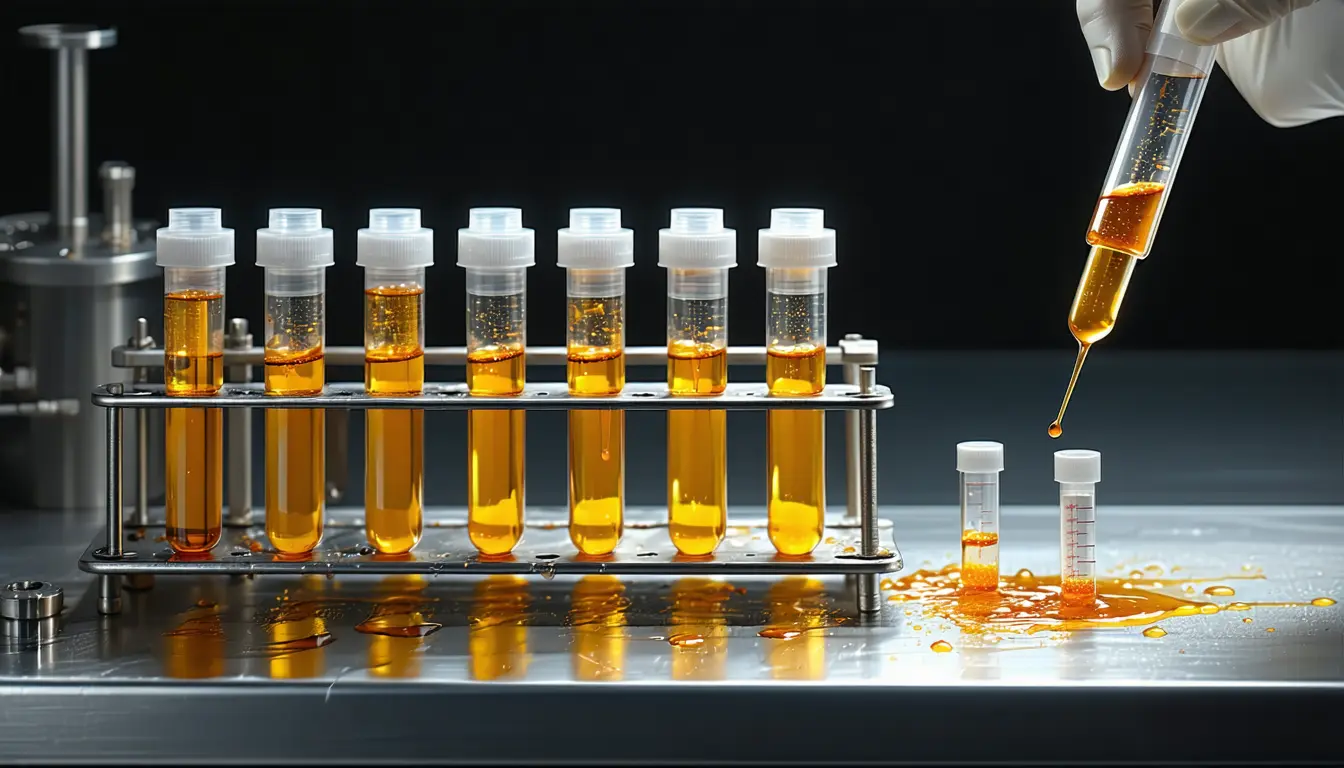
- SINTEF researchers screened different mRNA lipid nanoparticle formulations in fresh human whole blood, following how immune cells in that blood took up the particles and which signal substances those cells then produced.
- The readout separated formulations by how much immune cells absorbed them and by whether they provoked strong or weak activation of the immune system.
- The gap the method targets is the species difference in preclinical work, where a candidate that looks promising in mice can have no effect or cause serious side effects in a patient's bloodstream.
- The work appears in the European Journal of Pharmaceutics and Biopharmaceutics and comes from SINTEF's Department of Biotechnology and Nanomedicine, where the aim is easier development of mRNA drugs.
Why it matters
- decision If the kill decision can be made on human material first, the budget that used to buy an animal study for a doomed formulation buys more formulations instead, which changes what a preclinical plan looks like rather than only when it ends.
- constraint With no donor count, variant count or outcome comparison in the account of the work, a developer cannot yet estimate how many workable candidates this filter would discard, and that is the number a portfolio decision needs.
- capability Programs trying to reprogram T cells inside the patient rather than in a laboratory now have a bench test whose cells are the intended targets, not a stand-in for them.
Culture medium is a chemist's choice, made in a lab. Blood carries its own composition, unchosen: it arrives with the plasma proteins that stick to a lipid nanoparticle's outer fatty layer within moments of injection, and with the circulating immune cells that then decide whether to swallow the coated particle, which is what determines the effect of the medicine downstream [10]. That is the case for running the screen in blood, and it is a decent one: the variable the assay adds back is the variable cell culture takes away.
Take the 90 percent non-approval rate literally and each approved drug sits on top of roughly nine candidates that got as far as human testing and failed [16]. Some of that attrition is biology no bench assay reaches. Some of it is the species mismatch Hak points to, where mouse data flatters a formulation that a human bloodstream will ignore or reject [13]. A human-blood screen cannot touch the first category; it is aimed squarely at the second.
What the published account establishes is discrimination: the readout moves when the formulation changes [1]. What it does not supply, at least not in the account of the work, is a variant count, a donor count, effect sizes, or any comparison between the blood ranking and what the same particles did in an animal or a person [15]. Discrimination is only the necessary condition for a screen; sufficiency is a separate bar, one this account does not clear. What remains unknown is sensitivity: how often a candidate that looks bad in donor blood would have worked anyway. That number is the one a program director actually needs, because a filter with unknown false-negative behaviour quietly deletes options.
Fit between readout and product is where the method will earn or lose its keep. For a candidate whose target cells sit outside the bloodstream, immune capture is a loss channel and a tolerability signal rather than the mechanism of action. For in vivo CAR-T, the example Hak singles out [5], the intended mechanism is engagement with T cells in circulation, since the whole point is to install the cancer-recognizing receptor inside the patient rather than shipping cells out to a laboratory and back [4]. If whole blood is going to move a go/no-go call, that is where it should show up first.
Hak himself calls the test a small piece of the bigger puzzle whose value is deciding earlier whether to continue [8], and his claim for human relevance is the modest one, that findings from human blood may be more relevant than findings in experimental animals [3]. Cheap filtering of unknown sensitivity is still worth something when mRNA has to be wrapped in a particle to survive at all [11] and that particle can be assembled a thousand different ways [12], only a few of which can be put into animals. The condition on that view is one published case where the blood ranking and the in-life outcome agree.
What to watch
- A published comparison showing that variant rankings in donor blood track what the same particles do in animals or patients.
- Whether the ranking holds across donors, since whole blood is a different reagent from every person who gives it.
- Whether in vivo CAR-T programs start reporting whole-blood uptake and cytokine data alongside their animal packages.
Clarity's read
What the record supports and how the coverage leans. The claims behind it follow.
Reality
- Evidence34
- Adoption
- Insufficient
- Hype gap+28
- Incentives68
- Confidence42
Claim ledger
Ranked by verification strength, evidence, and original report placement.
- [1]
The results show the method enables researchers to see which variants of mRNA-LNP had the greatest uptake by immune cells and which triggered strong or weak activation of the immune system.
- [2]
SINTEF researcher Sjoerd Hak says testing with human whole blood outside the body, ex vivo testing, can be a useful addition to today's preclinical testing in laboratory animals.
- [3]
Hak says that since the blood is human, the findings may also be more relevant to what will actually happen in humans, compared to findings in experimental animals.
- [4]
In current CAR-T therapy, T cells are removed from the patient and genetically reprogrammed in the laboratory to carry a receptor that recognizes cancer cells, then injected back into the patient; the field is now working on in vivo CAR-T.
- [5]
Hak highlights CAR-T therapy as an example of medicine for which testing in human whole blood can provide benefits.
- [6]
Researchers at SINTEF's Department of Biotechnology and Nanomedicine tried a new method intended to make it easier to develop new forms of mRNA drugs; the research is published in the European Journal of Pharmaceutics and Biopharmaceutics.
- [7]
Using human whole blood, that is fresh blood containing all blood cells and plasma, the researchers tested different mRNA-LNP particles for how they were taken up by immune cells in the blood, and also looked at which signal substances the cells produced.
- [8]
Hak says the testing is only a small piece of the bigger puzzle, but that it allows you to decide earlier whether it is worth continuing, weeding out bad trial candidates at an early stage and selecting the most promising ones.
- [9]
Of all drugs tested in clinical trials on humans, 90% are not approved, according to Hak.
- [10]
When the particles are injected into the blood, the outer fatty layer binds to proteins in the blood plasma and the nanoparticle encounters immune cells circulating in the blood; whether the immune cell eats the particle, and what happens inside the immune cell afterward, will determine the effect of the medicine.
- [11]
mRNA is unstable, and to be used as a drug it must be packaged in small fat particles called lipid nanoparticles (LNPs).
- [12]
Hak says LNPs can be made in a thousand different ways, that how they are put together is crucial for how the mRNA enters cells and functions as medicine, and that many different variants therefore have to be created and tested.
- [13]
A major reason many drugs fail during testing is the big difference between humans and the animals used in preclinical testing: what looks promising in mice may have zero effect or even cause serious side effects when injected into a patient's bloodstream.
- [14]
mRNA-based drugs are expected to be used to treat disorders including cardiovascular diseases, rare hereditary diseases, autoimmune diseases and cancer.
- [15]
The phys.org account of the SINTEF work reports no number of mRNA-LNP variants tested, no number of blood donors, no effect sizes, and no comparison between the whole-blood rankings and outcomes in animals or humans.
- [16]
A 90 percent non-approval rate implies about nine clinic-stage failures for every candidate that is approved.
Get this ledger inside ChatGPT. Ask about any of our stories and the answer brings its figure, each claim’s verdict and the sources. Free, no account.
Sources
1 independent publisher whose own reporting we read for this story.
- phys.orgBeyond the Petri dish: Testing tomorrow's drugs in human blood
1 article · August 27, 2026
Topics and entities
Follow any of these and your For You feed starts watching them — no settings page required.
Topics
- mRNA TherapeuticsFollow
- Preclinical testing alternativesFollow
- Lipid nanoparticle deliveryFollow
- Immune response profilingFollow
- CAR-T cell therapyFollow