Believers who put reason above church teaching are about twice as likely to lean toward magic
In a 2025 survey of 1,812 US adults, 40% of God-believers who trust reason over church teaching lean toward magic, versus 19% of believers who do not. The link holds only where a religious tie remains, and one survey wave cannot show which way anyone is moving.
The Scientist · Science desk
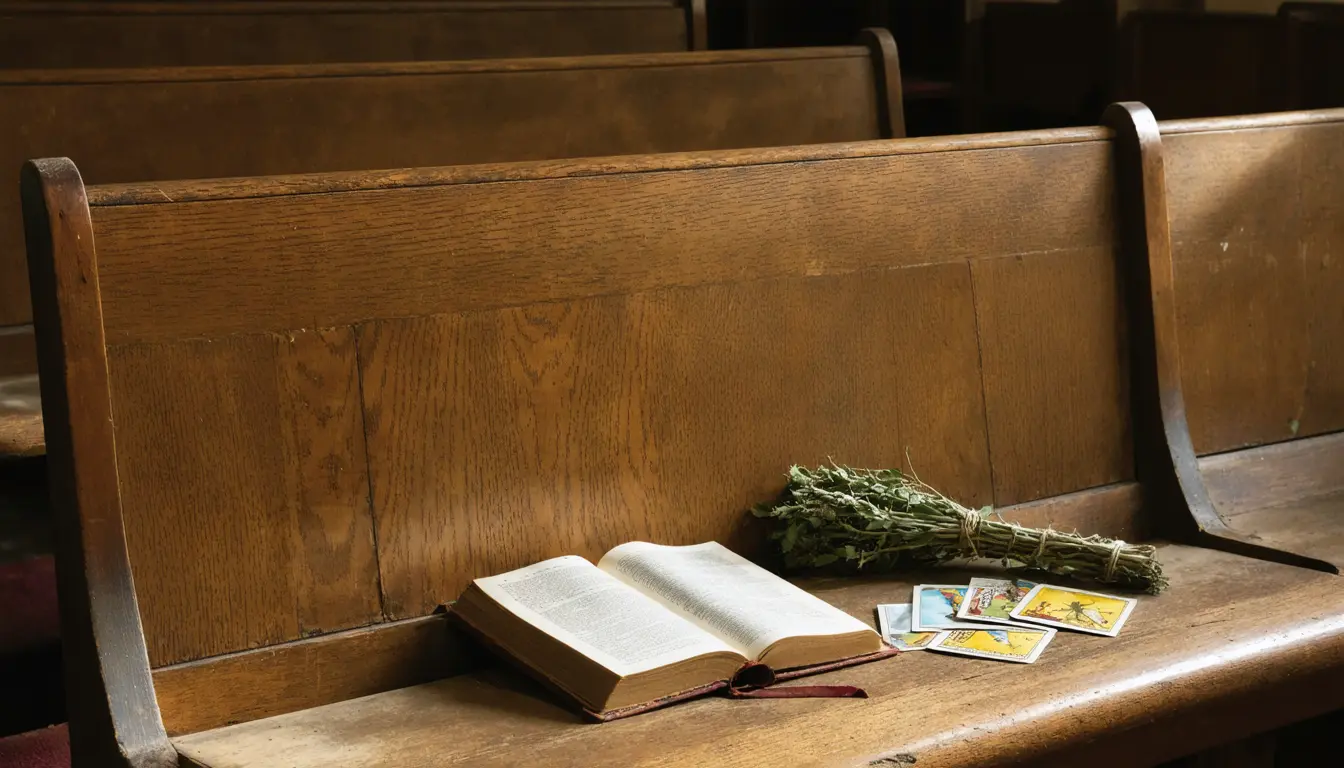
Among people who attend religious services, 28% of those who agree with secular rationalism lean toward magic, versus 19% of those who reject it. Among Americans who believe in God, 40% of those who agree lean toward magic.
| Figure | Value | Note | Claim |
|---|---|---|---|
| Attenders who agree with secular rationalism | 28% lean to magic | 6 | |
| Attenders who reject it | 19% lean to magic | 6 | |
| Believers who agree | 40% lean to magic | 5 |
What happened
- The authors built a four-question scale of secular rationalism: science as the only route to understanding, morality grounded in reason, and spiritual matters interpreted without deferring to religious authorities.
- Magic was six items, including ghosts, curses and talking to the dead, and belief in miracles was measured separately for comparison.
- Among people who attend services, 28% of those agreeing with secular rationalism lean toward magic, against 19% of those who reject it.
Why it matters
- What it limits constraint One survey wave cannot show whether these respondents are leaving religion, returning to it or staying put, so the finding fixes no direction of travel.
- What doesn't add up contradiction Social theory predicts that institutional decline brings an outlook with no room for magic. Among believers who keep a tie, the survey shows the opposite pattern, and for people without a tie it shows no link either way.
- What it limits constraint The authors say some compared groups were small, so the 40% and 28% figures carry more uncertainty than the clean ratio in the headline implies.
The elevated belief in magic shows up only where some religious tie remains. Among believers in God, the gap between rationalists and everyone else is 21 points [13]. Among service attenders it is 9 points [14], less than half as large [15]. For people who never attend or do not believe in God, the authors report that secular rationalism was no longer linked to belief in magic [7].
The analysis appeared in Social Forces in July 2026 [1]. It uses the latest wave of the Baylor Religion Survey, a nationally representative sample of 1,812 adults that Gallup fielded in early 2025 [2]. The authors write that about 18% of Americans believe in God and agree with secular rationalism [9]. If that share holds in the sample as drawn, the 40% figure rests on roughly 330 respondents [16]. The authors say some of the groups they compared were small [8], and fewer than 1% of Americans both disbelieve in God and reject these ideas [9]. For non-believers, then, the comparison group is very thin. The gap is real enough to see, and thin enough that we would not lean on the exact percentages.
The authors offer an explanation. As French sociologist Emile Durkheim wrote in 1912, "The magician has a clientele, not a church." [17] On the authors' reading, magic requires no community of worshippers, no priests and no doctrine, so a believer can take it up while staying in their own church [18].
Age may complicate the comparison. The authors say younger Americans distrust institutions most and, as their data suggest, are likely to believe in both magic and secular rationalism [19]. The article does not say how "lean toward magic" was scored or whether the comparisons adjust for age. If the rationalist group skews young, part of the gap could be age.
The authors also reach beyond their sample. They suggest that many Americans who no longer affiliate with a religion may still believe in tarot, astrology or psychic services [20]. Their support is outside data. Pew counts 29% of Americans as having no religion but only 5% as atheists, and two-thirds of those who say their religion is "nothing in particular" still believe in something beyond the natural world [12].
What to watch
- A panel study that re-surveys the same respondents over time, which the authors say is needed to tell drift from return.
- Whether the full Social Forces paper reports how 'lean toward magic' was scored and whether the comparisons adjust for age.
- Replication in other national surveys, especially for the non-attending group where this analysis found no link.
Clarity's read
What the record supports and how the coverage leans. The claims behind it follow.
Reality
- Evidence55
- Adoption
- Not scored
- Hype gap+20
- Incentives
- Not scored
- Confidence50
Claim ledger
Ranked by verification strength, evidence, and original report placement.
- [1]
The authors published the study in the journal Social Forces in July 2026, analyzing the latest wave of the Baylor Religion Survey.
- [2]
The Baylor Religion Survey wave is a nationally representative survey of 1,812 American adults that Gallup fielded in early 2025.
- [3]
The authors used four survey questions to measure 'secular rationalism': the belief that science is the only way to understand the world, that morality should rest on reason rather than religious teachings, and that people should interpret spiritual matters on their own rather than trust religious authorities.
- [4]
Respondents rated how strongly they believed in six things often called magic that require no god or church, from ghosts and curses to talking to the dead; belief in miracles was measured for comparison.
- [5]
Among Americans who believe in God, those who agree with secular rationalism were about twice as likely to lean toward magic as those who reject it: 40% versus 19%.
- [6]
Among people who attend religious services, the share leaning toward magic was 28% for those who agree with secular rationalism versus 19% for those who reject it.
- [7]
Among people who never attend services or do not believe in God, secular rationalism was no longer linked to belief in magic.
- [8]
Some of the groups the authors compared were small.
- [9]
According to Baylor Religion Survey 2025 data, fewer than 1% of Americans do not believe in God and actively reject these secular rationalist ideas, while about 18% believe in God and agree with them.
- [10]
The data come from a single point in time and cannot show whether these people are drifting away from religion, coming back to it or staying where they are; that would require surveying the same people over time.
- [11]
A long tradition of social theory predicts that as religious institutions decline, a scientific outlook with no room for the supernatural or magic will take their place; about 3 in 10 American adults now claim no religious affiliation, and scholars are still debating whether religious decline will bring decline in supernatural belief.
- [12]
According to the Pew Research Center, 29% of Americans have no religion but only 5% call themselves atheists; most say their religion is 'nothing in particular,' and two-thirds of that group still believe in something beyond the natural world.
- [13]
Among believers in God, the gap in leaning toward magic between those who agree with secular rationalism and those who reject it is 21 percentage points.
- [14]
Among service attenders, the gap is 9 percentage points.
- [15]
The attender gap is about 0.43 of the believer gap, less than half its size.
- [16]
If 18% of the sample believes in God and agrees with secular rationalism, that is roughly 330 of the 1,812 respondents.
- [17]
French sociologist Emile Durkheim wrote in 1912, "The magician has a clientele, not a church."
- [18]
The authors argue that magic needs no congregation, clergy or theology, so believers can adopt it without leaving their church, making it a natural fit for people who believe in God but no longer let institutions define the supernatural for them.
- [19]
Younger Americans distrust institutions most and, as the authors' data suggest, are likely to believe in both magic and secular rationalism.
- [20]
The authors suggest that many Americans who no longer affiliate with an organized religion may still believe in tarot, astrology or psychic services.
Get this ledger inside ChatGPT. Ask about any of our stories and the answer brings its figure, each claim’s verdict and the sources. Free, no account.
Sources
1 independent publisher whose own reporting we read for this story.
Topics and entities
Follow any of these and your For You feed starts watching them — no settings page required.
Topics
- Survey researchFollow
- Supernatural beliefFollow
- Sociology of religionFollow
Entities
- GallupFollow
- The ConversationFollow
- Chris GosdenFollow
- Émile DurkheimFollow
- Pew Research CenterFollow
- Baylor Religion SurveyFollow
- Social ForcesFollow