InvestNot yet confirmed elsewhere1 publisher2 min readPublished
US-backed Tamboran and Daly Waters sell the Beetaloo Basin's first commercial gas
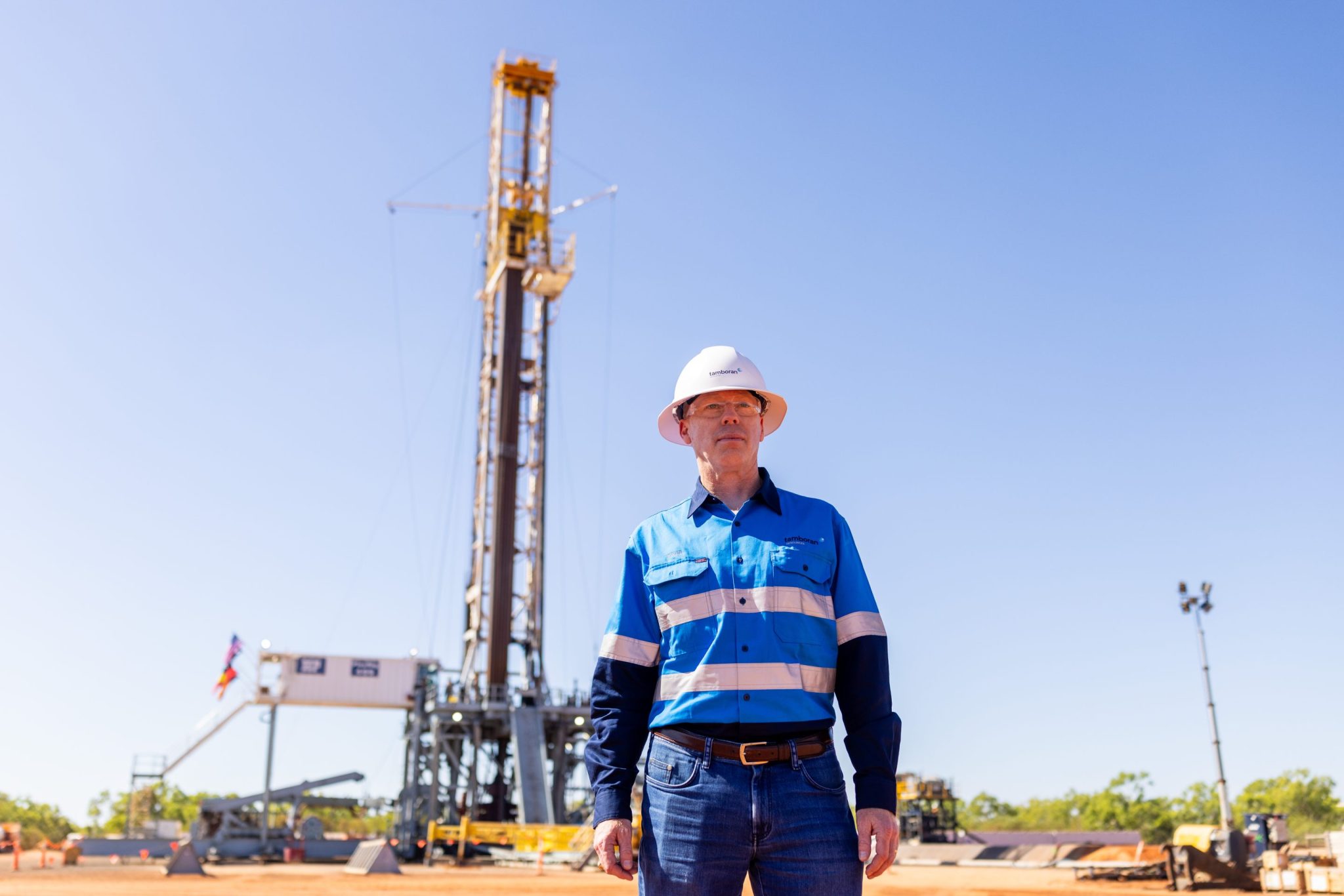
Tamboran Resources and Daly Waters Energy made the Beetaloo Basin's first commercial gas sales in September, Fortune reported. After decades of failed drilling, US capital and crews have got outback shale gas to paying buyers, though whether the wells repay their cost is still open.
The Investor · Invest desk
What happened
- Helmerich & Payne, Baker Hughes and Liberty Energy, cofounded by US Energy Secretary Chris Wright, took ownership stakes in Tamboran.
- Bryan Sheffield's private equity firm, Formentera Partners, invested heavily in Tamboran and Beetaloo Energy and set up Daly Waters Energy as his own Australian subsidiary.
- Fortune reported that Australia could face gas shortfalls as offshore fields dry up, while Qatar is largely offline because of the Iran war.
Why it matters
- exposure Because H&P, Baker Hughes and Liberty own part of their customer, poor well results would hit the value of their equity as well as their future drilling work.
- cost Five years without revenue were paid for by money-losing operators and their backers, so the first sales go toward a bill for wells and infrastructure that has already been run up.
- precedent Bringing service firms in as shareholders to open a basin that has no services is the model Sheffield calls "the way forward" for other countries.
Bryan Sheffield's explanation for why the Beetaloo stalled for decades comes down to suppliers. "The big problem was the lack of service companies and infrastructure. Talking the service companies into moving into this play was key to unlocking it," he said [8]. A rig contractor or frack crew has little reason to move equipment into a remote basin where nobody is producing yet. Equity in Tamboran [5] gave them a reason. The price is that part of their return now depends on the same wells they are paid to drill.
The large companies went first and got little for it. Amoco, later acquired by BP, drilled a test well in 1984 that came up dry [10]. Santos and others drilled with limited results and could not replicate the American formula [11], and the Northern Territory banned fracking from 2016 to 2018 [12]. The money that reached first gas came from Sheffield's private equity firm and the service companies [9]. For comparison, ExxonMobil paid $60 billion for Pioneer Natural Resources, the company run by his father, Scott [15]. Fortune's account does not include production volumes, gas prices, well costs or the sums Formentera and the service companies have put in.
From here the sales can go one of three ways. If the five wells now ramping up [3] hold their rates and more wells follow, the new pipeline and processing plant [7] fill up and the operators become producers with steady customers. If the ramp fades, September ends up as a one-off demonstration that the gas can be moved, and the service firms' stakes turn into the cost of an entry that did not pay. The third case sits between those two. If the supply gap Fortune describes does open [14], onshore gas could fetch prices high enough to carry wells whose economics would be thin on their own.
We think the September sales show the gas can reach buyers. They do not yet show that it pays. Fortune wrote that the basin "still must prove it can become economic over the long term" [13]. Sheffield's own claim is about the top line. "We created revenue. This whole time, the past five years, we have not had $1 coming back to us," he said [4]. Fortune describes the operators as money-losing companies [17]. We would be wrong if Tamboran publishes well rates and costs that cover its drilling bill, or if Helmerich & Payne, Baker Hughes and Liberty Energy add to their stakes once they have seen the production data.
What to watch
- Production data from the five ramping wells, showing whether output holds once the initial ramp is over.
- Any change in the Tamboran stakes held by Helmerich & Payne, Baker Hughes and Liberty Energy.
- Disclosure of prices or volumes in the contracts for Beetaloo gas sold into the Northern Territory.
Clarity's read
What the record supports and how the coverage leans. The claims behind it follow.
Reality
- Evidence40
- Adoption20
- Hype gap+35
- Incentives75
- Confidence45
Claim ledger
Ranked by verification strength, evidence, and original report placement.
- [1]
The first commercial natural gas deliveries from the Beetaloo Basin started flowing to the energy-hungry Northern Territory in September.
- [2]
Partners Daly Waters Energy and Tamboran Resources announced the first natural gas sales ever from the Beetaloo in September.
- [3]
Five wells are now ramping up.
- [4]
"We created revenue. This whole time, the past five years, we have not had $1 coming back to us."
- [5]
Helmerich & Payne, Baker Hughes and Liberty Energy, the fracking company cofounded by US Energy Secretary Chris Wright, all took ownership stakes in Tamboran.
- [6]
Beetaloo Energy recently contracted with Halliburton.
- [7]
A newly built pipeline and gas processing plant now move the Beetaloo gas.
- [8]
"The big problem was the lack of service companies and infrastructure. Talking the service companies into moving into this play was key to unlocking it."
- [9]
After the pandemic, Bryan Sheffield, with his startup private equity firm Formentera Partners, took the lead in the Beetaloo, investing heavily in Tamboran and Beetaloo Energy and starting his own Australian subsidiary, Daly Waters Energy.
- [10]
Amoco, later acquired by BP, drilled a test well in the Beetaloo in 1984 that came up dry.
- [11]
Santos and others drilled in the Beetaloo with limited results but could not replicate the American formula.
- [12]
The Northern Territory imposed a fracking moratorium from 2016 to 2018.
- [13]
The first sales show the basin can deliver, but it still must prove it can become economic over the long term.
- [14]
Australia could face natural gas shortfalls in the coming years as more of its offshore gas fields dry up; Qatar, one of the top three LNG exporters alongside the US and Australia, is largely offline because of the Iran war.
- [15]
Scott Sheffield's company Pioneer Natural Resources was bought by ExxonMobil for $60 billion.
- [16]
"Applying the American [fracking] recipe to another country is the way forward."
- [17]
Fortune described the Beetaloo operators as money-losing companies.
Sources
1 independent publisher whose own reporting we read for this story.
Topics and entities
Follow any of these and your For You feed starts watching them — no settings page required.
Entities
- Tamboran ResourcesFollow
- Daly Waters EnergyFollow
- Beetaloo EnergyFollow
- Beetaloo BasinFollow
- Bryan SheffieldFollow
- Formentera PartnersFollow
- Scott SheffieldFollow
- Pioneer Natural ResourcesFollow
- ExxonMobil Holdings Corp.Follow
- Helmerich & PayneFollow
- Baker HughesFollow
- Liberty EnergyFollow
- HalliburtonFollow
- SantosFollow
- Chris WrightFollow