Bank of Korea governor tells lawmakers private firms should run stablecoins
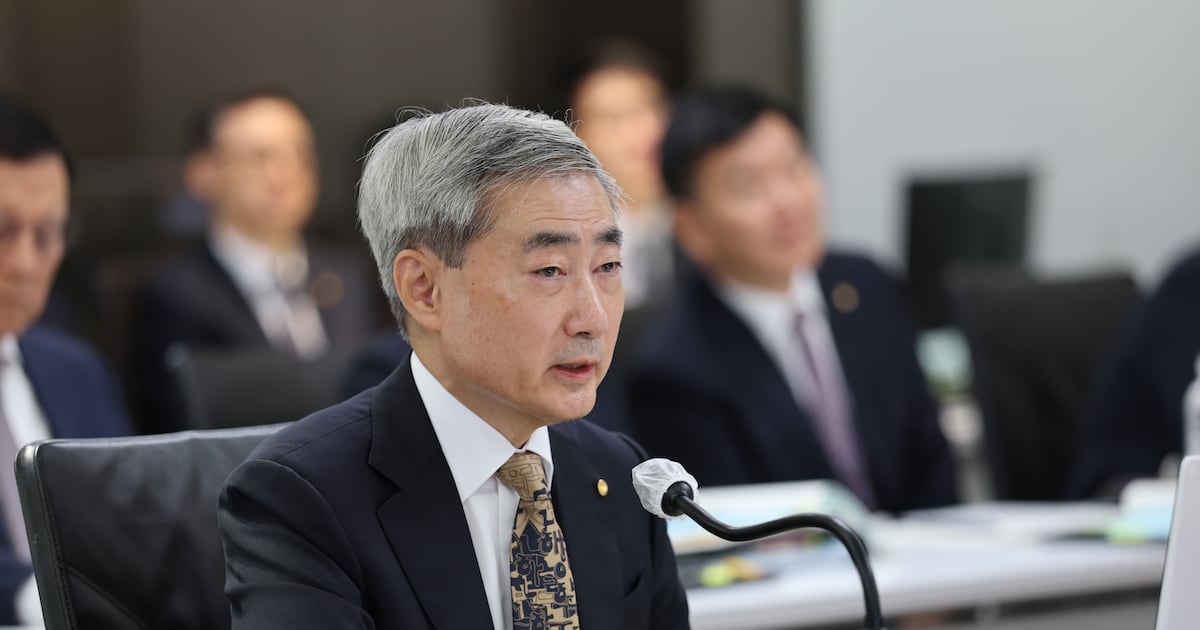
Bank of Korea Governor Hyun Song Shin told lawmakers on October 12 that private companies should issue and run stablecoins. The bank keeps building Project Hangang, and crypto.news reported that the remarks came without licensing rules.
The Investor · Invest desk
Private companies: should run stablecoin issuance. BOK: won't directly operate stablecoins, will voice views. Commercial banks: deposit tokens, accounts in Hangang. Bank-led issuance: no withdrawal announced. Nonbanks: safeguards concern. Legislation: no new licensing rules.
- decision Private companies Should handle stablecoin issuance and operations, Shin told lawmakers, claim 1
- decision Bank of Korea Will not directly operate stablecoin businesses; will express views on the monetary ecosystem, claim 10
- capability Commercial banks Issue deposit tokens and maintain customer accounts and deposits under Project Hangang, claim 5
- precedent Bank-led issuance The governor did not announce that the bank had withdrawn its earlier preference for it, claim 8
- constraint Nonbank companies Bank concern: nonbanks issuing won-backed stablecoins without appropriate financial safeguards, claim 7
- constraint Pending legislation No change established, and no new stablecoin licensing rules announced, claim 11
| Who | How | Kind | Claim |
|---|---|---|---|
| Private companies | Should handle stablecoin issuance and operations, Shin told lawmakers | decision | 1 |
| Bank of Korea | Will not directly operate stablecoin businesses; will express views on the monetary ecosystem | decision | 10 |
| Commercial banks | Issue deposit tokens and maintain customer accounts and deposits under Project Hangang | capability | 5 |
| Bank-led issuance | The governor did not announce that the bank had withdrawn its earlier preference for it | precedent | 8 |
| Nonbank companies | Bank concern: nonbanks issuing won-backed stablecoins without appropriate financial safeguards | constraint | 7 |
| Pending legislation | No change established, and no new stablecoin licensing rules announced | constraint | 11 |
What happened
- Shin spoke at a parliamentary audit at the Bank of Korea's Seoul headquarters, answering questions from independent lawmaker Lee Jun-seok on stablecoins, deposit tokens and CBDCs.
- Project Hangang pairs institutional digital currency with bank-issued deposit tokens to rebuild Korea's two tiers on a blockchain: the central bank settles between institutions and commercial banks keep customer accounts.
- Shin said the Bank of Korea has not considered a general purpose retail CBDC since 2023.
- In July the bank reaffirmed a preference for bank-led consortiums to introduce won-backed stablecoins, citing concern about nonbank issuers operating without appropriate financial safeguards.
Why it matters
- exposure Won stablecoin issuers would run without the central bank operating alongside them, so the safeguards the bank asked for in July fall to the private issuers themselves.
- constraint The remarks leave the issuer question where it was: private includes the bank-led consortiums favoured in July, so they do not by themselves widen access for nonbank firms.
- decision Commercial banks hold a role in both tracks, issuing deposit tokens under Hangang and anchoring the consortiums the bank preferred, and have to decide where to put their own build effort first.
Shin's stated reason is about design. According to crypto.news, he said "it is right for stablecoins to be handled by the private sector" [2]. He described stablecoins as tokens built to circulate on decentralized, permissionless blockchains and to move independently of central bank currency [4]. A product meant to sit outside the central bank's money is a poor fit for the central bank to operate. The bank's effort goes instead to the institutional digital currency system it continues to develop [1].
The bank's part in stablecoins shrinks to commentary. Shin said the bank "would not directly operate stablecoin businesses but would express its views on matters affecting the monetary ecosystem" [10]. We think that is a division of labour. The question of who may issue stays where it was.
Two other readings are open. The first is that the remark previews a softer line toward nonbank issuers. The evidence in the account runs the other way. The governor did not announce that the bank had withdrawn its earlier preference for bank-led issuance [8]. And crypto.news said the parliamentary account did not establish any change to pending stablecoin legislation [11].
The second is that the private market moves ahead on its own schedule whatever the bank prefers. In September, Eugene Investment & Securities signed an agreement with the blockchain company BEATOZ to test stablecoin settlement for tokenized securities subscriptions [9]. The two companies want to find out whether subscription, payment and settlement can be completed in a single blockchain-based process [12].
What to watch
- A pending bill or licensing rule that lets nonbank firms issue won stablecoins without a bank-led consortium would show our reading, that nothing changed on issuers, was wrong.
- Whether the Bank of Korea restates or drops its July bank-led preference in later testimony.
- Whether the Eugene Investment & Securities and BEATOZ test shows subscription, payment and settlement completing in a single blockchain process.
Clarity's read
What the record supports and how the coverage leans. The claims behind it follow.
Reality
- Evidence50
- Adoption
- Insufficient
- Hype gap−10
- Incentives
- Insufficient
- Confidence55
Claim ledger
Ranked by verification strength, evidence, and original report placement.
- [1]
Bank of Korea Governor Hyun Song Shin told lawmakers on October 12 that private companies should handle stablecoin issuance and operations while the central bank continues developing its institutional digital currency system.
- [2]
Shin said "it is right for stablecoins to be handled by the private sector", according to the account of his parliamentary remarks.
- [3]
Shin spoke at a parliamentary audit at the Bank of Korea headquarters in Seoul, responding to questions from independent lawmaker Lee Jun-seok about stablecoins, bank deposit tokens and central bank digital currencies.
- [4]
Shin said stablecoins should be operated by private companies because they are designed to circulate through decentralized blockchain networks, letting digital tokens move independently of central bank currency on permissionless blockchain systems.
- [5]
Project Hangang uses institutional digital currency and bank-issued deposit tokens to reproduce South Korea's existing two-tier monetary system on blockchain, with the Bank of Korea handling settlement between financial institutions and commercial banks maintaining customer accounts and deposits.
- [6]
Shin said the Bank of Korea has not considered general purpose retail CBDCs since 2023.
- [7]
In July the Bank of Korea reaffirmed its preference for bank-led consortiums during the initial introduction of won-backed stablecoins, and had expressed concern about nonbank companies issuing such assets without appropriate financial safeguards.
- [8]
The governor did not announce that the Bank of Korea had withdrawn its earlier preference for bank-led issuance.
- [9]
In September, Eugene Investment & Securities signed an agreement with blockchain company BEATOZ to test stablecoin settlement for tokenized securities subscriptions.
- [10]
Shin said the Bank of Korea would not directly operate stablecoin businesses but would express its views on matters affecting the monetary ecosystem.
- [11]
The supplied parliamentary account did not establish any change to South Korea's pending stablecoin legislation, and the statement did not announce new stablecoin licensing rules.
- [12]
Eugene Investment & Securities and BEATOZ intend to examine whether subscription, payment and settlement can be completed through a single blockchain-based process.
Get this ledger inside ChatGPT. Ask about any of our stories and the answer brings its figure, each claim’s verdict and the sources. Free, no account.
Sources
1 independent publisher whose own reporting we read for this story.
- crypto.newsBank of Korea won’t issue stablecoins: Here’s why
1 article · October 11, 2026
Topics and entities
Follow any of these and your For You feed starts watching them — no settings page required.
Topics
- Stablecoin RegulationFollow
- South Korea digital asset marketFollow
- Central Bank Digital CurrencyFollow
Entities
- Bank of KoreaFollow
- Eugene Investment & SecuritiesFollow
- Project HangangFollow
- BEATOZFollow
- Hyun Song ShinFollow
- Lee Jun-seokFollow
- crypto.newsFollow