Product13 publishers2 min readPublished Updated
Apple backs its heart rate accuracy claim with a 1,400-person study it ran and published
Apple's evidence for calling the Ultra 4's new optical sensor the most accurate in a wearable is a white paper Apple published, drawn from a study where most participants wore competitor watches on the other wrist. DC Rainmaker is testing it outdoors.
The Product Desk · Product desk
What happened
- Apple says its new optical heart rate sensor is backed by a study of 1,400 people, the majority of whom wore competitor watches on the other wrist at the same time.
- The claim that the Series 12 and Ultra 4 have the most accurate heart rate sensing in a wearable rests on a white paper Apple published itself, which includes comparisons against competitor devices.
- Background heart rate now samples every five seconds, 60 times more often than before, and the sensor adds electrode area for ECGs alongside new photodiodes and LEDs.
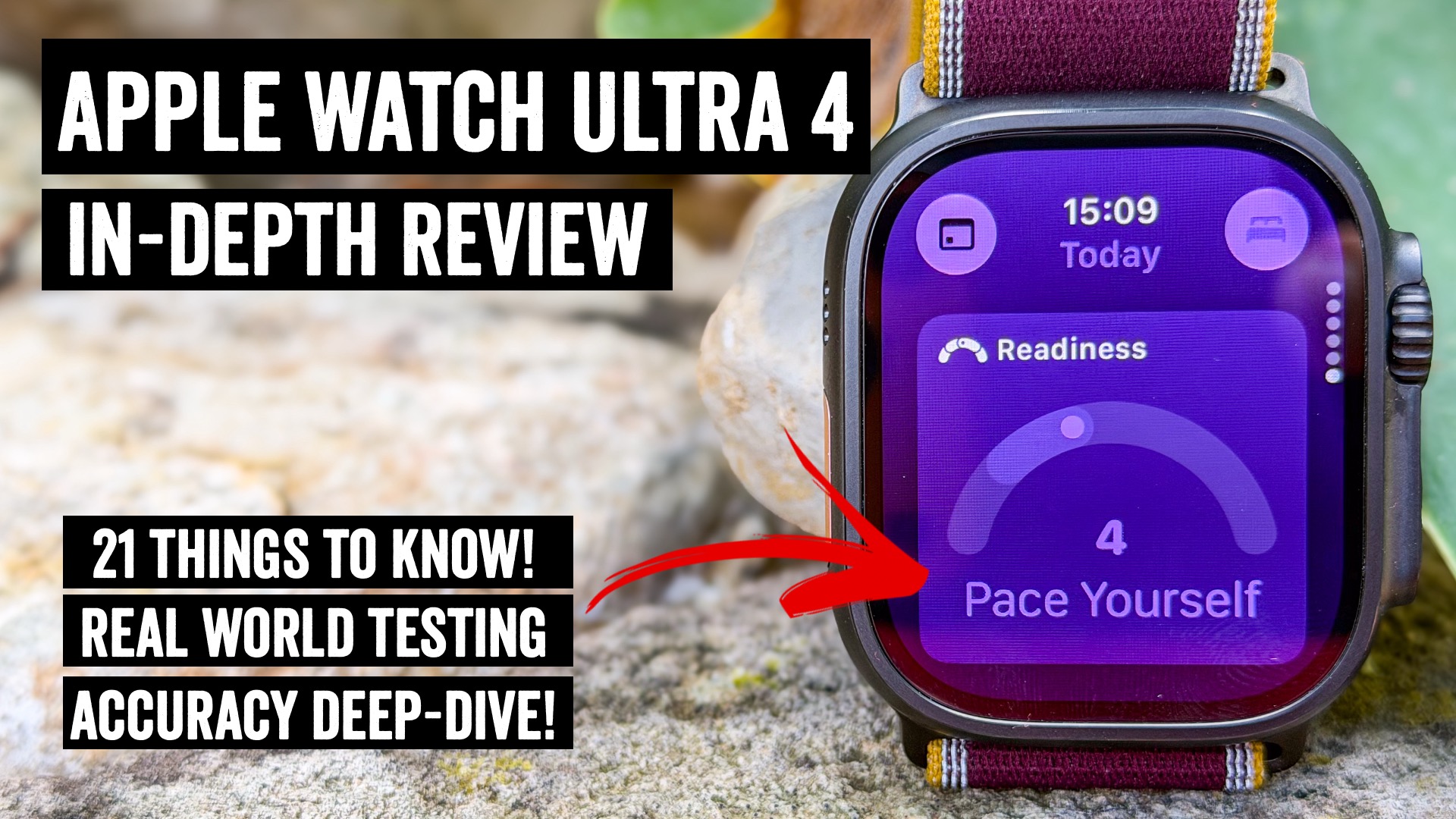
- A Readiness score arrives each morning on a 0 to 10 range with four descriptors, computed from sleep data, Vitals metrics, training load and recent activity.
- Sound Recognition alerts and Instant Shazam work at launch, while Live Rewind and Siri Recap are dated to later in 2026 and the redesigned Health app to later this year in English beta.
Compiled by The Product DeskSomething wrong?How this is made
Why it matters
- constraint Readiness needs seven nights of HRV data before it populates, so whoever hands out these watches has a blank tile to explain for the first week and no way to shorten the window.
- decision Anyone weighing the accuracy claim before independent charts appear is weighing a document Apple wrote and scoped. You can run your own dual-wrist week, or you can wait for the reviewers.
- capability Max Extended Mode records 45 hours of GPS workout without cutting GPS or heart rate fidelity, so a multi-day event stops costing data quality to get runtime.
DC Rainmaker is checking the sensor the way Apple checked it, with another watch on the other wrist. The reviewer wrote that he would "dive into some of those claims in that Apple-backed paper, and most critically, whether they stand up to real-life scrutiny out on the road (and trails, and gyms)" [9]. Until outside comparison charts land, the accuracy claim rests on a paper Apple published, containing comparisons Apple made [2].
The study design carries more weight here than the headcount. Dual-wristing means both watches recorded the same wearer in the same minute, so the comparison does not depend on lining up two separate sessions [1]. The comparison devices the review describes are other competitor watches [1]. An independent tester can add a chest strap to that setup.
The hardware under the glass changed: more electrode surface area for ECGs, new photodiodes below it for workout capture, a new LED array below that for around-the-clock readings, and a thinner bump than before [10]. Where it shows up in a user's data is sample count. One HRV reading every five minutes works out to 288 a day, and the old cadence, 24 times slower, produced about 12 [4][13][14].
Heart rate and Readiness are not the same kind of number. A chest strap or a rival watch worn for the same hour will either agree with the heart rate reading or it will not. Nothing outside the watch can contradict the morning Readiness score, since Apple's model computes it from data Apple's watch collected [5].
Users read the word, decide whether today is a hard day, and get on with it. Product teams tell themselves users open the contributing metrics and restructure the week. The value sits in the first behaviour, and it is measurable in your own logs.
Ask of any number on that watch face whether a second device can contradict it, and whether a different action follows when it moves. Heart rate accuracy answers the first. That is what lets a reviewer with two wrists test a claim built on 1,400 participants at all [1]. Readiness has to answer the second, and the check is whether your training week differed after the score arrived. If it reads 3 on Tuesday and 9 on Wednesday and the plan does not move, the score changed nothing about your week.
What to watch
- DC Rainmaker's dual-wrist accuracy charts, including any chest-strap reference. Those are what would test the white paper's comparisons outdoors.
- Whether Apple's white paper reports per-device error against the competitor watches it compared, so outside testers can reproduce the comparison.
- The Health app beta arriving later this year in English, and whether Health Age and the six-minute VO2Max test hold up in review.