Apple reportedly scraps stubby Apple Pencil designed for the foldable iPhone
Gurman says Apple built and tested a shorter Pencil that clipped to the side of its foldable, then dropped it because that edge is where the hinge and your hand already are. That settles how to scope apps for it.
The Product Desk
What happened
- Bloomberg's Mark Gurman reports in Power On that Apple internally prototyped and tested an Apple Pencil for its foldable iPhone, and that the accessory is unlikely to be released.
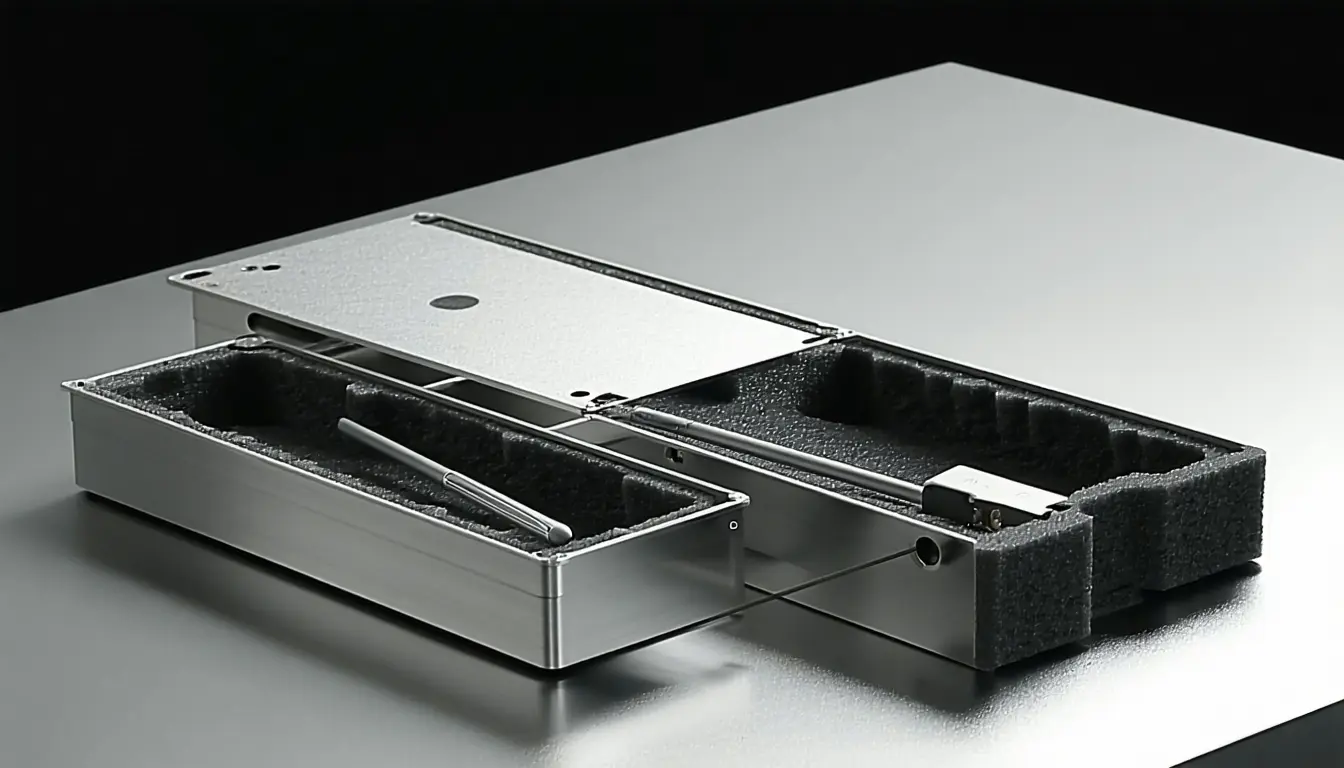
- The unit Apple tested was stubbier than the Pencils it sells for iPads, cut down to match the shorter height of the foldable when it is held open.
- It was designed to attach magnetically to the side of the phone for both storage and charging, the same arrangement Apple already uses on the iPad.
- Digital Trends reports that a pencil clinging magnetically to that side edge could make the device harder to fold and unfold.
- Apple is expected to unveil the foldable at a September 9 event, with the device rumoured to carry the iPhone Ultra name.
Why it matters
- constraint With the inner display's softer top layer named as the blocker, handwriting, markup and precise selection lose their hardware path on this generation no matter how good the app is.
- decision Teams that scoped this device as an iPad mini that folds into a pocket now have to scope it as a large phone whose only supported input is fingers.
- contradiction 9to5Mac puts the shelving down to Apple honouring Jobs on styluses while Digital Trends puts it down to materials, and only one of those has a version a supplier can fix.
- precedent Because the reporting only rules out the first foldable, a stylus stays plausible later, which keeps accessory tooling alive as a speculative line rather than a closed one.
Hold an unfolded book-style phone with two hands and your palms sit along the long edges. That is exactly where Bloomberg's Mark Gurman says the tested Pencil would have magnetically parked, unlike an iPad in landscape, where the stylus rides the top edge and stays out of your grip [11].
The panel raises a separate problem. In 9to5Mac's reading of the Power On newsletter, the stylus would likely have left "unsightly marks" on the more delicate inner screen [7]. Digital Trends describes the same problem in materials terms: a pointed tip pressing on the softer upper layer of a foldable display, leaving traces of the kind fingernails already leave [8]. The pitch for a folding phone is that a bigger canvas invites precision input; the prototype ran into the canvas being the part that cannot take a point.
The two write-ups do not land in the same place on cause, and that difference is the whole planning question. 9to5Mac attributes the shelving mainly to Apple not wanting to contradict the position Jobs took when he mocked smartphone styluses at the 2007 iPhone launch [12][9]. Digital Trends treats it as a hardware limit and is careful to say Gurman's words rule out the accessory for the first foldable, not for later ones, with a stronger display or a softer tip as the unlock [14]. If the blocker is materials, there is a supply-chain answer to watch for. If it is brand positioning, there is no date attached to it at all.
Timing settles the near term either way. 9to5Mac published on August 30, 2026, describing a debut just over a week out [5], MacRumors puts the unveiling on September 9 [2], and Digital Trends refers to the same September 2026 event [6]. That leaves about ten days [10], not enough time for a component with magnets and a charging coil to join a product line.
For anyone with a foldable line item, the categorization worth doing splits into three buckets. Bucket one: what a thumb can drive on the closed device. Bucket two: what needs the open display and fingers. Bucket three: what needs a tip. Digital Trends has been hearing that the unfolded device resembles an iPad mini and carries dedicated multitasking features [15], and that is the belief that put handwriting, markup and precise selection into bucket three on a lot of roadmaps. Gurman's account moves everything in that bucket onto hardware nobody has announced [1].
Bucket two carries a hidden cost even though it looks like a win. Every feature there asks the user to open the device before they can reach it. Judge those on whether people come back in week three, not on minutes logged against the inner screen, since opening a phone to get at a feature is a tax and taxes show up in return rates long before they show up in session counts.
The second-generation question stays genuinely open, and Digital Trends is right that Gurman's language leaves it open [14]. Tooling a case with a pencil loop, or a flow that assumes a tip, is a bet that Apple ships an inner display it is willing to let a point touch.
What to watch
- Whether the September 9 keynote mentions any input accessory for the foldable, or stays silent on the side edge entirely.
- First-party and third-party case listings: a side cutout or magnet array would suggest the mount design survived internally.
- Any Apple disclosure about the inner display's cover layer hardness, which is the blocker both reports point at.
Clarity's read
What the record supports and how the coverage leans. The claims behind it follow.
Reality
- Evidence34
- Adoption
- Insufficient
- Hype gap+24
- Incentives61
- Confidence63
Perspective Coverage
3 publishers- Builder
- Builder 43%
- Operator
- Operator 27%
- Investor
- Investor 30%
Claim ledger
Ranked by verification strength, evidence, and original report placement.
- [1]
Bloomberg's Mark Gurman reported in his Power On newsletter that Apple internally prototyped, tested and considered launching an Apple Pencil for the upcoming foldable iPhone, but that release of the accessory is unlikely.
- [2]
Apple is expected to unveil the foldable iPhone during its September 9 event, and the device has been rumoured to be named iPhone Ultra.
- [3]
The Apple Pencil tested for the foldable iPhone is stubbier than the versions Apple sells for iPads, aligned to the device's shorter height.
- [4]
The Apple Pencil for the foldable iPhone was designed to magnetically attach and charge on the side of the device, similar to how Apple Pencils attach to iPads.
- [5]
9to5Mac's report, dated August 30, 2026, said Apple's first foldable iPhone should be making its debut in just over a week.
- [6]
Digital Trends refers to the Apple September 2026 event as not far away.
- [7]
Gurman noted the stylus likely would have made "unsightly marks" on the much more delicate inside screen of the iPhone Ultra.
- [8]
Digital Trends reports that the pointed end of a stylus could damage the relatively softer upper layer on foldable displays and leave visible marks similar to those left by fingernails.
- [9]
Steve Jobs mocked smartphone styluses when he unveiled the original iPhone in 2007.
- [10]
Ten days separate the August 30, 2026 reports from the September 9 event at which Apple is expected to unveil the foldable.
- [11]
Gurman noted the accessory would have been awkward to hold while using the foldable, because it sticks to the side, versus the iPad where it sticks at the top in landscape.
- [12]
9to5Mac's read is that Apple probably is not launching the accessory so as not to conflict with Steve Jobs' position at the original iPhone launch: "Who wants a stylus?"
- [13]
Digital Trends reports that a pencil attaching magnetically to the side of the iPhone could make it difficult to fold or unfold the device.
- [14]
Digital Trends argues Gurman's words rule out a pencil-like accessory for the first foldable iPhone but not subsequent models, and that Apple might ship one for a future iteration once foldable display technology is physically stronger or a stylus with a softer tip is possible.
- [15]
Digital Trends says it has been hearing for a long time that the foldable iPhone will most likely resemble an iPad mini when unfolded, with additional screen and dedicated multitasking features.
Get this ledger inside ChatGPT. Ask about any of our stories and the answer brings its figure, each claim’s verdict and the sources. Free, no account.
Sources
3 independent publishers whose own reporting we read for this story.
- 9to5mac.comApple reportedly considered launching a new Apple Pencil for iPhone Ultra
2 articles · August 30, 2026
- digitaltrends.comApple apparently tested a stylus for the foldable iPhone, then nixed the idea - Digital Trends
1 article · August 30, 2026
- macrumors.comApple Pencil for iPhone Ultra Was Tested
2 articles · August 30, 2026
Topics and entities
Follow any of these and your For You feed starts watching them — no settings page required.