The $120bn off the books: judge AI datacenter debt on tenants, not on accounting
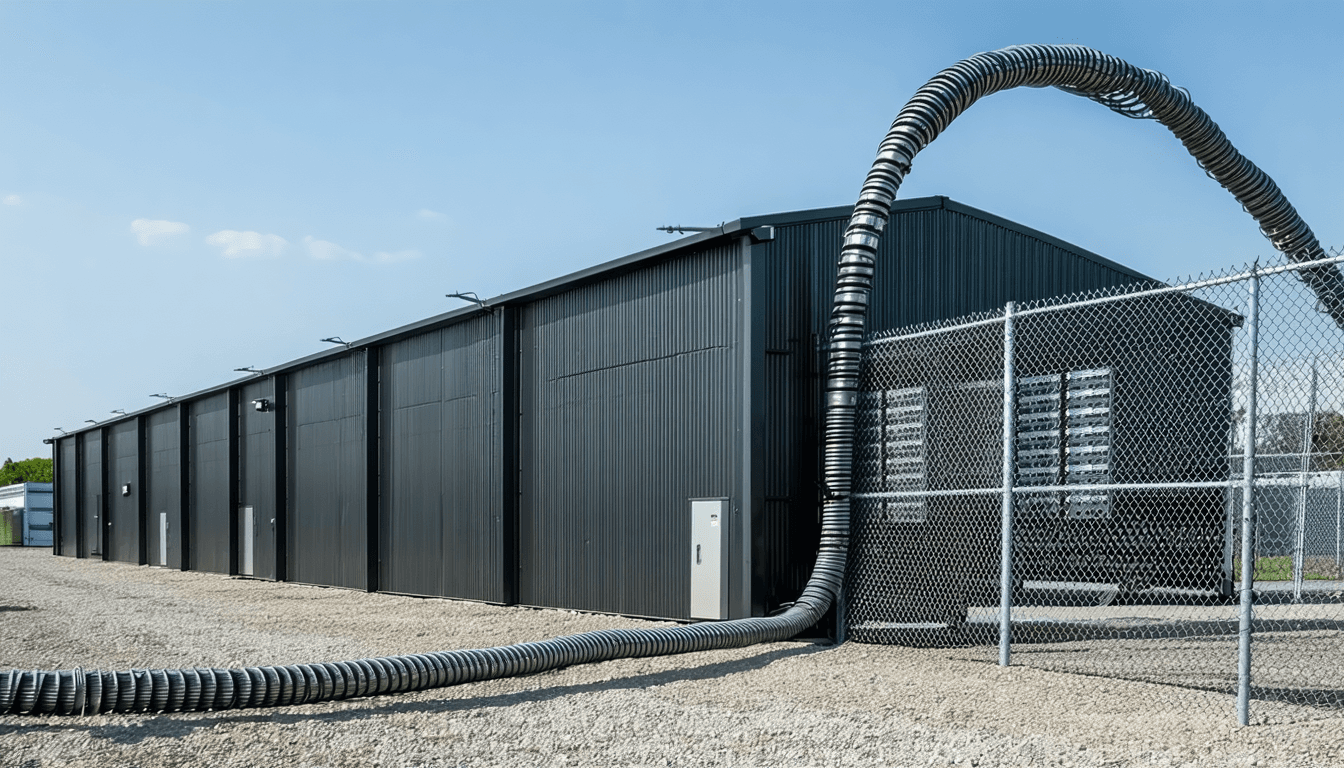
Meta, Oracle, xAI and CoreWeave moved datacenter spending into unconsolidated vehicles. The structure is old and legal. The exposure sits in occupancy, and CBRE puts vacancy at 1.4%.
The Board Room · Leadership desk
What happened
- The Financial Times counted more than $120bn of AI datacenter spending moved off tech balance sheets through special-purpose vehicles by December 2025.
- Gene Marks, writing in the Guardian, says read the footnotes and argue about consolidation, but the Enron comparison does not hold.
- Goldman Sachs puts potential hyperscaler spending on AI and datacenters at $5.3tn through 2030, with private markets taking a growing share of the financing.
Why it matters
- Who has to decide decision Anyone underwriting one of these counterparties has to price the tenant's continued appetite for the building rather than the location of the liability; the consolidation question resolves either...
- Who's exposed exposure If the economics disappoint, the first loss sits with the banks and outside investors who own the majority of the vehicle, not with the sponsor whose books never carried the borrowing.
- What doesn't add up contradiction The defence leans on Bezos calling AI an industrial bubble while resting on CBRE's record-low vacancy: one framing says the capital is mispriced, the other says the space is scarce, and only the...
- What it sets up precedent The biotech version of this financing faded because cheaper money became available elsewhere, not because it detonated, which points to a repricing of private credit as the likelier ending here...
The debt does not go away in these structures; it changes address. The vehicle borrows, banks and outside investors own most of it, and the tenant holds a contract for exclusive and full use of the building once it is finished [2]. That contract is what the lenders underwrote, which is why the accounting treatment is the least interesting part of the file. What they hold is a claim on one occupant with no obvious substitute if that occupant walks.
Scale first. The $120bn the Financial Times counted off balance sheet as of December 2025 [1] is about 2.3% of the $5.3tn Goldman Sachs thinks hyperscalers could spend on AI and datacenters through 2030 [4][12]. Goldman also expects private markets to carry more of that financing as the buildout proceeds [4]. Whatever this structure is, it has not run its course.
The occupancy numbers are the strongest part of Gene Marks's argument in the Guardian, and they are also the part that can turn. CBRE has North American capacity up 36% last year with vacancy still falling to a record 1.4%, and demand outpacing supply in nearly every major market [5][6]. For the vacant share to fall while the base grew that much, leased capacity had to grow by more than 36% [13]. Construction is not the binding number. Absorption is.
Where the Enron comparison misleads is not in its verdict but in its subject. Enron collapsed in 2001 and cost shareholders tens of billions [8], and Marks is probably right that fraud at that scale is not being repeated, given disclosure requirements and scrutiny far heavier than the 1980s vehicles faced [14][15]. But "not fraud" and "not a loss" are separate findings, and his own precedent shows it. Centocor's partnerships were ordinary practice, held at a minority interest, funded by limited partners, with Centocor keeping exclusive rights to the drugs [9]. Some of those drugs failed in clinical testing, and no panic followed because the risk had been spread to the partners [10]. The structure worked as designed, and money was still lost.
Marks's distinction is that a datacenter can disappoint financially without disappearing the way a failed trial does [17], which is why he reaches for Bezos's description of an industrial bubble, the sort that leaves usable assets behind [7]. Fair, though it relocates the question rather than answering it: disappointment then arrives as a resale price on land, power and equipment. Reading the footnotes and arguing about consolidation, as he suggests [16], settles the accounting. It does not tell you how full the buildings are.
What to watch
- CBRE's next read: vacancy lifting off 1.4% would remove the occupancy defence the tenant-demand case currently rests on.
- Any hyperscaler that consolidates a datacenter vehicle, or restates to bring one on balance sheet, resets what the footnotes are worth.
- Pricing on datacenter SPV paper: if private credit gets dearer, the structure dies of cost, as the biotech partnerships did.
Clarity's read
What the record supports and how the coverage leans. The claims behind it follow.
Reality
- Evidence38
- Adoption74
- Hype gap+22
- Incentives55
- Confidence44
Claim ledger
Ranked by verification strength, evidence, and original report placement.
- [1]
The Financial Times reported in December 2025 that tech companies had shifted more than $120bn of AI datacenter spending off their balance sheets through special-purpose vehicles and similar financing structures.
- [2]
The mechanism: the tech firm forms a separate entity that is not consolidated in its financials; the entity raises money from investors, banks and financial firms that own the majority of it and builds the datacenter; a contract gives the tech firm exclusive and full use once built; most of the debt incurred is not shown as a liability on the firm's books.
- [3]
Big datacenter builders including Meta, Oracle, xAI and CoreWeave are raising billions to construct facilities and are not recognising these long-term debt obligations on their balance sheets.
- [4]
Goldman Sachs estimates hyperscalers could spend $5.3tn on AI and datacenters through 2030, and expects private markets to play an increasingly important role in financing that buildout.
- [5]
Developers increased North American datacenter capacity by 36% last year, according to CBRE's North America Data Center Trends H2 2025 report.
- [6]
Vacancy fell to a record 1.4% and demand is outpacing supply in nearly every major market, per CBRE's North America Data Center Trends H2 2025 report.
- [7]
Jeff Bezos calls AI an "industrial bubble", and industrial bubbles leave things behind: railways, fiber-optic cable, factories, and this time datacenters.
- [8]
Enron, the energy firm, failed spectacularly in 2001, causing tens of billions of dollars of losses to its shareholders and contributing to a historic market meltdown.
- [9]
In the 1980s and early 1990s Centocor formed limited partnerships in which it held a minority interest; the partnerships issued debt and took investments from limited partners to fund drug development, and Centocor held the exclusive right to use the resulting drugs. Hundreds of millions of dollars were plowed into these partnerships, and the practice was common in biotechnology at the time.
- [10]
Some of the drugs funded through those partnerships failed in clinical testing, but this did not cause a stock market panic because the risks were spread.
- [11]
The biotech off-balance-sheet financing vehicle eventually became more expensive and less popular because it was easier and more affordable to raise money other ways.
- [12]
The $120bn shifted off balance sheet as of December 2025 equals roughly 2.3% of Goldman Sachs's $5.3tn projected hyperscaler spend through 2030.
- [13]
Leased North American datacenter capacity must have grown by more than 36% last year, because the vacancy rate fell while the total base expanded 36%.
- [14]
Marks argues it is highly unlikely that fraud at Enron's level is being perpetrated now by these companies.
- [15]
Marks says the disclosures required of companies using these structures today are significant, the scrutiny is intense, the investing public is smarter, and today's risks are arguably more recoverable.
- [16]
Marks's conclusion: scrutinise the companies, read the footnotes and argue about consolidation, but do not call them Enron.
- [17]
Today's investors are financing land, buildings, electrical infrastructure and computing equipment; a datacenter can disappoint financially, but it does not disappear the way a drug candidate does when a clinical trial fails.
Get this ledger inside ChatGPT. Ask about any of our stories and the answer brings its figure, each claim’s verdict and the sources. Free, no account.
Sources
1 independent publisher whose own reporting we read for this story.
- theguardian.comAn AI ‘debt bomb’ crisis? No. This isn’t Enron 2.0 | Gene Marks
1 article · August 23, 2026
Topics and entities
Follow any of these and your For You feed starts watching them — no settings page required.
Topics
- AI Data Center FinancingFollow
- Datacenter Capacity and VacancyFollow
- AI Bubble and Debt-Bomb DebateFollow
- Off-Balance-Sheet Accounting and ConsolidationFollow