Science1 publisherNot yet confirmed elsewhere3 min readPublished
Three zoo lions fed whole carcasses every nine days spent nearly three times as long eating
Adelaide University researchers found three Monarto Safari Park lions fed nearly three times as long when whole carcasses joined their feast-and-fast diet. The study covered three males at one park, so other zoos will need to repeat it before it becomes standard practice.
The Scientist · Science desk
Drafted by a language model from the sources cited here and checked against its claim ledger before publication. How we use AISend a correction
What happened
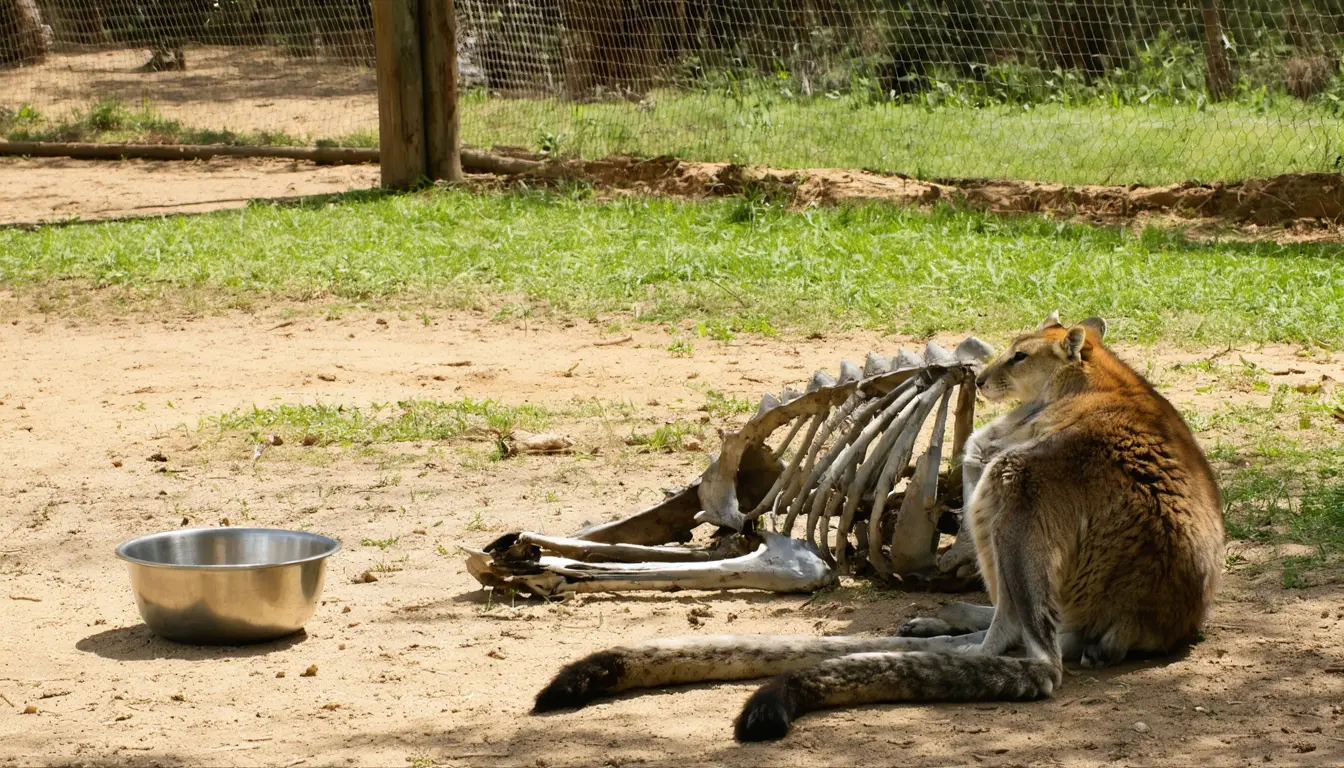
- In the experimental phase the three lions received about 200 kg of carcasses, left out for up to three days before a period of rest and digestion.
- After eating, the lions rested far more, then moved gradually more as the fast went on, a cycle the researchers say matched wild lions.
- Pacing rose slightly over the study, but its biggest jumps came around keeper arrivals and moves between enclosure areas, not with time since the last meal.
Compiled by The ScientistSomething wrong?How this is made
Why it matters
- decision A zoo already running feast-and-fast feeding now has a specific schedule to trial, with one group's evidence that shared carcasses did not set the males fighting.
- constraint Because three lions were compared only against their own earlier behaviour, the result cannot yet support a welfare standard for lions in general.
- decision If pacing follows routine cues more than hunger, keepers trying to reduce it would look at how predictable arrivals and moves are before shortening fasts.
- precedent Evaluations of feeding changes built on short or daytime-only observation would miss the multi-day rest and activity cycle this study recorded.
Lesia Hryhorenko, the lead author at Adelaide University's School of Animal and Veterinary Sciences [16], started from the wild animal. "Wild lions don't eat at the same time every day. They experience natural periods of feasting and fasting depending on hunting success," she said [3]. The study tested that idea on three adult male African lions at Monarto Safari Park, and each lion was its own comparison: the team watched them before carcasses were introduced and again afterward [6]. That design holds the animals and their enclosure constant. It cannot separate the effect of the carcasses from the passage of time. Pacing crept up slightly across the study period [12], and a before-and-after comparison with no parallel group cannot say how much of any change came from the food and how much from the weeks passing.
The near-threefold feeding figure is a ratio. The lions also fed more often and in longer bouts [1], but the release does not give the baseline in minutes, so the gain could be modest in absolute terms or large. Hryhorenko emphasised what the lions did with the extra time. "Providing whole carcasses changes much more than the nutritional content of the diet," she said [10]. "It gives lions the opportunity to engage in behaviors such as tearing, pulling and manipulating food over extended periods, which are important components of their natural feeding ecology." [11]
I think the pacing result is the one keepers should look at first. In carnivores, pacing is a repetitive behaviour often linked to anticipation [15]. If hunger drove it here, it should have climbed as each fast lengthened. It did not do so consistently [12]. The authors conclude it was probably tied more to familiar routines and the expectation of food than to hunger [13]. That is an inference from timing in three animals. A zoo could test it by moving keeper arrival times and checking whether the pacing peaks move too.
Continuous recording is what made that timing visible. Eight infrared cameras ran around the clock for three months [9], producing what the university calls one of the most detailed 24-hour datasets yet for African lions in human care on carcass feeding [17]. Co-author Associate Professor Alexandra Whittaker said the findings show why animal behaviour needs to be monitored over longer periods when zoo management practices are evaluated [14]. The cycle of heavy rest and slowly rising activity plays out over days [2]. A study that watched only feeding days would have recorded the feast and missed the fast.
On this evidence, a nine-day carcass cycle is a reasonable trial for a zoo that already runs feast-and-fast feeding [7]. The case for a standard needs more animals. All three were male, and the finding that carcass days brought no extra aggression [4] comes from one group of three. Whether a pride with females shares a carcass the same way would take a separate experiment.
What to watch
- A replication at another zoo, especially one with females or a mixed pride, using a similar carcass cycle.
- The full paper's baseline feeding times in minutes, needed to size the near-threefold increase in absolute terms.
- A test that shifts keeper arrival times to see whether pacing peaks move with them.