Science1 publisher3 min readPublished
A zoo welfare case for 'good stress' rides on London's first pelican chicks in 360 years
The enrichment prescriptions cost almost nothing and fit what is known about how breeding gets triggered, but the hatching carrying the argument is one uncontrolled event with three candidate causes.
The Scientist · Science desk
What happened
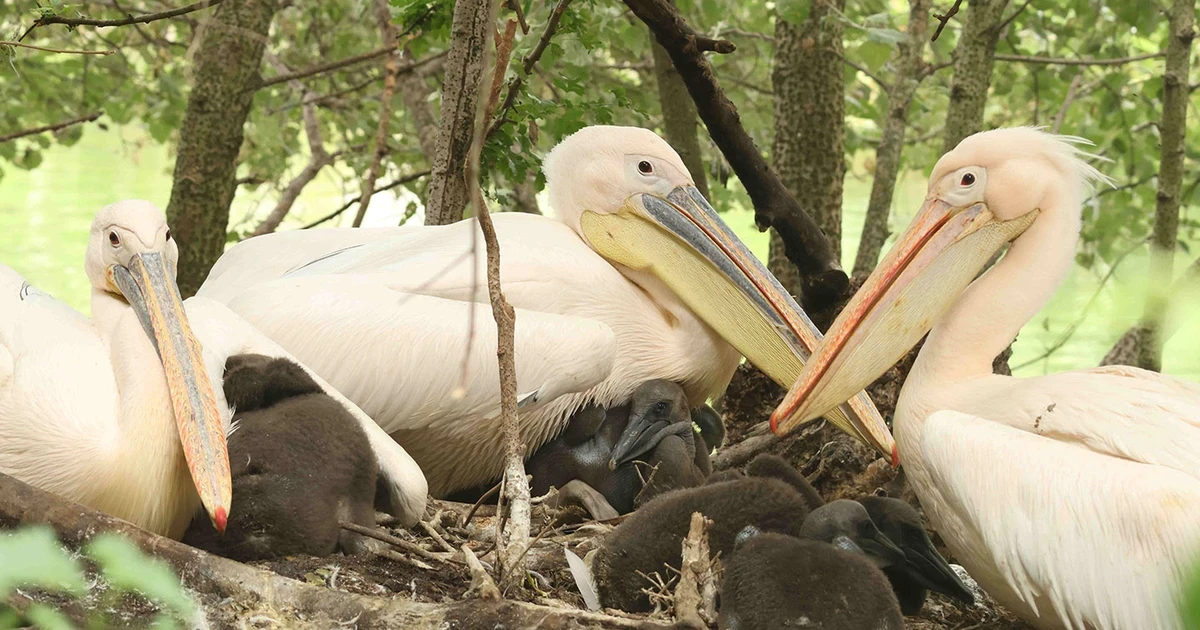
- Pelicans have been kept in St James's Park in London for 360 years, and the current flock this summer produced the first chicks ever to hatch in the park.
- The researcher describing the case attributes it to a coincidence of the heat wave, the flock's social dynamics and the compatibility of the individual birds, conditions that had not aligned before.
- The same researcher's recent evaluation of positive stress in zoo and aquarium animals concluded that it contributes materially to the well-being of captive animals.
- The recommended measures are small and routine: food hidden in varying places, new scents and materials, soil, bark and sand underfoot, moved ropes and branches, and seasonal planting.
- Supporting evidence includes a 2021 study finding that zoo meerkats still perform sentinel duty despite the absence of any predators to watch for.
Compiled by The ScientistSomething wrong?How this is made
Why it matters
- constraint With three candidate causes behind one outcome, the pelican case cannot tell a curator whether to change the substrate, the temperature or the roster of birds, so it motivates an enrichment programme without validating one.
- decision Because these changes need staff attention rather than capital, the choice they force on a zoo is whether to log what happens afterwards, since nothing about the cost forces a record.
- capability A checklist of meaningful, chosen and surmountable gives inspectors something to score in an enclosure before any outcome is known, which is harder to satisfy by simply buying more enrichment items.
- contradiction Framing comfort as the sector's wrong target sits badly with the author's own remark that many zoos already provide these challenges, which makes this a refinement of existing practice rather than an indictment of it.
Breeding is the useful part of this story, because it is the thing comfort alone does not buy. Pelican reproduction in captivity is demanding: the environmental and social conditions have to arrive together, and the birds have to meet cues that stimulate courtship and nesting rather than simply be kept unbothered [3]. A hatching is therefore evidence that something in the setting changed in a way the birds could act on.
The difficulty is what changed. The researcher, writing at phys.org, names three likely contributors at once: the heat wave, the flock's dynamics, and the compatibility of the individual birds [4]. That is one outcome tied to three candidate causes, with no comparison flock to weigh them against. Set against 360 years of pelicans on the same lake with no chicks [1][2], the park's record is a single hatching in roughly 360 years of opportunity [1]. That is enough to generate a hypothesis and not enough to test one. If the heat wave did most of the work, the enrichment programme is the wrong lesson drawn from the right bird.
The vocabulary has a related problem. Eustress is defined as the beneficial response to a stressor [5], which means the label is applied once the outcome is already known, and a stressor followed by a good result gets called good stress. The more testable contribution in the review is its forward-looking checklist: is the challenge meaningful to the animal's ecology, does the animal have a choice about engaging with it, and can it actually overcome it [9]. Those three questions can be scored before anyone knows how the animal fares, which is what separates a design standard from a story told afterwards.
The supporting evidence is behavioural rather than outcome-based. A 2021 study found that zoo meerkats retain the sentinel behaviour of their wild counterparts even with no predators around, which the author reads as a sign that the opportunity to perform such behaviour still matters [11]. What that does not tell you is whether meerkats given lookout posts and buried food end up healthier, longer-lived or more fertile than meerkats that are not. The argument needs the behaviour to persist, but persistence on its own is not a measurement of welfare.
The prescriptions themselves are modest, and deliberately so. Hide food in different places, change scents and natural materials, vary the ground underfoot, move the ropes and branches, let planting shift with the seasons, and above all break the routine, because food that always appears in the same place at the same time asks the animal to decide nothing [8]. The author also notes that many zoos already do much of this [10], which puts the paper some distance from a charge that the sector picked the wrong target; it is asking for deliberate attention to the difficulty of the challenge.
Cheapness cuts both ways. An intervention with no capital cost is easy to adopt and equally easy to adopt without measuring, and provision counts, so many scatter feeds per week, will stand in for outcomes until someone records the outcomes. The claim that biologically relevant challenge belongs in enclosure design is plausible on ecological grounds and low-risk to act on [6][7]. The pelicans show that something changed and chicks followed; they do not yet show that the enrichment itself was what changed.
What to watch
- Whether the flock nests again in a cooler summer, which would begin to separate the heat wave from the flock's social composition.
- Whether the meaningful-choice-solvable test is turned into a scored welfare audit with published outcome measures rather than counts of enrichment provided.
- Whether anyone runs a within-zoo comparison, with matched enclosures, on the meerkat and clownfish setups the review recommends.