Science1 publisher2 min readPublished
Lab-made honeybee silk film largely breaks down in healing wounds, CSIRO and Adelaide find
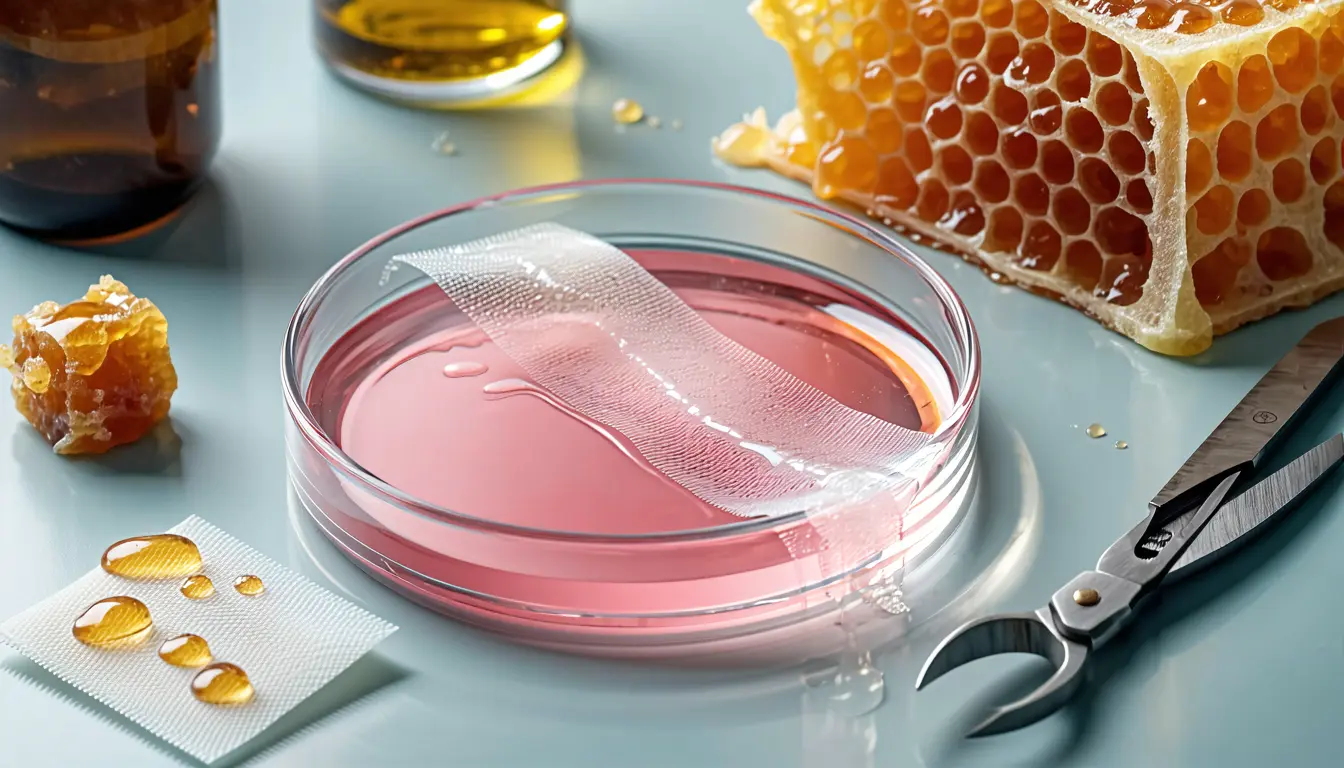
CSIRO and Adelaide University found lab-made honeybee silk films were well tolerated in healing wounds, with much of the film breaking down in place. Versions engineered to fight infection in chronic wounds are the next stage and were outside this study.
The Scientist · Science desk
Drafted by a language model from the sources cited here and checked against its claim ledger before publication. How we use AISend a correction
What happened
- The study, published in the Journal of Biomedical Materials Research Part B, examined how the films interact with acute wound healing in vivo.
- CSIRO developed and produced the recombinant silk film, while Adelaide University supplied wound-healing expertise and ran the laboratory tests.
- Honeybee silk is a protein that larvae use to build protective structures in the hive, and it differs from spider and silkworm silk.
- Chronic wounds affect an estimated 450,000 people in Australia each year and cost its health system more than $6 billion annually, according to the release.
Compiled by The ScientistSomething wrong?How this is made
Why it matters
- capability Dressings that degrade inside the wound could be taken off less often, and the researchers say that would spare delicate new tissue the disturbance of removal.
- constraint Evidence from acute wounds does not establish how the film behaves in the infected chronic wounds the team is aiming at, so the safety result covers a narrower use than the pitch.
- cost Rural and remote patients now carry the burden of frequent dressing changes and specialist trips to capital cities, and Antipov expects them to gain most if the dressings work.
The film tested here was the base material. The infection-sensing and drug-release features are still plans [6][7]. Johnston, the CSIRO lead researcher, described the next step. "Now we know the material doesn't impact the overall healing process, we're excited to move to the next stage and start building materials that help prevent infections," she said [13].
Antipov, of Adelaide University's Future Industries Institute, explained why the plain film had to come first. "Wound healing is a very complicated process, and we need to understand how a new material behaves in that environment before we can start adding more sophisticated functions to it," she said [14]. She summarised the result this way: "What we've shown is that this honeybee silk material is biodegradable and well tolerated by the body, and importantly, it does not stop the wound from healing" [15].
A finding that a material does not stop healing is a comparison. How much it proves depends on the comparison group and how many wounds sit in each arm. The release does not say what organism was tested, how many wounds were treated, what they were compared with, or how much film was left at the end. It says "much" of the film broke down gradually [4].
Earlier CSIRO studies, from more than a decade of work on honeybee silk as a biomaterial, found it strong, flexible, biodegradable and safe in biological applications [12]. The new paper extends that record to the inside of a healing wound [1].
The later features depend on how the silk is made. Because CSIRO produces it recombinantly in the lab, researchers can change its protein sequence [6]. According to the release, that can be done without breaking the material's structure [11]. "Think of the film as a building material that we can redesign at the molecular level," Johnston said [16]. "We can potentially build specific instructions into the silk so that, in the future, a dressing could respond to the conditions in a wound rather than act as a passive barrier" [17].
The thing this doesn't tell you is whether an engineered film will behave like the plain one. I think each new sequence makes a new material, and Antipov's argument for testing the base film first applies again to every version that follows [14].
What to watch
- The full paper's methods: the organism tested, the number of wounds, the control arm, and how much film remained over time.
- First results from the engineered 'smart' dressings, and whether an edited protein sequence is tolerated as well as the base film.
- Any test in chronic or infected wounds, the setting the team says it is targeting.