Science1 publisher2 min readPublished
X-ray scans at Berkeley Lab catch NASA heat-shield materials as they char and hollow out
NASA and Berkeley Lab researchers imaged heat-shield materials in 3D as they broke down at up to 900 degrees Celsius, using X-rays and a neural network. Engineers now have a record of how ablation starts, though their design simulations have yet to use it.
The Scientist · Science desk
Drafted by a language model from the sources cited here and checked against its claim ledger before publication. How we use AISend a correction
What happened
- Artemis I's uncrewed test flight showed unexpected charring and uneven loss of heat-shield material that pre-flight simulations had not predicted.
- The team trained a generative adversarial network to turn rapid intermediate-resolution scans into high-resolution 3D records, so it did not have to choose between scan speed and detail.
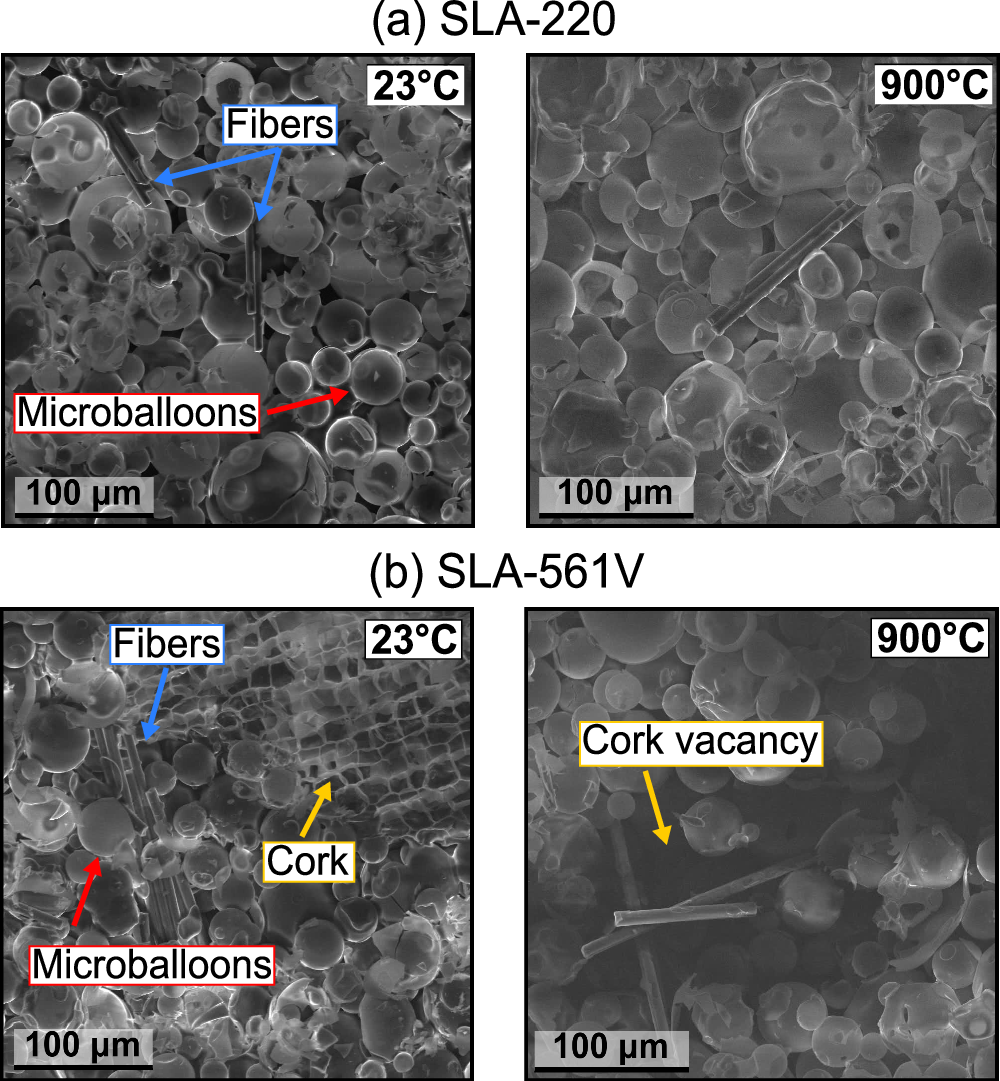
- In SLA-561V, the ground-cork filler vaporized quickly on heating and left hollow voids in the material.
- SLA-220, a silicone-elastomer material, degraded into interconnected, branching microchannels that let hot gases vent rapidly through the shield.
Compiled by The ScientistSomething wrong?How this is made
Why it matters
- capability Modellers can now follow the order in which voids and channels form inside a heated ablator; with only before-and-after samples, that sequence had to be inferred.
- constraint What the scans show applies to the onset of breakdown in still gas. Behaviour at peak reentry heat and under airflow still has to come from other facilities or from flight.
- decision Engineers choosing between cork-filled and silicone ablators can now weigh how each one fails inside, and the phys.org account says those differences shape reentry performance.
Reentry heats a shield's material to about 1650 degrees Celsius [5]. The Berkeley chamber stops at 900 degrees, the temperature at which heat-shield material begins to break down [6], so the tests run 750 degrees below flight conditions [17]. Researchers can set the pressure and the mix of gases around a sample. Air velocity, though, appears to be missing from the chamber's capabilities, according to the phys.org account [7].
Within those limits the experiment is well built. Ablation works by passing reentry heat into pieces of the shield that then fall away and carry the energy off [3], so the events that matter happen inside the material while it is hot. Until now engineers mostly saw a sample before testing and again afterward [1]. Here the sample sits in the heated chamber while X-ray micro-computed tomography records 3D images of its structure as it breaks down [8].
The thing the account doesn't tell you is how the network's output was checked. The detail in each high-resolution record is produced from a coarser scan [14], so the fine structure of the voids and channels is partly the network's reconstruction. The obvious reference to compare it against is a slow, full-resolution scan, the kind that risks missing changes as they happen [13].
The technique has already been used widely. "Nearly every major NASA ablative heat shield material has been studied with this technique at the Advanced Light Source, including those relevant to the Artemis and Mars entry missions," said Vishnu Oruganti, one of the lead researchers [9]. Oruganti was formerly a Ph.D. student at the University of Illinois at Urbana-Champaign and is now at NASA's Johnson Space Center [10].
In my view these images are the input the design codes need. So far, though, the advance is in imaging. The researchers have not yet updated the simulations engineers use to calculate how heat shields will behave [15].
What to watch
- A published comparison of the GAN reconstructions against full-resolution micro-CT scans of the same samples.
- Heat-shield simulations updated with the void and channel data, and whether they reproduce the uneven charring seen on Artemis I.