Science1 publisher2 min readPublished
Reviews of Geophysics synthesis maps how wildfire smoke changes chemically as it travels
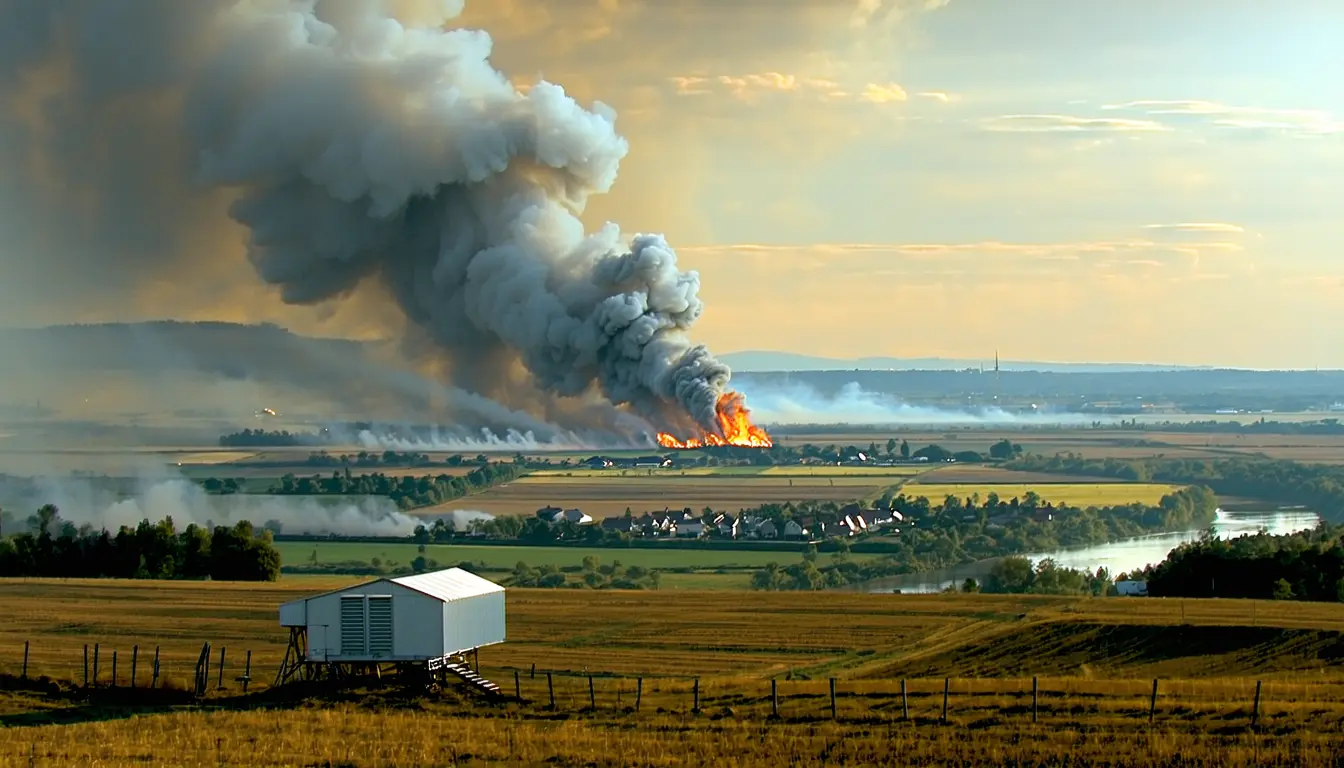
Authors of a Reviews of Geophysics paper argue wildfire smoke keeps reacting as it ages, so downwind air can carry pollutants the fire never emitted. Air-quality forecasts and exposure estimates improve when they model that aging, the authors write.
The Scientist · Science desk
What happened
- Near the flames, newly emitted compounds react quickly, and farther downwind the smoke mixes with surrounding air and forms secondary species, a process the authors call plume aging.
- Depending on fire intensity and weather, a plume may disperse close to its source or rise high into the atmosphere and travel far from it.
- The review pays particular attention to light-absorbing black and brown carbon and to organic particles that change as smoke ages.
Compiled by The ScientistSomething wrong?How this is made
Why it matters
- constraint An air-quality model that carries a fire's initial emissions downwind unchanged cannot produce the ozone and secondary organic aerosols that form inside the plume, so it will miss part of what arrives.
- exposure Sampling close to a fire can misdescribe what a distant community breathes, so exposure estimates have to be built for the smoke as it arrives, not as it left.
- constraint Satellites cannot see reactions and some downwind changes cannot be measured directly, so forecasts of aged smoke will depend on modelled chemistry that is only as good as the aircraft and ground data used to test it.
The review's lead author, answering questions for Eos, describes the goal as the question that smoke concentration alone cannot answer: "What are people and ecosystems actually exposed to as smoke travels?" [2][5] Fires emit carbon dioxide, carbon monoxide, methane, nitrogen oxides and volatile organic compounds, and some fuels add ammonia and sulfur species [12]. The particles include soot, organic material, ash and trace metals [12]. Downwind, some of those compounds are consumed while others become more abundant or change their properties [6].
Other pollutants appear only after the smoke has left the fire. Reactions inside the plume can generate ozone and secondary organic aerosols [14]. "A plume is not chemically uniform or static," the lead author said [16]. The authors write that accounting for in-plume chemistry improves air-quality forecasts and estimates of downwind exposure, and that it supplies evidence for health guidelines and fire-management decisions [7].
The complication for forecasters, in my view, is that the chemistry depends on what burned. A forest, a grassland and a building release different pollutants [3]. The review brings the chemical pathways together to explain why smoke from different fuels, locations and weather conditions behaves differently [18].
The evidence comes from watching smoke at different ages. Research aircraft sample in and around a plume at several distances from the fire, while ground stations measure gases and particles continuously as smoke passes [8]. Comparing those readings shows which compounds were emitted, which were reduced and which formed [8]. That comparison is the closest the field gets to following one parcel of smoke as it ages. Filters collected during fires are analyzed later for additional particle components, and laboratory burns let researchers examine selected fuels under known conditions [9]. Satellites map how a plume spreads and track some long-lived species, but they cannot detect reactions [10]. Atmospheric models combine these observations to test chemical pathways and to study changes that cannot be measured directly [11]. "Each method reveals different pieces of the same evolving chemical system," the lead author said [17].
The thing this doesn't tell you is the size of the effect. The Eos summary does not include figures for how much a plume's composition changes between the fire and a downwind community, or for how much better a forecast does when it models that aging. The paper is a review, and its contribution is gathering known chemical pathways in one place [1][18].
What to watch
- Field campaigns that put numbers on how much plume composition changes with distance from the fire for a given fuel type.
- Whether operational air-quality forecast systems add in-plume chemistry for aging smoke, and how their downwind ozone and particle forecasts then compare with ground-station readings.
- Whether smoke health guidelines begin to treat aged downwind smoke separately from fresh smoke near the fire.