White House weighs Treasury permission for US firms to use sanctioned tankers on lawful cargo
The Trump administration is discussing easing sanctions on some shadow-fleet tankers to curb record freight rates, Reuters reported. Under one option, US companies would apply to Treasury before using them; no mechanism is final.
The Engineer · Build desk
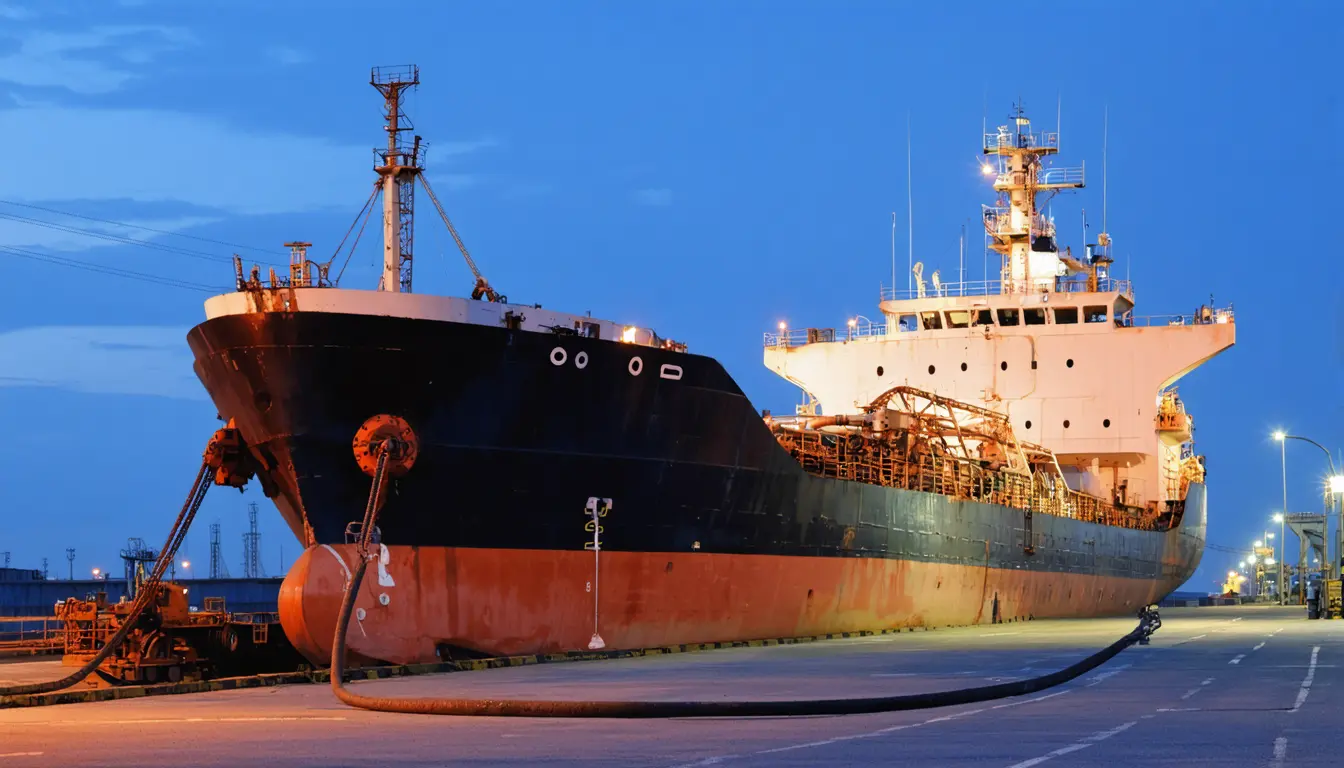
US firms would apply to Treasury to use the vessels; a permit does not automatically bring insurance, ports or all routes; per Energy Aspects, freight rates hurt US oil exports; fuel prices are a political risk before 3 November 2026 midterms; the UK wants tighter curbs on shadow-fleet services.
- constraint US companies Would have to apply to the US Treasury for permission before using such vessels, claim 4
- constraint Vessels with a US permit A US permit does not automatically give access to insurance, port services or all international routes, claim 11
- cost US oil exports Per Energy Aspects, Chris Wright spoke of freight rates that hurt their competitiveness, claim 7
- exposure The administration High fuel prices are a political risk ahead of the midterm elections on 3 November 2026, claim 6
- contradiction United Kingdom Calls for tighter restrictions on services that help shadow-fleet vessels operate in violation of sanctions, claim 9
| Who | How | Kind | Claim |
|---|---|---|---|
| US companies | Would have to apply to the US Treasury for permission before using such vessels | constraint | 4 |
| Vessels with a US permit | A US permit does not automatically give access to insurance, port services or all international routes | constraint | 11 |
| US oil exports | Per Energy Aspects, Chris Wright spoke of freight rates that hurt their competitiveness | cost | 7 |
| The administration | High fuel prices are a political risk ahead of the midterm elections on 3 November 2026 | exposure | 6 |
| United Kingdom | Calls for tighter restrictions on services that help shadow-fleet vessels operate in violation of sanctions | contradiction | 9 |
What happened
- One option would let the vessels carry only cargo that US restrictions do not already prohibit, and the talks do not cover a general lifting of the embargo on sanctioned oil.
- Energy Aspects said Energy Secretary Chris Wright has talked about easing tanker restrictions to lower freight rates that hurt US oil exports, and that he rejected any intent to support Russia.
- High fuel prices are a political risk for the administration ahead of the US midterm elections on 3 November 2026.
- The talks follow a temporary easing of sanctions on Russian diesel, which drew criticism from Zelensky, European politicians and some Republican senators.
Why it matters
- constraint A Treasury permit settles US law only. Insurance, port services and routes are separate approvals, so any freight relief depends on parties the permit does not bind.
- decision A US company that wants the extra capacity would have to apply to Treasury before using a vessel, and the permit would not secure insurance or port access for it.
- exposure mezha.net's account says the move could widen differences between allies over how sanctions apply to maritime shipping.
According to Reuters, as relayed by mezha.net, US companies would have to apply to Treasury before using the vessels [4]. A per-user permission gives Treasury a decision point on every use. We think that is how the option keeps some enforcement leverage while still adding ships. The account does not include a vessel list, the conditions for permits or a start date [12].
The White House expects extra tankers on legal routes to lift supply, including from the Persian Gulf, and to cut logistics costs [5]. The target is record freight rates [2]. For a permit to show up in those rates, the ships have to be usable. The account says some of the vessels are old and have technical and insurance problems [10]. It adds that insurance, port services and access to all international routes do not come automatically with a US permit [11]. British and European restrictions may keep hampering the vessels in ordinary shipping [10].
Those restrictions are heading the other way. The UK is calling for tighter limits on services that help Russian shadow-fleet vessels operate against sanctions [9]. London and Washington would be taking opposite positions on the same class of ships.
In our view Treasury's permit is one approval among several. Insurance, port services and British and European restrictions sit outside the permit [11][10]. That makes the freight case the weaker half of the plan, since it needs several parties to cooperate before a rate moves. We would revise that if the permit conditions, once published, deal with insurance and port access.
What to watch
- Whether Treasury publishes a vessel list, permit conditions and a start date.
- Whether insurers and port operators accept permitted tankers, and whether British and European restrictions change.
- Whether record freight rates move once any permits are issued.
Clarity's read
What the record supports and how the coverage leans. The claims behind it follow.
Reality
- Evidence30
- Adoption
- Insufficient
- Hype gap−10
- Incentives60
- Confidence45
Claim ledger
Ranked by verification strength, evidence, and original report placement.
- [1]
The Trump administration is discussing easing US sanctions on certain tankers that earlier carried oil or oil products from Russia, Iran and Venezuela.
- [2]
According to a US official cited by Reuters, the aim is to increase available tanker capacity and restrain record-high sea freight rates.
- [3]
The idea is not a general lifting of the embargo on sanctioned oil; one option would let the vessels carry only cargo that US restrictions do not themselves prohibit.
- [4]
To use such vessels, US companies would have to apply for permission to the US Treasury Department, according to Reuters.
- [5]
The White House expects that admitting additional tankers to legal routes will help increase supplies, including from the Persian Gulf, and reduce logistics costs.
- [6]
High fuel prices are a political risk for the administration ahead of the US midterm congressional elections on 3 November 2026.
- [7]
According to research firm Energy Aspects, Energy Secretary Chris Wright spoke of possibly easing tanker restrictions to lower freight rates that hurt the competitiveness of US oil exports, and rejected any intent to support Russia.
- [8]
The discussion follows a temporary easing of sanctions on Russian diesel, which drew criticism from Ukrainian President Volodymyr Zelensky, European politicians and some Republican senators, who argue extra Russian energy revenue can fund the war against Ukraine.
- [9]
The United Kingdom is calling for tighter restrictions on services that help vessels of Russia's shadow fleet operate in violation of sanctions.
- [10]
Even with US permits the effect on freight rates may be limited: some of the vessels are old and have technical and insurance problems, and British and European restrictions may keep hampering their work in ordinary shipping.
- [11]
A US permit does not automatically give a vessel access to insurance, port services or all international routes.
- [12]
At the time of the Reuters report this was a discussion, not a finally approved mechanism; no full list of vessels, conditions for permits or timeline for the policy has been announced.
- [13]
mezha.net concludes that a possible Washington decision could widen differences between allies over the application of sanctions to maritime shipping.
Get this ledger inside ChatGPT. Ask about any of our stories and the answer brings its figure, each claim’s verdict and the sources. Free, no account.
Sources
1 independent publisher whose own reporting we read for this story.
- mezha.netСША розглядають послаблення санкцій проти суден «тіньового флоту»
1 article · October 14, 2026
Topics and entities
Follow any of these and your For You feed starts watching them — no settings page required.