Invest1 publisher3 min readPublished Updated
The SPR Falls Below 300 Million Barrels, And With It A Free Option You Were Holding
US emergency crude stocks are at their lowest since 1983, according to NPR. Prediction markets moved the odds of a record crude price by December 31 from 10% to 12.5%.
The Investor · Invest desk
Drafted by a language model from the sources cited here and checked against its claim ledger before publication. How we use AISend a correction
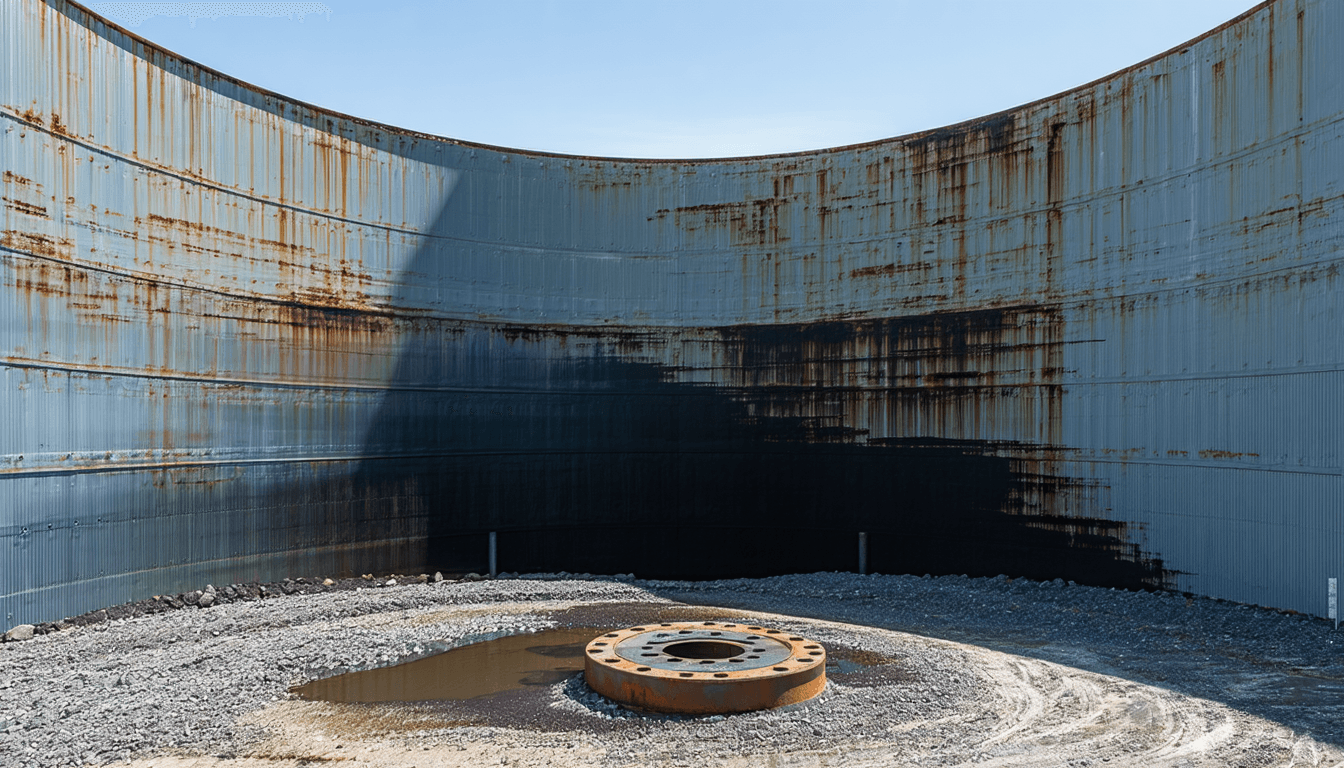
What happened
- The US Strategic Petroleum Reserve holds under 300 million barrels for the first time since 1983.
- US oil reserves have reached their lowest level in over four decades.
- The SPR is the nation's emergency crude-oil stockpile, established in the 1970s to mitigate crude shortages and price shocks.
- The current low reserve level raises concerns about the US ability to manage future supply disruptions, especially amid tight global oil supplies this year.
- The probability of crude oil reaching a new all-time high by December 31 has edged up from 10% to 12.5% over the past week.
Compiled by The InvestorSomething wrong?How this is made
Why it matters
The US Strategic Petroleum Reserve now holds under 300 million barrels, the first time it has been that low since 1983, according to NPR [1][2]. The reserve was built in the 1970s specifically to blunt crude shortages and price shocks, which means the instrument the government would normally reach for in a disruption is now the smallest it has been in more than four decades [2][3].
That is the whole story, and it is enough. For anyone with energy-linked costs, a fuel surcharge pass-through, or a hedging programme, the SPR has functioned as an unpriced option: a credible threat of state supply that shaved the top off spike scenarios. Nobody paid a premium for it and nobody booked it as an asset. It is thinner now, and the thinning is structural rather than a week of weather.
The market response so far is modest and worth reading precisely. The probability of crude reaching a new all-time high by December 31 rose from 10% to 12.5% over the past week in the prediction-market data reported by Crypto Briefing, which is a 2.5 point move and a 25% increase in relative odds [5][6][11]. Note what that still says: the same market puts 87.5% on no new record by year end [7]. This is not a repricing of the oil complex. It is a small upward drift in the tail, which is exactly what you would expect when the buffer against tails gets smaller and nothing else changes.
Crypto Briefing frames the reserve level as a signal markets may read as a potential supply constraint, alongside the usual drivers [9]. Geopolitical tension and OPEC production decisions remain the variables that actually set the near-term path, and the reserve level changes how much either one costs you when it moves against you [8]. The publication also notes that global supply has been tight this year, which is the condition under which a thin buffer stops being an accounting detail [4].
Be clear about what this material does not establish. There is no refill schedule here, no purchase price, no target level, and no statement of how far below 300 million barrels the reserve sits or how fast it got there. There is no claim that a shortage is imminent. What is established is a level and a comparison year, plus a small shift in one probability estimate [1][5].
The operator consequence is a budgeting question rather than a trading one. If your energy exposure is unhedged because spikes have historically been capped, the historical cap is a weaker assumption than it was, and the honest response is to price the hedge and decide, not to assume the option is still there. If you are already hedged, the cost of rolling that protection is more likely to drift up than down while the reserve stays at this level.
Watch the reserve level itself for further movement in either direction, since a refill campaign and continued drawdown carry opposite messages about federal appetite [10]. Watch OPEC production policy and developments in producing regions, the two inputs that determine whether the thin buffer is ever tested [8][10]. And watch demand: the same publication flags shifts in global oil demand as a critical indicator as supply conditions evolve [10].