Invest1 publisher3 min readPublished
Wright sends crude traders to 10 million barrels a day of workaround routes
The US Energy Secretary told oil markets on September 13 not to bank on an Iran breakthrough and to lean on alternative transit already moving about 10 million barrels a day, with Hormuz itself running above 9 million against 17 to 20 before the strikes.
The Investor · Invest desk
What happened
- US Energy Secretary Chris Wright told oil markets on September 13 to stop pricing in a diplomatic breakthrough with Iran over the Strait of Hormuz, because one is not coming anytime soon.
- He pointed traders to alternative transit routes already handling roughly 10 million barrels a day of crude and refined products as the more reliable bet for the foreseeable future.
- Wright put current flows through the strait at over 9 million barrels a day under US naval escort, with additional volumes rerouted through pipeline infrastructure.
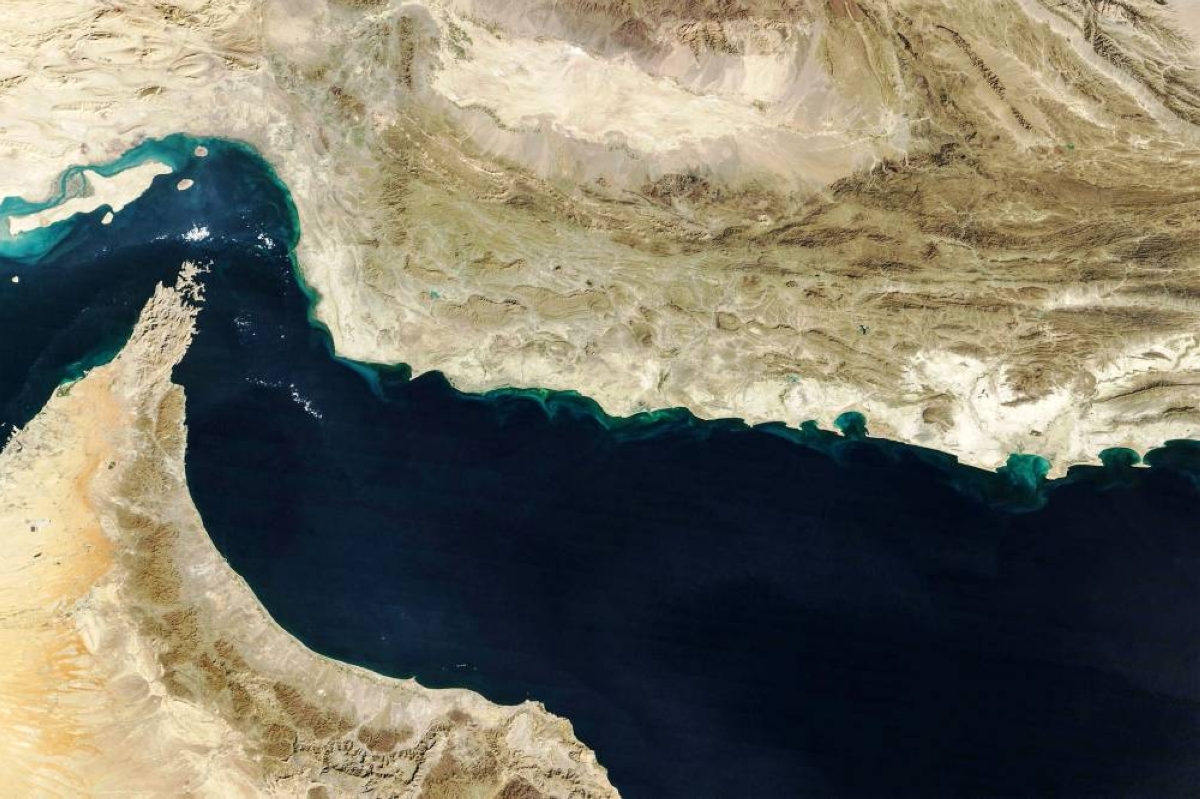
- Hormuz normally carries 17 to 20 million barrels a day, roughly a fifth of world petroleum consumption, through a passage barely 21 miles wide at its narrowest point.
Compiled by The InvestorSomething wrong?How this is made
Why it matters
- constraint The workaround has a ceiling set by pipeline capacity and voyage length, so barrels displaced by any further cut at Hormuz have nowhere cheap to go.
- exposure Every barrel in the corridor is exposed to a US deployment decision, because tanker insurance rates for the strait track the escort's presence.
- decision Desks sizing risk into this week's Oman round have Washington on record telling them to discount it, so their near-term positioning turns on how long the escort holds.
- cost Keeping roughly 10 million barrels a day on workaround logistics buys added transit time and shipping charges, and that sits in the delivered price of those cargoes.
Add the two figures Wright gave the market and the total is about 19 million barrels a day: over 9 through the strait under US naval escort, roughly 10 on alternative routes [8][3][13]. Hormuz alone moved 17 to 20 million before the strikes [4]. Wright did not say how much of that 10 million was already moving on those routes before US and Israeli forces struck Iran earlier in 2026 [18][6].
Take the throughput on its own. Over 9 million against a normal 17 to 20 is 45 to 53 percent of the pre-strike range [14]. Since the strikes the strait has averaged between 7 and 11 million a day even with US naval protection in place [7], so Wright is describing the upper half of that band [17].
The same figures imply a world petroleum market of 85 to 100 million barrels a day, since Hormuz at 17 to 20 is put at roughly a fifth of consumption [4][15]. The 8 to 11 million a day now missing from the strait is 8 to 13 percent of that [16]. Most of those barrels still arrive, by pipeline or around the Arabian Peninsula, later and at a higher freight cost [8][10].
That leaves the escort. Cryptobriefing's account says that if naval support were reduced, insurance rates for tankers transiting the strait would spike, raising the cost of every barrel that moves through the corridor [11]. Iran is reportedly due in Oman around September 14 and 15 to discuss temporary shipping arrangements with Gulf nations, partly to reduce the need for military escorts [9]. Washington is telling traders to discount that meeting [1][2], and the publisher concluded from the advice to lean on existing workarounds that the US expects no meaningful near-term result [19].
The Oman round produces a temporary passage framework, and the breakthrough Wright told traders to ignore prices in within days [9][1]. Or escalation pushes throughput toward the 7 million floor of the observed band, and the workaround, capped by pipeline capacity, has no room to absorb the difference [7][10][12]. Or the escort thins for reasons that have nothing to do with Iran, and insurance repricing lifts the delivered cost of every transiting barrel with no change in physical volume [11].
On this evidence I would price escort duration ahead of deal odds. The roughly 10 million on alternative routes is bounded by pipe capacity and voyage length [10][3], while the 9 million through the strait is a function of who is sailing alongside it [8]. The counter is straightforward, and it is why I would not size that view heavily: a temporary arrangement between Iran and its Gulf neighbours is cheap for both sides to sign, needs no American signature, and is on the table this week [9].
What to watch
- Whether the Oman round on September 14-15 produces even a temporary passage framework for tankers.
- Whether Hormuz throughput slides from above 9 million barrels a day toward the 7 million floor of its post-strike band.
- Any change in US naval escort posture in the strait, since insurance quotes for the corridor move with it.