LeadershipNot yet confirmed elsewhere1 publisher3 min readPublished
UNDP says developing countries are running out of money to shield up to 130 million people from $100 oil
UNDP's No Time to Recover report says governments shielding up to 130 million of the world's poorest from high oil prices are running out of money. With conditions expected to worsen into spring, the cost of $100 oil is moving from state budgets onto households.
The Board Room · Leadership desk
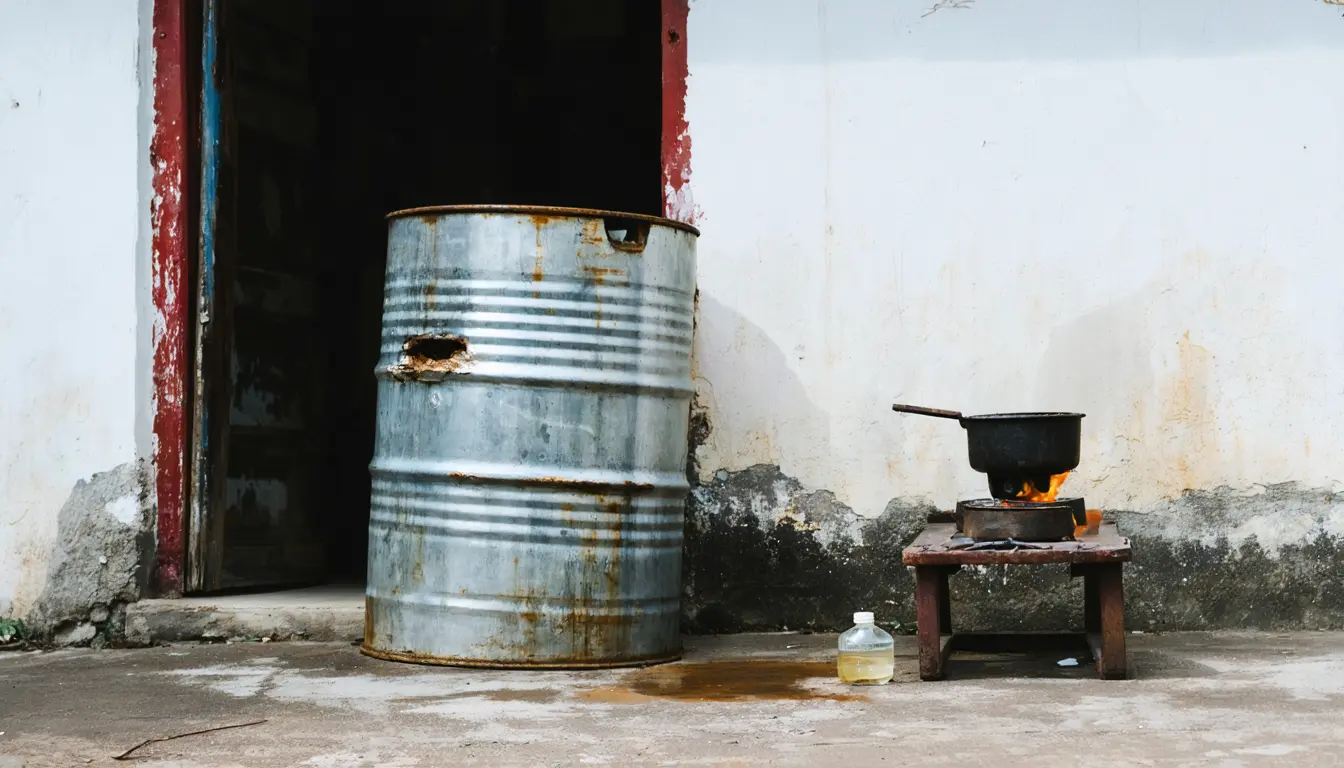
Up to 130 million of the world's poorest have been shielded from high prices; many are now at risk as governments run out of resources. Governments with no fiscal space let price hikes flow through. Bond financing costs 9%. El Nino is expected to cause widespread crop failures.
- exposure Up to 130M of world's poorest Shielded from high prices by emergency government measures; many now at risk as governments run out of resources, claim 5
- decision Developing-country governments Fiscal space 'completely eaten up', so countries are letting price hikes flow through, claim 6
- cost Developing-country borrowers Bond financing costs 9% as a global bond sell-off drives up government borrowing costs, claim 9
- exposure Crop harvests Worst El Nino in perhaps 1,000 years is expected to cause widespread crop failures and a higher risk of extreme weather, claim 8
| Who | How | Kind | Claim |
|---|---|---|---|
| Up to 130M of world's poorest | Shielded from high prices by emergency government measures; many now at risk as governments run out of resources | exposure | 5 |
| Developing-country governments | Fiscal space 'completely eaten up', so countries are letting price hikes flow through | decision | 6 |
| Developing-country borrowers | Bond financing costs 9% as a global bond sell-off drives up government borrowing costs | cost | 9 |
| Crop harvests | Worst El Nino in perhaps 1,000 years is expected to cause widespread crop failures and a higher risk of extreme weather | exposure | 8 |
What happened
- Since fighting restarted in the Middle East, oil has risen back over $100 a barrel, a move of the past few weeks.
- The worst El Nino in perhaps 1,000 years is expected to bring widespread crop failures and a higher risk of extreme weather.
- UNDP administrator Alexander De Croo put the cost of bond financing for developing countries at 9%, as a global bond sell-off lifts government borrowing costs.
Why it matters
- cost Households in subsidy-dependent economies now pay fuel costs their governments had been absorbing, and we'd expect spending on other goods to be squeezed as a result.
- constraint With bond financing at 9%, governments whose fiscal room is used up cannot cheaply borrow to restore support, so new subsidies before spring look unlikely.
- exposure Firms buying farm goods from El Nino-affected regions carry crop-failure risk in the same months that household demand in those markets is under pressure.
De Croo's warning is about the order of events. Emergency measures went in after the Iran war broke out earlier this year [5]. By the time the El Nino forecast and the bond sell-off arrived, much of the fiscal room had already gone on cushioning prices [1]. "What we see now is that countries are pivoting their policy and letting the price hikes flow through. They're pivoting the policy because they have no choice, because their fiscal space is completely eaten up," he said [6].
The pressure has two time horizons. De Croo expects the situation to deteriorate between now and the spring [10]. Of fuel prices, El Nino and the bond markets, he said: "unfortunately for each of those at the moment, we don't see any light at the end of the tunnel" [10]. The debt squeeze is older. By Debt Justice's figures, education budgets in debt-distressed low-income countries have been cut at four times the rate of public spending overall since 2019 [20]. "High levels of debt are having a devastating impact on people's access to healthcare and education," said Heidi Chow, the group's executive director [12].
The report's timing gives some reason to discount its numbers. The UNDP published it ahead of the IMF and World Bank annual meetings in Bangkok [2][3], where De Croo is pressing lenders and donors for affordable finance [16]. Its 130 million is an upper bound [5]. His own poverty estimate spans an order of magnitude: "We are witnessing a perfect storm that could throw tens if not hundreds of millions of people back into poverty," he said [7]. In our view that weakens the size of the warning more than its direction, because De Croo describes price pass-through as a decision governments are already taking [6].
The remedies on offer work at different speeds. Debt Justice wants outright cancellation of some of the most burdensome debts and an overhaul of the IMF-administered common framework for debt restructuring [13]. "We urgently need debt cancellation," Chow said, naming "banks, hedge funds and oil traders" among the highest-interest lenders [14]. The UNDP does not oppose relief for the hardest-hit countries, De Croo said, but it would take many months to negotiate [15]. His ask is for lenders and donors to "step up access to affordable finance so countries can sustain support for their most vulnerable households" [16]. Central bank liquidity, such as the Federal Reserve's currency swap lines in past crises, is one tool he named. "What would help is a certain level of liquidity," he said [18]. During Covid, G20 nations implemented a temporary standstill on debt repayments for developing countries [17]. De Croo declined to say what the specific response should be, beyond creating "time and space" for countries to make needed changes [19].
The choice in Bangkok is between speed and depth. On De Croo's argument, liquidity is the option that can arrive before spring, while debt relief takes many months to negotiate [15][10]. For companies selling into these economies, we'd expect household demand to weaken first, as fuel costs that governments had absorbed move onto consumers [6]. Crop-linked supply is the second exposure, because the El Nino forecast covers the same months [8][10].
What to watch
- Whether the IMF and World Bank meetings in Bangkok produce new liquidity for developing countries, on the model of central bank swap lines or the G20's Covid-era debt standstill.
- Fuel-price decisions in subsidy-dependent countries over the winter, the first hard evidence of how many of the 130 million lose their cover.
- Developing-country bond financing costs against the 9% De Croo cited, as the bond sell-off runs into spring.
Clarity's read
What the record supports and how the coverage leans. The claims behind it follow.
Reality
- Evidence45
- Adoption
- Insufficient
- Hype gap+15
- Incentives65
- Confidence50
Claim ledger
Ranked by verification strength, evidence, and original report placement.
- [1]
The UNDP warned that developing countries face a triple shock from the energy crisis, El Nino and surging borrowing costs, and need urgent support from the international community.
- [2]
UNDP administrator Alexander De Croo was speaking before the IMF and World Bank annual meetings in Bangkok this week.
- [3]
Before the meetings, the UNDP published a report, No Time to Recover, laying out the risks of what it calls the "compounding crises" of energy, climate and debt.
- [4]
Oil prices have been driven back above $100 a barrel in recent weeks since hostilities resumed in the Middle East.
- [5]
The report says that since the Iran war broke out earlier this year, up to 130 million of the world's poorest people have been shielded from the full impact of high prices by emergency government measures, and that many are now at risk as governments run out of the resources needed to keep cushioning them.
- [6]
"What we see now is that countries are pivoting their policy and letting the price hikes flow through. They're pivoting the policy because they have no choice, because their fiscal space is completely eaten up," De Croo said.
- [7]
"We are witnessing a perfect storm that could throw tens if not hundreds of millions of people back into poverty."
- [8]
The worst El Nino climate pattern in perhaps 1,000 years is expected to cause widespread crop failures and increase the risk of extreme weather events.
- [9]
The global bond sell-off is driving up government borrowing costs. De Croo said: "The cost today for bond financing for developing countries, it's 9%. That is really, really high."
- [10]
De Croo said the situation was expected to deteriorate between now and the spring, saying of fuel prices, El Nino and the bond markets: "unfortunately for each of those at the moment, we don't see any light at the end of the tunnel."
- [11]
Research published by Debt Justice shows low-income countries classified by the IMF as in, or at risk of, debt distress have cut education budgets by an average of 8% since 2019, and wider public spending by 2%.
- [12]
"High levels of debt are having a devastating impact on people's access to healthcare and education."
- [13]
Debt Justice is calling for the outright cancellation of some of the most burdensome debts and an overhaul of the IMF-administered common framework for debt restructuring.
- [14]
Chow said: "We urgently need debt cancellation", especially from the highest interest lenders like "banks, hedge funds and oil traders."
- [15]
De Croo said the UNDP did not oppose efforts to secure debt relief for some of the hardest-hit countries but argued it would take many months to negotiate, and called for more urgent action.
- [16]
De Croo urged multilateral lenders, donors and partners to "step up access to affordable finance so countries can sustain support for their most vulnerable households".
- [17]
During the Covid crisis, G20 nations implemented a temporary standstill on debt repayments for developing countries.
- [18]
De Croo pointed to liquidity measures available to central banks, such as the currency swap lines implemented by the US Federal Reserve during recent financial crises. "What would help is a certain level of liquidity," he said.
- [19]
De Croo declined to say what the specific response should be, but stressed that it should create "time and space" for developing countries to carry out much-needed changes.
- [20]
Education budgets in debt-distressed low-income countries have been cut at four times the rate of wider public spending since 2019.
Sources
1 independent publisher whose own reporting we read for this story.
- theguardian.comDeveloping nations face triple shock from energy crisis, El Niño and borrowing costs, UN warns
1 article · October 10, 2026
Topics and entities
Follow any of these and your For You feed starts watching them — no settings page required.
Topics
- Global povertyFollow
- Sovereign DebtFollow
- Development financeFollow
- Energy pricesFollow
- El NinoFollow
Entities
- United Nations Development ProgrammeFollow
- Alexander De CrooFollow
- International Monetary FundFollow
- World BankFollow
- Debt JusticeFollow
- Heidi ChowFollow
- Kristalina GeorgievaFollow
- U.S. Federal ReserveFollow
- G20Follow
- Common Framework for Debt TreatmentsFollow