Invest3 publishers3 min readPublished
Britain arrests five men over a suspected attack on the airfield US bombers use against Iran
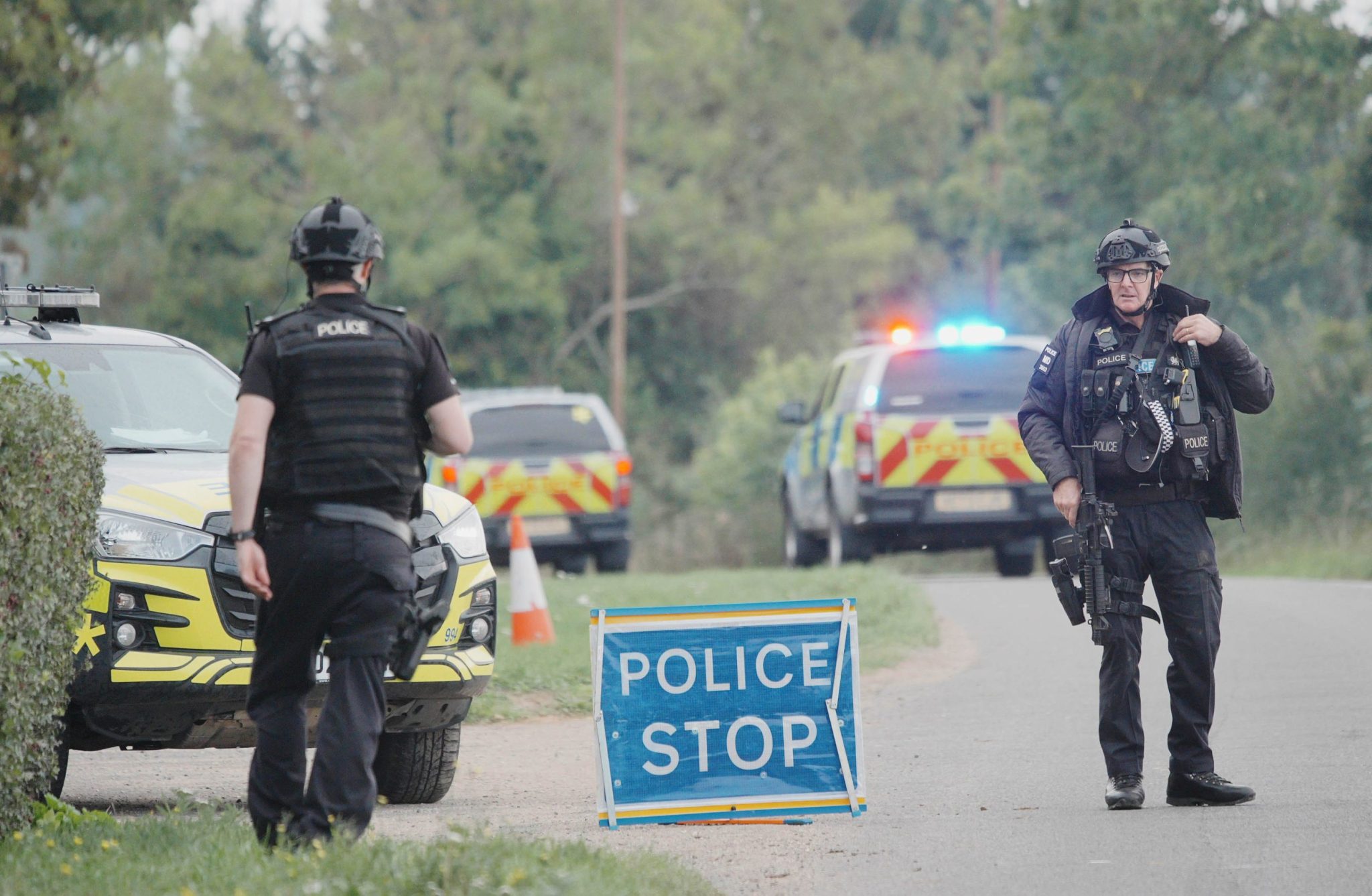
British police arrested five men over a suspected terrorist plot at RAF Fairford, the airfield US bombers use to strike Iran. Reports split on a Tehran motive, while a UAE presidential adviser says Iran's attacks have made US bases more important to Gulf hosts.
The Investor · Invest desk
What happened
- Counterterror officers are leading the investigation, and three suspicious vehicles are being searched.
- American B-1 and B-52 bombers have taken off from Fairford, a US Air Force-run base in western England, for operations in the Iran war.
- Britain did not join the US-Israeli war on Iran that began Feb. 28, and at first it refused President Trump's request to use British bases for strikes.
- RAF Lakenheath, another US base, in eastern England, confirmed it is on Charlie alert, the second-highest threat level the US Defense Department issues.
Compiled by The InvestorSomething wrong?How this is made
Why it matters
- cost Britain now pays for counterterror policing around a US bombing operation, and neither account puts a figure on that cost or says whether Washington shares it.
- decision A confirmed Tehran link would force a government no longer led by the prime minister who granted the 'defensive' permission to decide whether to keep carrying that risk.
- precedent If London responds to attacks the way the UAE adviser says the Gulf has, pressure on host countries will lock US basing in Europe in place, with Fairford the first test outside the region.
Britain has lent this runway to the US under an agreement dating from the 1950s, and the base sits about 100 miles west of London [5]. It keeps getting used because the runway is long enough for heavy bombers. Fairford has handled them in at least three wars: the Gulf War, the 2003 Iraq war and this year's war on Iran [7][1]. For most of that history the cost to the host was political. Sunday's case adds a policing cost. British police made the arrests outside a base the US Air Force operates [3], and US European Command said it would not discuss "specific force protection measures" [16].
The two accounts split on motive. Semafor reported that investigators believe a motive tied to Tehran is most likely [2]. Fortune reported that it is unclear whether the arrests are linked to the Iran war [12]. It also noted that British security officials already blame Iran-linked proxies for a string of arson and sabotage attempts in the UK and other countries, many aimed at the Jewish community, and have warned that Tehran could widen its British targets if the Middle East conflicts continue [13]. Anti-war campaigners have protested at Fairford's perimeter fence several times since the war started [11].
There are two ways this plays out, and they point to different conclusions. If charges tie the plot to Tehran, Iran's reach will have extended to the home soil of a country that stayed out of the fighting. If the case turns out to be domestic, the argument that hosting US bombers invites attack falls back on the proxy record British officials had already described [13]. Either way, the permission was narrow. Then-Prime Minister Keir Starmer agreed to US use of British bases for "defensive" operations against Iran's missiles and their launch sites [9].
The Gulf hosts have already faced Iranian strikes on US military targets and, by Semafor's account, are not questioning their strategy [17]. Regional powers "understand some of the challenges of having US military [bases]," the diplomatic adviser to the UAE president told Foreign Affairs, adding that the war and the Iranian attacks have made having them more important, not less [18].
In the adviser's account, a bigger threat raises the cost of hosting and the value of hosting at the same time. I think that transfers to Britain less cleanly than the Gulf would like, or rather, it transfers only to the part of Britain's exposure that Iran created directly. The Gulf states host US forces within reach of the Iranian strikes they have already faced [17]. Britain's exposure comes from lending a runway to a campaign it declined to join. The counter-case is that London has already made the Gulf's argument once. Iranian attacks on UK interests and on Britain's Gulf allies moved it from refusal to permission within days [8][9]. If investigators confirm a Tehran link and the government leaves that permission as it stands, the counter-case wins and the Gulf view holds outside the Gulf. For now the visible response is at the gates: local residents said security around Fairford appeared heavier in recent days, with heavy vehicles parked across the entrances [14].
What to watch
- Whether the five are charged, and whether police or prosecutors name an Iranian link that settles the split between the Semafor and Fortune accounts.
- Whether the current UK government keeps, narrows or withdraws the 'defensive' basing permission Starmer granted.
- Whether RAF Fairford's force protection level is confirmed at Charlie, matching RAF Lakenheath.