Science4 publishers3 min readPublished
US Air Force secretary confirms weapons already fielded in orbit
Troy Meink said the US has fielded on-orbit space control weapons, the first American acknowledgement of the kind, though he gave no detail on the weapons or their targets, leaving the consequence in the UN argument over a ban.
The Scientist · Science desk
What happened
- In April 2024 Russia vetoed a US-Japanese resolution that would have called on all countries not to develop or deploy nuclear arms or other weapons of mass destruction in space.
- The Congressional Budget Office estimated that the space-based components of the Golden Dome missile defence system alone could cost as much as $542 billion over the next 20 years.
- In the same speech Meink said the Air Force was adding more autonomous systems and predicted the service would look "radically different" by 2032.
Compiled by The ScientistSomething wrong?How this is made
Why it matters
- precedent Moscow's case at the UN was that Washington and its allies resisted a total weapons ban because they intended to deploy. A US service secretary has now said deployment has happened, and the next session can quote him.
- constraint American infrastructure leans on satellite communications, but Meink gave no specifics, so operators of comms and timing services have nothing here to feed into a revised risk estimate.
- cost Roughly $27 billion a year of appropriations is the price the CBO puts on Golden Dome's space-based half, and that figure covers the planned programme. Whatever is already in orbit sits outside it.
- contradiction The same account notes earlier US demonstrations of destroying satellites from the ground, so the stated posture moved further than the demonstrated capability did.
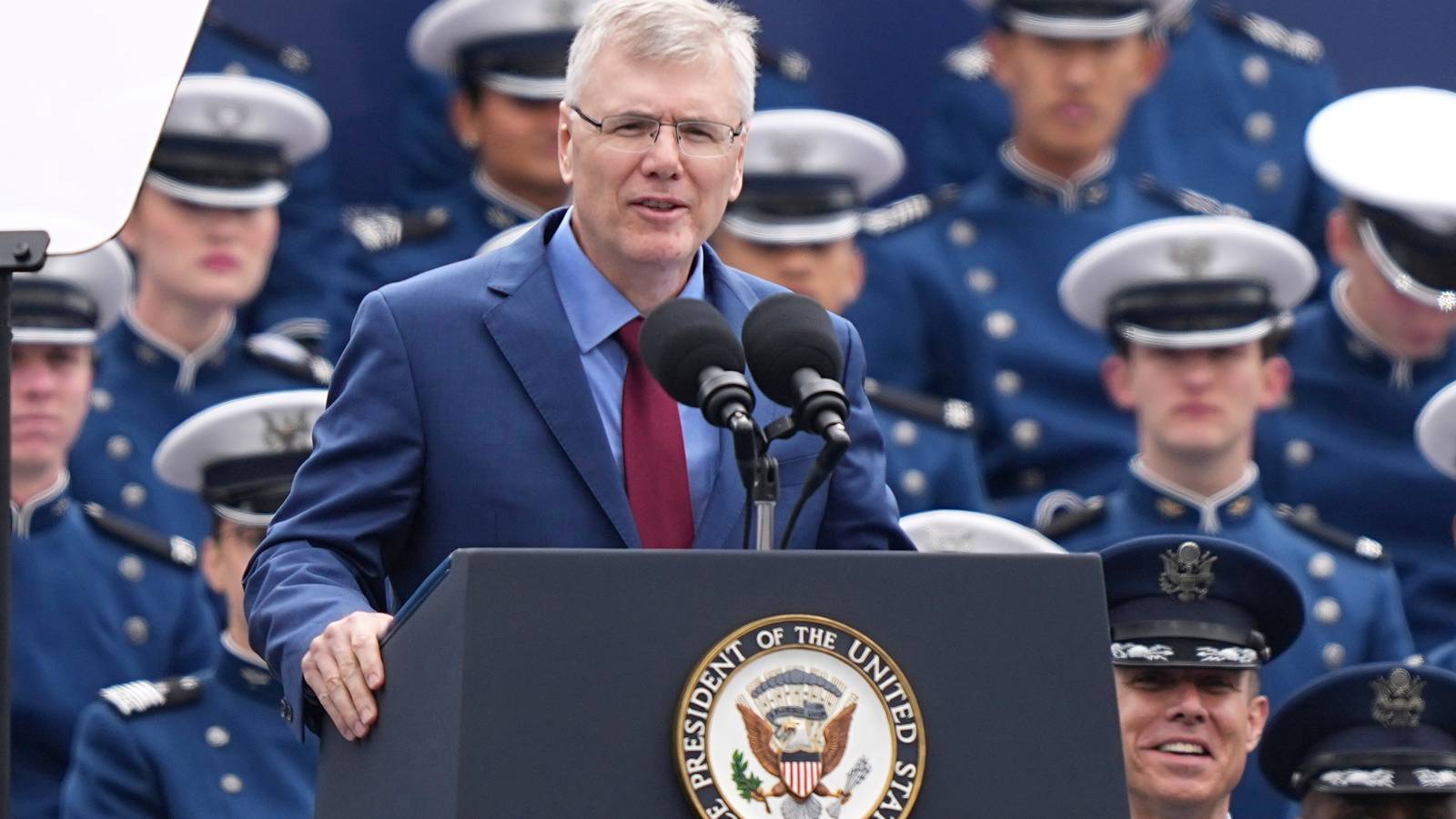
Meink said Monday that the US has fielded "on-orbit space control weapons capable of defending the Joint Force against hostile adversary action" [2], speaking at the Air and Space Forces Association's Air, Space & Cyber Conference [4]. That was the whole of it: one sentence. The Associated Press reported that he did not detail what the weapons are, how they work, or whether they are aimed at objects in space or on Earth [3].
The 1967 treaty declared outer space a global commons to be used only for peaceful purposes [11]. The prohibition actually invoked in the last round of UN argument was narrower. The US-Japanese resolution that Russia vetoed in April 2024 would have called on all countries not to develop or deploy nuclear arms or other weapons of mass destruction in space, as banned under that treaty [10].
Russia called the resolution hypocritical and a double standard, and proposed a rival text to ban all weapons in space "for all time," which also failed [12]. Its stated reason was that the United States and its allies opposed a total ban because they planned to deploy weapons there [13]. In my view that is where Monday's remark will matter most.
The AP called it the first US confirmation that it has deployed weapons in space [1]. The physical picture was already less clean than the treaty language. The US has previously demonstrated that it can shoot down satellites from Earth [14], and the space-based anti-satellite programme American officials have warned about is Russian. Two years ago Washington said Russia was developing one, and the White House said at the time that the danger was not imminent [8]. In 2024 the Biden administration said the Russian weapon was nuclear, able to loiter in orbit for long durations and then release a burst that would take out satellites around it [9].
The one dollar figure in the record covers a programme still in planning. Trump announced the Golden Dome missile defence system in his second term, with plans that include putting US weapons in space [16], and directed the Pentagon to pursue space-based interceptors in an executive order during his first week [18]. The Congressional Budget Office estimated that the space-based components alone could cost as much as $542 billion over the next 20 years [19], an average of about $27 billion a year [20]. Trump said last year that he expected the system to be "fully operational before the end of my term," which ends in January 2029 [17].
Meink used the same speech to say the Air Force was adding more autonomous systems and to predict that the service would look "radically different" by 2032 [5], with one-way attack drones replacing artillery as the "primary killer" [6]. "We are increasing readiness against existing threats," he said [7].
What to watch
- Whether the Air Force or the Pentagon adds any specification to Meink's line: weapon class, orbit, or whether anything is Earth-directed.
- Whether the quote is cited at the UN, either in a revived Russian proposal to ban all weapons in space or in a US response.
- Whether budget requests fund space-based interceptors on Trump's January 2029 schedule or across the CBO's 20-year window.