Invest2 publishers3 min readPublished
Designating the ICC itself would make its banks and vendors the enforcers
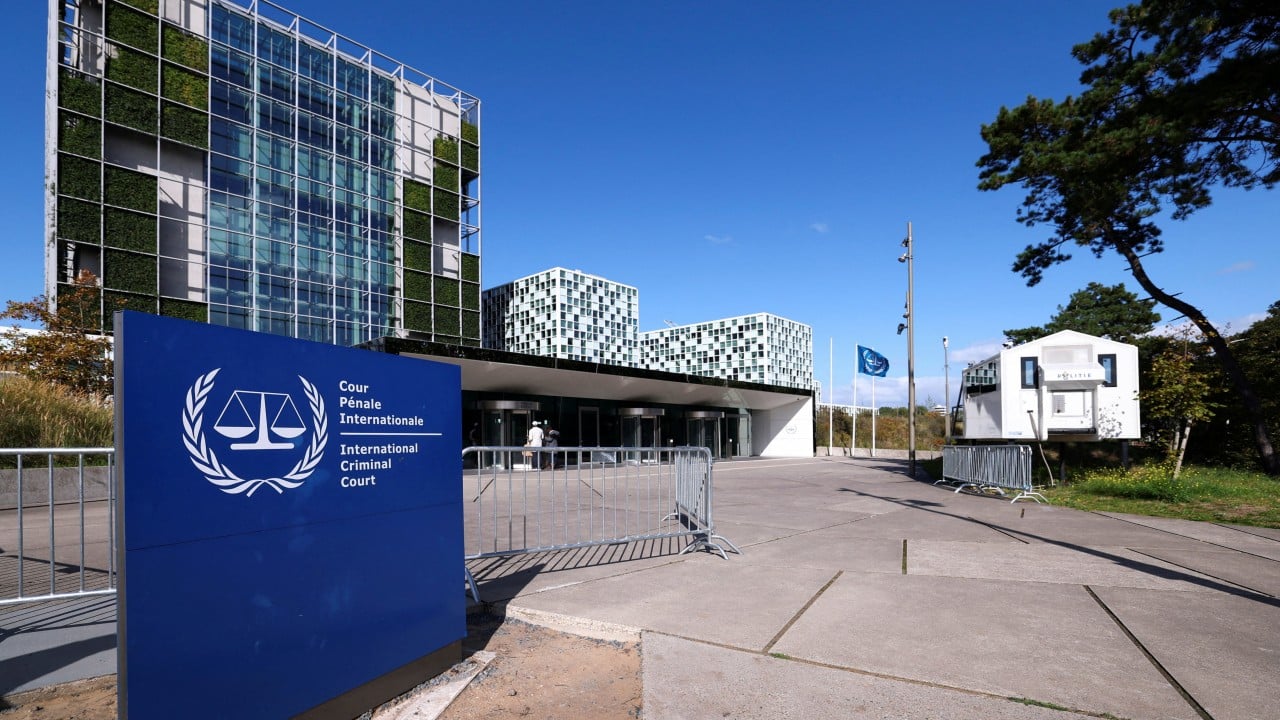
Two sources told the South China Morning Post that sanctions on the whole court are prepared and imminent. Thirteen officials are already designated. The institutional version reaches anyone under US jurisdiction who banks the court.
The Investor · Invest desk
What happened
- Two sources familiar with the matter told the South China Morning Post that the administration has prepared sanctions against the entire International Criminal Court and plans to announce them soon.
- Cryptobriefing reports the announcement is expected around the week of September 20, 2026, timed to coincide with UN General Assembly activities in New York.
- The US sanctioned ICC President Tomoko Akane and Senior Trial Lawyer Abdoulaye Seye on August 18, 2026, with a wind-down for existing transactions set to expire on September 17.
- At least 13 ICC officials are now under US sanctions, a roster that includes roughly half the court's sitting judges and its former chief prosecutor.
Compiled by The InvestorSomething wrong?How this is made
Why it matters
- exposure Every bank, law firm and service provider under US jurisdiction that touches an ICC payment would carry the legal risk itself, so the decision to process each transfer sits with them.
- constraint By cryptobriefing's reading, a member state's contribution to the court starts to interact with its own banking relationships in the US. For 124 governments, court funding becomes a treasury question.
- contradiction SCMP's sources said only that the announcement is coming soon, while cryptobriefing dates it to the week of September 20, 2026, leaving compliance desks two different clocks for the same event.
- precedent Venezuela and Chad have already left the court under US pressure, so an institutional designation extends a campaign that has already produced withdrawals.
Designating people and designating an institution differ in who has to read the list. The 13 or more ICC officials already named lose access to US-held assets and face travel restrictions [6][10]. The institutional version would prohibit US persons and companies from any transaction with the court [7]. That reaches everyone who invoices The Hague. Cryptobriefing writes that any bank, law firm or service provider subject to US jurisdiction would face legal risk for processing payments to or from the ICC [9].
The legal scaffolding is old. Executive Order 14203 authorised ICC-related sanctions in February 2025 [3], and the national emergency behind them was extended for another year in January 2026 [8]. A designation in the week of September 20, 2026 [2] would land about 19 months after the order [21]. The shorter interval matters more to a compliance desk: the August 18 designations of Akane and Seye carried a 30-day wind-down for existing transactions that expired on September 17 [4][5][23], three days before the week the institutional announcement is expected [22].
There are 124 states still party to the Rome Statute [11]. The US has never been one of them [12]. Cryptobriefing's reading is that continuing to fund and cooperate with the court could complicate those states' own financial relationships with US institutions [13]. Rubio has pushed in the same direction from the other side. In July he announced a campaign to isolate the court and called on other countries to withdraw from it [16], and cryptobriefing reports that he has urged member states to pull funding or membership outright, describing the ICC as a politicized body that undermines American sovereignty [17]. Venezuela and Chad have withdrawn, at least partly in response to US diplomacy [18].
The asks behind the campaign are specific. US officials want the arrest warrants against Israeli leaders dropped and the past investigation into American troops in Afghanistan closed [19]. The warrants were issued in November 2024 [20].
SCMP writes that targeting the entire organisation could severely undermine the court's work prosecuting war crimes and genocide worldwide [24]. On what both reports describe, the route there runs through private compliance decisions, one payment at a time [9].
SCMP notes that Washington has sanctioned a number of ICC judges and prosecutors but has so far held off from sanctioning the court itself, and that the institutional move has long been considered one of the options [14]. It has stayed an option. The timing is also thinly sourced: SCMP's two sources said the sanctions are prepared and will be announced soon, without a date [1], while the week-of-September-20 window comes from cryptobriefing [2]. The State Department did not immediately respond to SCMP's request for comment [15].
What to watch
- Whether any designation arrives with general licences for legal services and salary payments; that scope decides how much of the prohibition actually binds.
- Whether further Rome Statute parties follow Venezuela and Chad out, and whether any of the 124 suspends its assessed contribution to the court.
- Whether the announcement lands in the UN General Assembly week or slips again, given that Washington has held off before.