Leadership1 distinct publisher3 min readPublished
American and British prosecutors have agreed to decide between themselves where scam-center cases get charged, and an industry disruption event in October will show who outside government is expected to act on that timetable.
The Board Room · Leadership desk

Compiled by The Board RoomSomething wrong?How this is made
The line in this framework with the most consequence for anyone outside government is the one about determining where cases of common interest are brought [3]. A syndicate running compounds in Cambodia, Laos or Burma [6] can plausibly be charged in either capital, and under this agreement that choice is settled between prosecutors before a defendant, or a subpoenaed exchange, knows whose procedural rules will govern the file.
The scale figure driving the priority does not reconcile cleanly. Overseas scam centers are blamed for nearly $10 billion a year in American losses [7], while the FBI's own accounting for 2025 reports $7.2 billion in crypto investment fraud, inside $11.37 billion of crypto-associated losses, inside a $20.88 billion total [8][9]. That leaves roughly $2.8 billion between the attribution and the nearest line item [1], and the material does not say what fills it: scam-center losses booked under other fraud categories, non-crypto losses, or an estimate built on a different basis entirely.
Recovery arithmetic is worth doing before treating seizure totals as remedy. More than $700 million in crypto had been restrained by April in connection with scam-center laundering [10], about 7% of one year's claimed losses [2]. The forfeiture action against Cambodian businessman Chen Zhi seeks roughly 127,271 BTC, valued near $15 billion when filed [11], which is about 1.5 times the annual loss figure [3] and implies a bitcoin price of roughly $117,900 at filing [4]. That headline value moves with the market rather than with the case, and nothing in the record says whether any of it reaches victims.
A skeptic would say three signatures on a cooperation document are the cheapest product a prosecutor's office can ship. The answer is that the operating machinery was built first and needed routing. The Scam Center Strike Force has run since November 2025 with prosecutors, the FBI and the Secret Service against Chinese transnational criminal organizations [6]; Executive Order 14390 required an action plan on March 6 [12]; Britain secured Five Eyes agreement on Aug. 27 to move intelligence faster and to disable the accounts, communications channels and financial services these networks use [5]. The Sept. 3 framework is the piece that assigns the charging decision [1].
What the evidence does not yet support is a firm view of the October ask. Officials plan a joint industry disruption event [4], with no participants named and no scope described. The nearest precedent on record is the May campaign, in which participating companies acted against the communications and financial infrastructure that lets overseas networks reach American victims [13]. The distinction that matters for a firm holding relevant records is that a disruption event asks for voluntary account and channel action on the government's calendar, while a charging decision asks for evidence on a court's, and the two arrive with different consequences for getting it wrong.
So the narrow question this quarter is whether one evidentiary response can satisfy two prosecuting authorities whose forum choice a firm will learn late [3]. Built now it is a policy and a retention schedule; retrofitted after a case is charged in the capital nobody prepared for, it is a scramble conducted under someone else's deadline.
Ranked by verification strength, evidence, and original report placement.
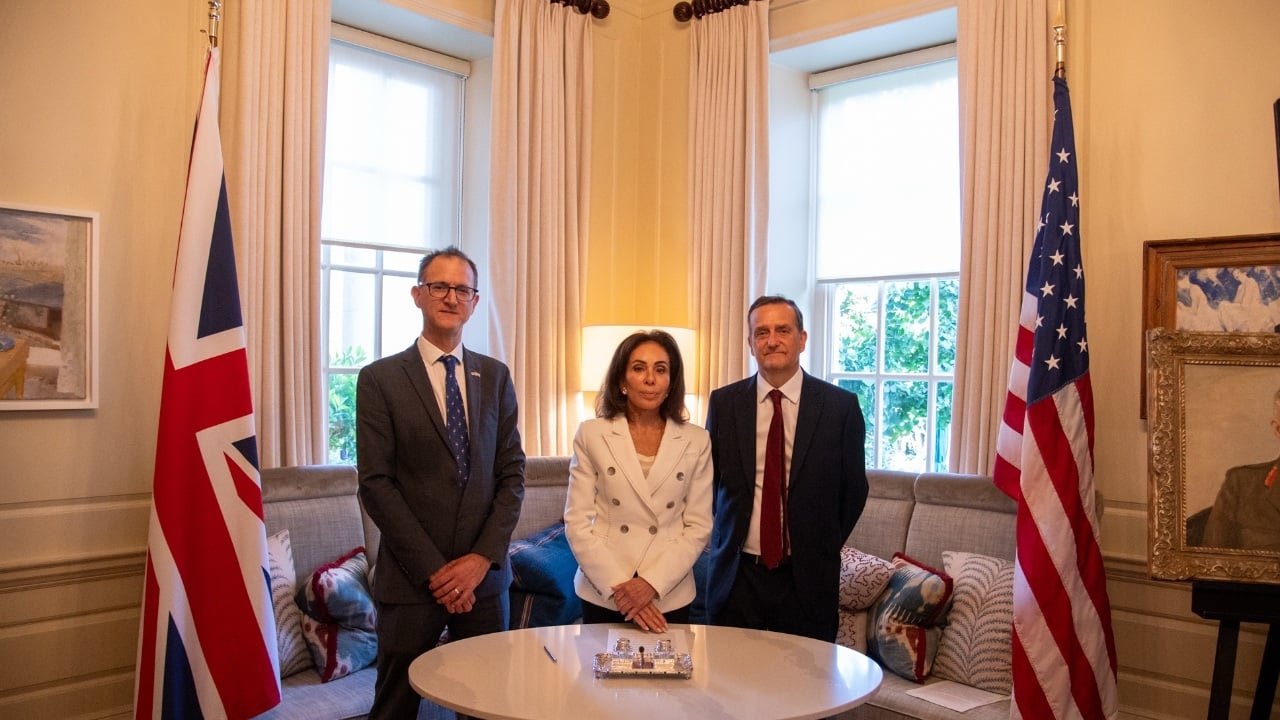
On Sept. 3, federal prosecutors and British authorities established a joint framework, described as first-of-its-kind, joining the U.S. Attorney's Office for the District of Columbia with the Crown Prosecution Service of England and Wales and the U.K. National Crime Agency, to pursue transnational networks running cryptocurrency and cyber-enabled investment scams.
U.S. Attorney Jeanine Ferris Pirro, Crown Prosecutor for England and Wales Stephen Parkinson, and National Crime Agency Director General Graeme Biggar signed the agreement for their respective agencies.
The agreement establishes parallel investigations, information sharing, jurisdictional coordination and case prioritization: participating agencies will investigate shared targets in parallel, exchange information about organized crime syndicates, and determine where to bring cases of common interest.
Officials plan a joint industry disruption event in October.
On Aug. 27, Britain separately secured support from Five Eyes (the U.S., U.K., Canada, Australia and New Zealand) for faster intelligence sharing and coordinated efforts to disable accounts, communications channels and financial services used by international scam networks.
The U.S. Scam Center Strike Force began operating in November 2025 against Chinese transnational criminal organizations running compounds primarily in Southeast Asia; its Justice Department mandate combined prosecutors, the FBI, the U.S. Secret Service and other agencies to pursue fraud, money laundering, digital infrastructure and cryptocurrency connected to operations in Cambodia, Laos and Burma.
Distinct publishers with included, body-backed reporting in this cluster.
1 article · September 4, 2026
Follow any of these and your For You feed starts watching them — no settings page required.
invest
Washington and London divide up prosecutions of the crypto scam compounds2 distinct publishers
invest
Washington licenses private hacking, and hands the contractor the liability1 distinct publisher
security
DOJ and the NCA will decide together which country prosecutes each scam-compound case1 distinct publisher
invest
DOJ Flew a $165M Ponzi Case Home From Fiji, Which Resets the Affiliate Math1 distinct publisher
Evidence-backed comparisons of source perspectives and observed adoption signals. Read the methodology
Which Builder, Operator, and Investor concerns the observed source mix emphasized—not a truth score.
Evidence, demonstrated adoption, hype gap, incentives, and confidence are assessed independently, each on its own current evidence. How these are measured.
One outlet paraphrasing an official announcement
Named signatories, named agencies and a date make the prosecutorial half of this story checkable against the agencies' own releases, and news.bitcoin.com reports it consistently. The financial half is weaker: the near-$10 billion attached to scam centers arrives with no source attached to it, while the numbers that do carry attribution come from a single FBI annual compilation of reported losses, which measures complaints rather than verified theft. Nothing here has been checked by a second newsroom.
Signed, with the first cases still pending
What has actually occurred is a signature and a date in a diary. The operational record cited around it belongs to earlier programmes: the Scam Center Strike Force standing up in November 2025, more than $700 million in crypto restrained by April, a May campaign that interrupted over 1.4 million accounts. No charge, seizure or extradition is yet attributed to the new framework, and the October London event has no named participants outside government.
Alliance language ahead of the arrangement
'First-of-its-kind alliance' is carrying more weight than the document it describes, which is an understanding about investigating in parallel and agreeing where to file. The loss headline compounds the stretch: nearly $10 billion for overseas scam centers overshoots by about $2.8 billion the roughly $7.2 billion crypto investment fraud figure the same report calls the largest source of reported American losses. Neither the pact nor the numbers are invented; both are presented at a size the supporting detail does not reach.
Announcing agencies, relayed by a crypto outlet
Three prosecuting bodies declaring that they will cooperate is an announcement with upside for all three, and this reporting relays it without a dissenting voice or any accounting of what earlier coordination convicted. The relay matters as much as the source: news.bitcoin.com serves a crypto readership that gains when fraud losses are attributed to Southeast Asian compounds and trafficking rings rather than to the irreversibility of the payment rail, and the piece ends by coaching readers on warning signs.
Solid on the signing, thin on the scale
We would be surprised to learn the pact does not exist or that the signatories are wrong, since that is the sort of detail a wrong report gets corrected on within a day. Confidence falls away on scale and effect, where one crypto-trade summary carries figures of three different provenances, an FBI complaint compilation, an unattributed $10 billion, and a forfeiture valuation that only makes sense at a bitcoin price near $117,900, with no second outlet to test any of them.