Invest1 publisherNot yet confirmed elsewhere2 min readPublished
Vertiv's 10x argues the AI infrastructure trade runs through the air conditioning
An 80-year-old air-conditioning maker is the S&P 500's third-best performer since early 2021, trailing Nvidia by 4.4 percentage points a year.
The Investor · Invest desk
Drafted by a language model from the sources cited here and checked against its claim ledger before publication. How we use AISend a correction
What happened
- Vertiv listed in early 2021 worth under $11 billion and now carries a market cap of $109 billion.
- Its 50.5% annualized return over the six and a half years since ranks third in the S&P 500.
- The only two names ahead of it are Comfort Systems at 55.2% and Nvidia at 54.9%.
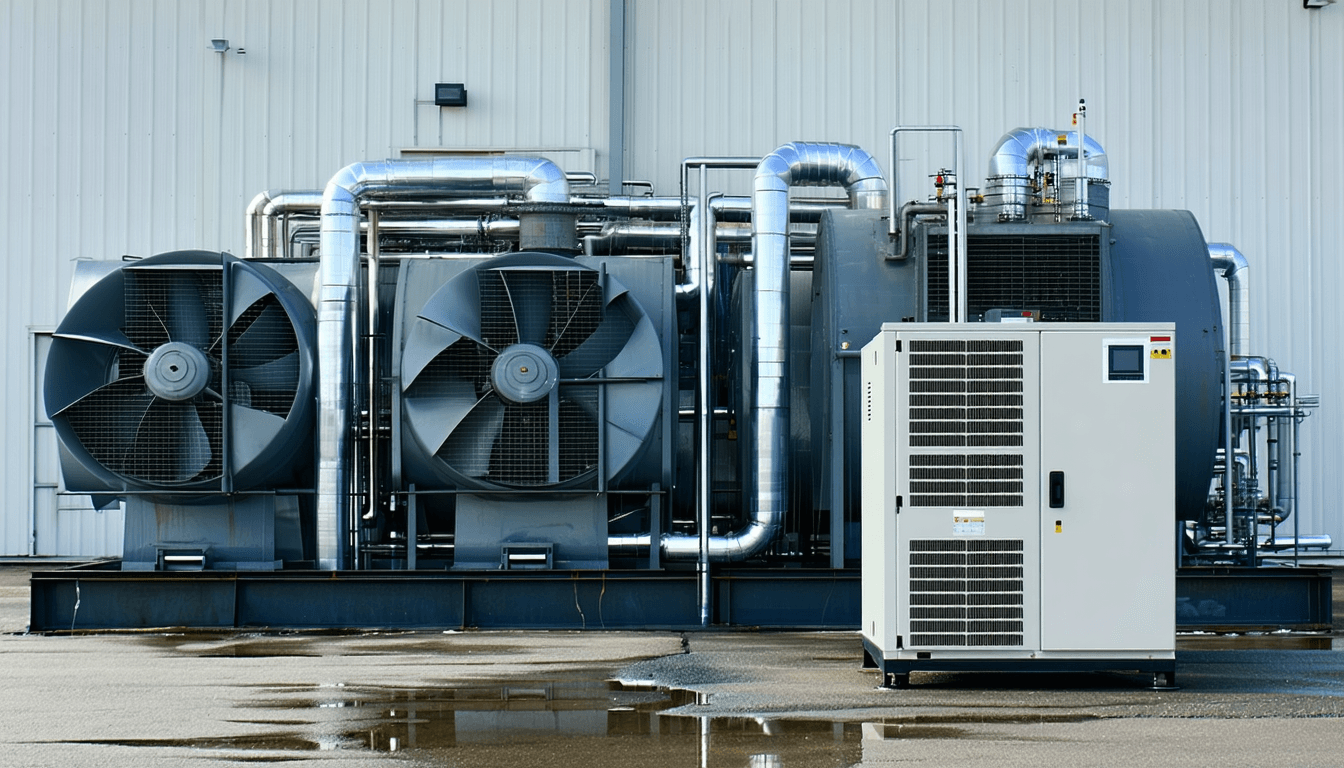
- The product behind the move is direct-to-chip liquid cooling for servers packed with Nvidia GPUs, which Fortune says leads all rival approaches in deployment.
- Dave Cote took over after a Goldman Sachs group screened more than 1,000 companies and put the 80-year-old air-conditioning maker in front of him.
Compiled by The InvestorSomething wrong?How this is made
Why it matters
- constraint Heat sets the ceiling on how much compute fits in a building, which puts the thermal vendor's order book upstream of whatever the compute is eventually used for.
- capability Because the cooling supplier compounded within about a fifth of the chipmaker, an investor could hold the buildout without underwriting a view on which accelerator architecture wins.
- decision Boards told to produce an AI strategy now have a second template on the table: sell into the constraint the technology creates rather than adopt the technology.
- precedent A four-part screen with a published track record invites imitation, so the next overlooked industrial adjacent to a data center gets bid before its economics change.
The mechanism is physical and unglamorous. Putting Nvidia GPUs and similarly dense gear into a room requires cooling of a kind data centers did not previously need, and Vertiv's direct-to-chip liquid systems are doing more of that work than any competing approach, according to Fortune [15]. That is a supplier position rather than a technology bet. The customer's design decision creates the requirement, and the requirement has to be bought from someone.
Compound the two annualized figures out over the same six-and-a-half-year window and the distance between the accelerator and the air conditioner is narrower than the framing suggests: Nvidia becomes roughly 17x, Vertiv roughly 14x, so the chipmaker returned about 1.2 times what its customers' cooling vendor did [12]. An allocator who never formed a view on which accelerator would win, and bought the thing every accelerator needs instead, kept most of the compounding without needing to be right about silicon.
The two headline numbers do not quite reconcile, and it is worth saying so. The market-cap move implies about 42% a year compounded, some eight points below the annualized return quoted beside it [13]. Gaps of that shape usually come out of share count, dividends, or a start date that does not sit exactly where the market-cap base does, and the word "under" in "under $11 billion" is carrying weight [4]. The direction is not in question. The precision is looser than a figure quoted to one decimal place implies.
What is transferable here is the filter rather than the outcome. Cote told Fortune he held weekly calls with a Goldman Sachs group and that they looked at more than 1,000 companies before the bank surfaced Vertiv [2]. His criteria predate any interest in AI: a dominant or potentially dominant position, an industry already profitable or on its way there, room to grow internally and by acquisition, scope for wider margins, and the chance to lead a new technology in the sector [8]. He had already run that screen through more than 100 acquisitions at Honeywell [7]. "It was not like I was an AI savant," he says, "but I knew that if I positioned myself in the middle of the data industry there was a good chance something good would happen" [9].
Fortune's read is that Cote noticed a large trend and made himself indispensable to it rather than chasing a hot technology [11]. The screen that found an air-conditioning company in 2019 is now published, and the supply of dominant-position industrials sitting next to a data center is finite.
What to watch
- Whether the liquid-cooling lead holds as rivals ship their own direct-to-chip systems; Fortune's "more than any other solution" is a snapshot, not a moat.
- Whether the 10x market-cap figure and the 50.5% annualized return reconcile in company filings once share count and the exact start date are fixed.
- Whether Cote's next acquisitions deepen the cooling position or spend the multiple on adjacent businesses.