Product5 publishers3 min readPublished
Apple bars speaker names and financial data from the Apple Watch's always-on summaries
Apple's Siri Recap explainer says the Apple Watch will not attribute speakers and will drop financial, authentication and government-ID data from its summaries, and it asks the wearer to be mindful of everyone else in the room.
The Product Desk · Product desk
What happened
- The Apple Watch Series 12 and Ultra 4 add Audio Intelligence features including Sound Recognition, Music Recognition, Live Rewind and Siri Recap, and the watches listen continuously once those are switched on.
- Audio is processed in the Secure Exclave on watch and iPhone, out of reach of the operating system, apps, the user and Apple, and Apple says none of it is recorded or stored.
- The feature needs one of the new watches plus an iPhone 16 or later, excluding the iPhone 16e, and Apple says it launches later this year.
Compiled by The Product DeskSomething wrong?How this is made
Why it matters
- constraint Apple's own warning that summaries can be incomplete or inaccurate keeps them out of any workflow that needs a record, so a team that wants minutes still needs a person who can be corrected.
- exposure The switch belongs to the wearer alone. The colleague across the table sits inside the capture with no control of their own and only Apple's request that the wearer be mindful.
- contradiction TechRadar's account of Live Rewind putting 15 seconds of transcript on the watch face weakens the no-transcript line that carries most of the privacy case for Siri Recap.
- precedent A published, itemised omission list gives buyers and reviewers something concrete to demand from the next vendor shipping an always-listening microphone.
Siri Recap does not identify or attribute speakers, and a name appears only if somebody said it out loud [3]. The watch across the table in a one-to-one can be on a work schedule, taking notes. The summary it produces says nothing about which sentence was yours.
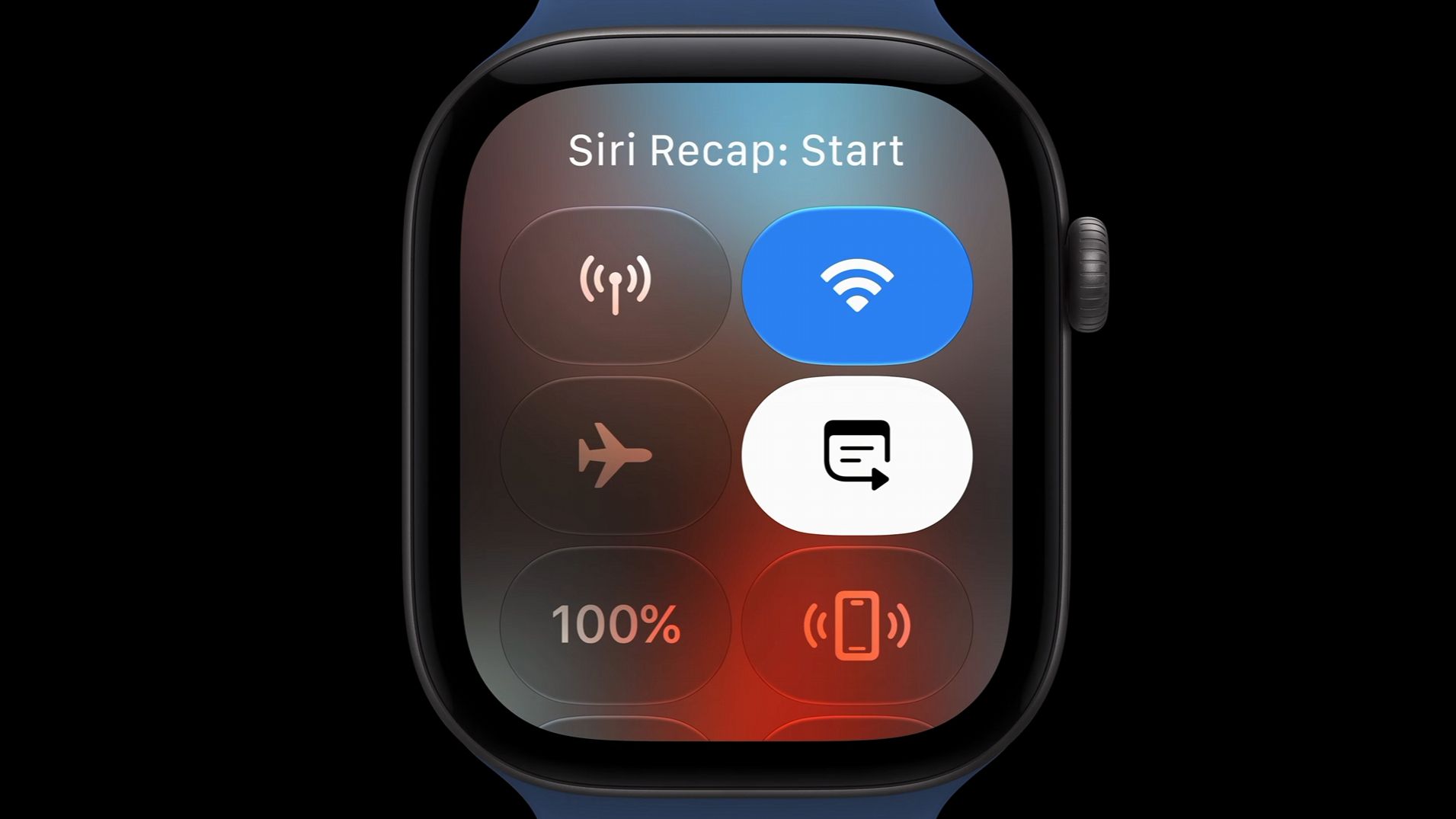
The people it helps are easy to name. Matt, TechRadar's wearables writer, said a virtual assistant "taking minutes in the background all day long could be very useful" for people who sit in a lot of meetings, and wrote of the new features that "they're going to make most people uncomfortable" [18]. The wearer holds the switch: Siri Recap is turned on in the Apple Watch app on iPhone, can be set to listen on a schedule, and gets a quick toggle in Control Center [10]. For everyone else in the room, Apple's document offers a suggestion: "While audio is not recorded and stored, and no speakers are attributed, consider those around you where conversations might be private or sensitive" [13].
The pipeline keeps the audio inside the hardware. Audio goes to the Secure Exclave on the Apple Watch and iPhone, where the operating system, apps, the user and Apple cannot reach it, and no audio is recorded or stored [7]. An encrypted, condensed text version goes to Private Cloud Compute, where Apple Foundation Models write the output. That text runs less than half the length of the original transcript and is stripped of tone, filler and redundancy [8][9]. Apple's Audio Intelligence article, quoted by TechRadar, aims a sentence at anyone who might ask for the tape: "there is no recording to share, forward, or produce if requested by any party, because no recording exists" [16].
Six categories are named for omission [4]. Two are content judgements, language promoting self-harm and hateful speech, and the other four are data types: financial data, government-assigned identifiers, authentication data and certain personal identifiers [1]. The same explainer says filtering may not remove all sensitive information, and that summaries can be incomplete or inaccurate [5]. Those caveats push the liability onto whoever forwards a summary to a client. Unsaved summaries auto-delete after seven days, and saved ones stay in the Siri app until deleted, exportable to apps like Notes [11].
That no-transcript claim is specific to Siri Recap. Live Rewind, the other new Audio Intelligence feature, can put a transcript of the last 15 seconds of audio on the watch face whether or not a wake word was said, according to TechRadar [15]. Both features run off the same microphone: Siri Recap, which Apple says makes no transcript, and Live Rewind, which makes a short one [3].
Computerworld, writing before Apple confirmed the feature, called it a "surveillance-as-a-service solution" and asked why it would be useful and who it is for [20]. On the industry question it wrote that "others will not be equally cautious, so we owe Apple a debt for warning us of what's at stake" [21]. No other vendor in these accounts has adopted Apple's omission list. The nearest comparison TechRadar names is Amazon's Bee, a microphone on a smart band used to capture and summarize conversations [19], and TechRadar's writer notes that Meta's smart glasses have been banned in some public spaces and disparaged with names like "pervert glasses" [22].
For a team shipping ambient capture, two variables separate the designs: who can turn the microphone off, the wearer only or anyone in the room, and what outlives the conversation, nothing or an artifact somebody can keep. Siri Recap sits at wearer-only and a seven-day summary the wearer can save [10][11]. For the person across the table who did not consent, Apple's answer is a request that the wearer be mindful [13].
What to watch
- Whether the shipping build applies the omission list to Live Rewind's 15-second transcript as well as to Siri Recap summaries.
- Whether venues and employers that wrote rules for camera glasses extend them to watches with always-on microphones.
- Whether the independent verification Apple promises for Private Cloud Compute produces a published review that covers Siri Recap.