Product1 publisherNot yet confirmed elsewhere2 min readPublished
Technion's electrolysis process swaps oxygen for an industrial epoxide at 98% efficiency
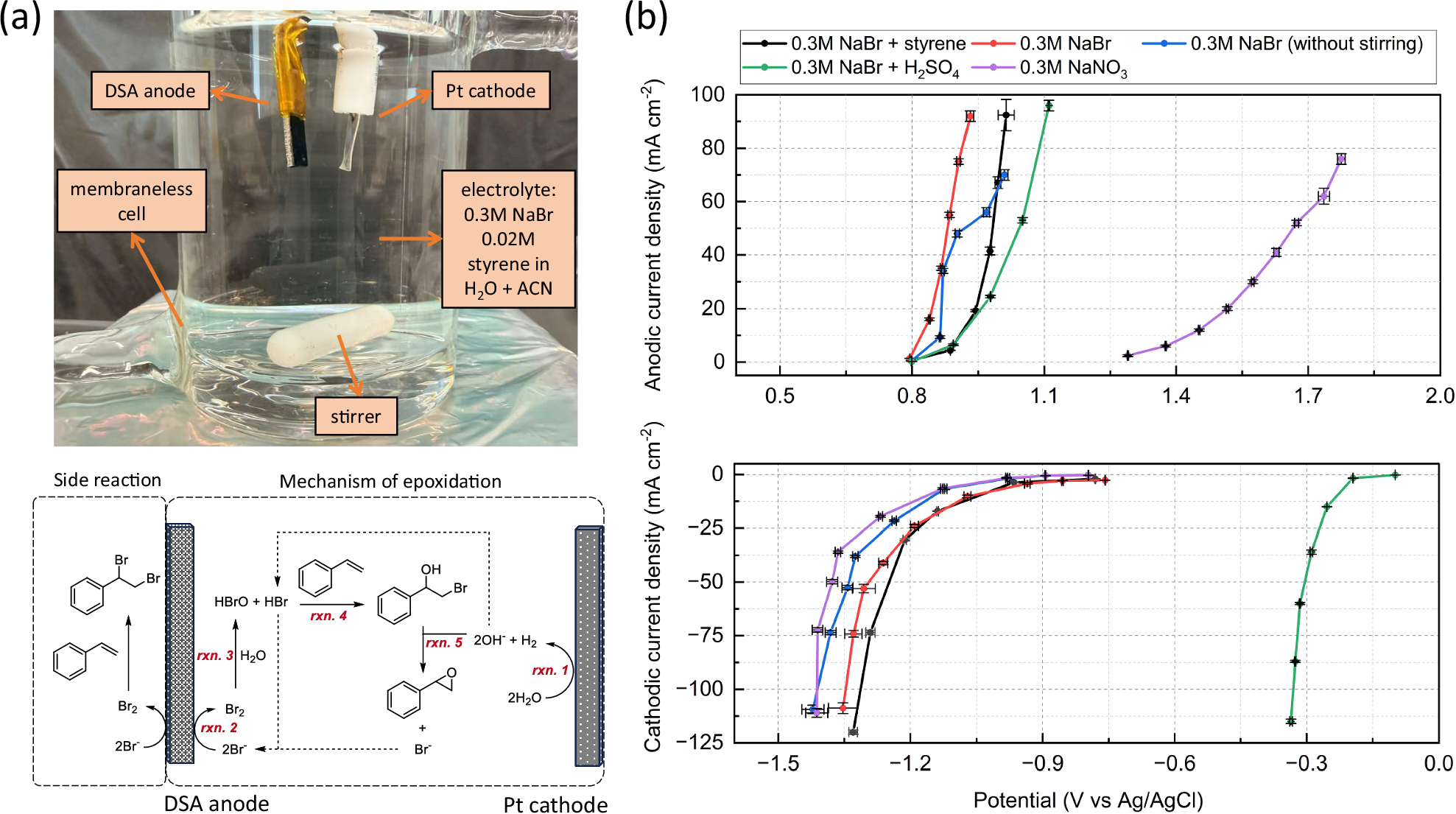
Technion researchers built an electrolysis process that makes an epoxide in place of oxygen, at 98% efficiency for both reactions. Selling a chemical alongside the fuel could help green hydrogen compete on cost, but only once the process holds up in sustained industrial use.
The Product Desk
What happened
- The researchers report a current density they describe as compatible with large-scale industrial electrolysis.
- The system pairs electrodes with a redox mediator, a solvent environment and a set operating configuration, and runs with no membrane between the electrodes.
- Prof. Avner Rothschild and postdoctoral researcher Dr. Guilin Ruan led the study, which was published in Nature Communications.
- H2Pro has already commercialized an earlier technology from the same Technion research group.
Compiled by The Product DeskSomething wrong?How this is made
Why it matters
- constraint The 98% is a charge figure, so a developer cannot put it into a hydrogen cost model until energy-use and component-lifetime data appear.
- decision The epoxide only lowers the effective cost of hydrogen where a plant can sign an epoxide buyer. That puts nearby chemical demand into the siting choice.
- precedent With a US patent application filed and H2Pro already selling the group's earlier work, the likeliest next step is a company licensing this process.
For a plant manager, this paper raises two questions: what the 98% measures, and who buys the epoxide.
The first has a plain answer. According to the team, the figure means only about 2% of the electrical charge was lost to competing reactions [3]. It describes where the current went, for both the hydrogen and the epoxide [2]. On its own terms that is a strong result. Energy use and cost per kilogram are different quantities, and the Interesting Engineering report does not include either [3].
Green hydrogen has been held back by its cost compared with hydrogen made from fossil fuels [6]. Interesting Engineering's pitch is that two useful outputs give producers an extra economic incentive [14]. The work so far is the researchers' own experiments [13].
The result also depends on the whole system. According to Ruan, the performance comes from optimizing the complete electrochemical system, not a single electrode or reaction [11]. If that holds at scale, an operator would be maintaining a redox mediator and a solvent environment along with the electrodes [12].
The new system builds on Rothschild's earlier work separating the reactions that normally produce hydrogen and oxygen [9]. The team has filed a US patent application for it [8].
The second question depends on the site. Epoxides go into polymers, coatings, adhesives, pharmaceuticals and other products [5], so the demand exists in general. A coproduct lowers the effective cost of a plant's hydrogen only if a buyer near that plant takes the volume the electrolyzer makes.
I'd sort any candidate site on two axes. One is offtake: an epoxide buyer within reach, at volumes matched to the hydrogen you need. The other is run time: published data on sustained industrial operation, enough to price mediator and electrode replacement over years. A site with offtake and run-time data is ready for a pilot conversation. Offtake without the data puts a site on a watch list, with a named contact at the buyer. Without offtake, the epoxide is just another stream to handle, however efficiently it is made. Right now every site sits on the no-data side, because the study does not establish that the technology is ready for commercial-scale deployment, and the report says further development is needed to show how it performs under sustained industrial conditions [13].
What to watch
- Energy-use or cell-voltage figures for the epoxide process, the data a developer needs to compare it with standard electrolysis on cost.
- A sustained-operation test under industrial conditions that reports how long the redox mediator and electrodes last.
- A licensee or spinout for the US patent application, following the path H2Pro took with the group's earlier technology.
Clarity's read
What the record supports and how the coverage leans. The claims behind it follow.
Reality
- Evidence40
- Adoption3
- Hype gap+25
- Incentives40
- Confidence35
Claim ledger
Ranked by verification strength, evidence, and original report placement.
- [1]
Researchers at the Technion, Israel Institute of Technology, developed an electrochemical process that replaces the oxygen normally generated during water electrolysis with an epoxide.
- [2]
The researchers report that the system achieved 98% efficiency for both hydrogen generation and the parallel epoxide-producing reaction.
- [3]
According to the team, 98% efficiency means only about 2% of the electrical charge was lost to competing reactions.
- [4]
The researchers report achieving a current density they say is compatible with large-scale industrial electrolysis.
- [5]
Epoxides are a class of chemicals widely used to manufacture polymers, coatings, adhesives, pharmaceuticals and other products.
- [6]
Wider adoption of green hydrogen has been constrained by its cost compared with hydrogen produced from fossil fuels.
- [7]
The study, published in Nature Communications, was led by Prof. Avner Rothschild of the Technion Faculty of Materials Science and Engineering and Dr. Guilin Ruan, a postdoctoral researcher.
- [9]
The process builds on earlier work by Rothschild and collaborators that separated the electrochemical reactions that normally produce hydrogen and oxygen, the basis of membrane-free electrolysis.
- [10]
H2Pro has commercialized an earlier technology from the research group.
- [11]
According to Ruan, the system's performance comes from optimizing the complete electrochemical system rather than focusing on a single electrode or reaction.
- [12]
The system brings together the electrodes, a redox mediator, the solvent environment and the operating configuration, producing hydrogen and epoxide without a membrane separating the electrodes.
- [13]
The reported results are from the researchers' experiments; the study does not establish that the technology is ready for commercial-scale deployment, and further development is needed to show how the process performs under sustained industrial operating conditions.
- [14]
The approach could offer an additional economic incentive for green hydrogen production because electrolysis would produce two useful outputs rather than hydrogen and oxygen alone.
Sources
1 independent publisher whose own reporting we read for this story.
- interestingengineering.comGreen hydrogen process reaches 98% efficiency while producing valuable chemicals
1 article · October 8, 2026
Topics and entities
Follow any of these and your For You feed starts watching them — no settings page required.
Topics
- Green HydrogenFollow
- Water ElectrolysisFollow
- Electrochemical synthesisFollow
Entities
- TechnionFollow
- Avner RothschildFollow
- Guilin RuanFollow
- H2ProFollow
- Nature CommunicationsFollow
- European Research CouncilFollow