Termination notice targets Cursor's contract for OpenAI models
Cursor's chief executive puts OpenAI models at about 5% of user traffic, small enough that most users will not notice the cutoff and specific enough to break the workflows pinned to them. Anthropic answered with more compute.
The Product Desk
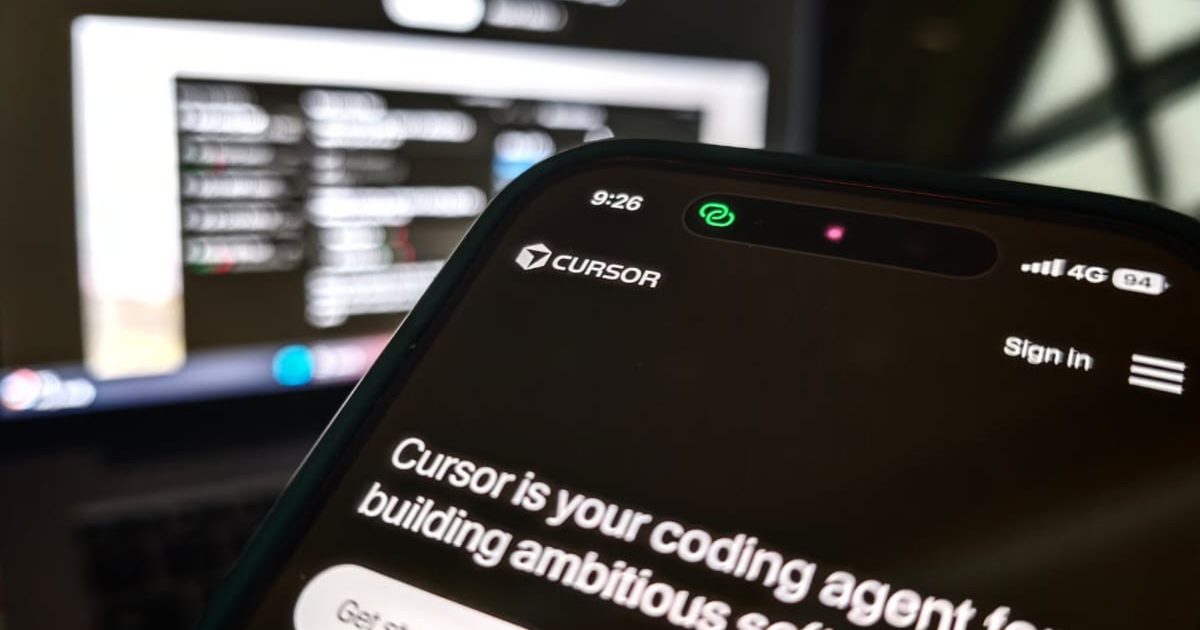
What happened
- Digital Trends reports that Cursor has been notified of an intent to terminate the contract supplying OpenAI models, with the shutdown proposed for November 12, 2026.
- Cursor co-founder and chief executive Michael Truell confirmed the development, said OpenAI models account for about 5% of Cursor user traffic, and said the company is talking to OpenAI to resolve it.
- Anthropic co-founder and chief operating officer Tom Brown said Cursor has been a trusted partner since Claude 3.5 and that Anthropic would continue to increase compute for Claude models in Cursor.
- ClaudeDevs, cited in the same report, says weekly limits for Claude Code Pro, Max, Team and seat-based Enterprise plans rise permanently by 25% from September 14, with a 50% boost in place until then.
Why it matters
- constraint A 5% slice of traffic is 100% of the workflow for any team whose prompts, evals and parsers were tuned to one GPT model, and the rewrite lands on the person who tuned them rather than on either vendor.
- contradiction The report's own account of who served notice does not hold together, so anyone briefing a board should treat the date as firmer than the counterparty and hedge the rest.
- precedent A rival paying for displaced traffic in compute makes courted-then-cut a reusable move against any application sitting between two model vendors.
- decision Heavy Claude Code users now have a stated permanent ceiling rather than a temporary allowance to plan against, which changes whether building a fallback path is this quarter's work or next year's.
The developer who feels this is the one who wrote a prompt library, a small eval suite and two tool-calling workarounds against one GPT model a year ago, shipped it, and has not opened that config since, rather than the one who casually tries three models on a hard bug. Cursor sells a picker with several vendors in it [3]. What people do with a picker is choose once, get an acceptable answer, and stop touching it.
So the traffic number and the migration number measure different things. The load side is the smaller problem. If OpenAI models carry about 5% of Cursor's traffic [1], everything else carries 95%, and absorbing every displaced request raises the load on the remainder by roughly 5.3% [4]. That is a capacity question a vendor can answer in a sentence, which is close to what Anthropic's Tom Brown did [2]. The rewrite side is a person-weeks question, and it sits with whoever tuned the prompts.
The Claude Code allowance deserves arithmetic rather than applause. Take a baseline weekly limit of 100 units: the boost in place now puts a user at 150, and the permanent increase puts them at 125 [9], which is about 17% below the ceiling they have today [5]. "Permanent" is doing real work in that sentence, and it is the word a capacity planner should read twice.
The report is also unsettled about who sent the letter. Digital Trends frames the story as OpenAI pulling its models and sources the account to OpenAI, while the sentence carrying the November 12, 2026 date names SpaceX as the party notifying Cursor of intent to terminate [8][6]. The same piece places the episode in the deteriorating relationship between Elon Musk and Sam Altman, and notes Musk criticised Altman after the news [10]. Until the notice itself surfaces, the date is the part worth putting in a plan and the counterparty is the part worth hedging.
The sort that helps here has two axes: share of traffic on one, and how pinned the workflow is on the other, where pinned means prompts, evals and output parsers tuned to one model's habits. Low share and unpinned is a dropdown change. High share and unpinned is fine as long as someone has actually run the swap. Low share and pinned is where Cursor's affected users are sitting, and it is the quadrant teams under-fund because the traffic percentage looks harmless in a review deck. High share and pinned is the one that belongs in a contract, with a notice period you can name.
The forcing question is narrow: a 30-day termination letter from either model provider tomorrow would cost some number of engineer-days to reach acceptable output elsewhere, and land on someone's desk to absorb. A vendor promising more compute has not answered either count.
What to watch
- Whether the termination notice itself surfaces and settles who the counterparty actually is.
- Whether Cursor and OpenAI reach a compromise that restores direct access before the proposed November 12, 2026 shutdown.
- Whether Anthropic's September 14 permanent limit increase holds at 25% once displaced Cursor traffic arrives.
Clarity's read
What the record supports and how the coverage leans. The claims behind it follow.
Reality
- Evidence24
- Adoption38
- Hype gap+42
- Incentives74
- Confidence28
Claim ledger
Ranked by verification strength, evidence, and original report placement.
- [1]
Cursor co-founder and CEO Michael Truell confirmed the development, said OpenAI models account for about 5% of Cursor user traffic, and said the company is speaking with OpenAI to resolve the issue.
- [2]
Anthropic co-founder and chief operating officer Tom Brown said Cursor has been a trusted partner of Anthropic since Claude 3.5 and that the company would "continue to increase compute" to support Claude models in Cursor.
- [3]
Cursor is a prominent AI-powered coding environment that lets developers use models from different companies inside their programming workflow.
- [4]
If OpenAI models are about 5% of Cursor traffic and all of that traffic moved to the remaining providers, the load on those providers would rise by about 5.3%.
- [5]
A permanent 25% increase over baseline weekly limits sits about 17% below the 50% boost users hold before September 14.
- [6]
The same Digital Trends sentence names SpaceX as the party that notified Cursor of intent to terminate the contract for providing OpenAI models, while the article's headline and framing describe OpenAI as the party pulling its models.
- [7]
Digital Trends reports that OpenAI is moving to cut off Cursor's direct access to its models.
- [8]
According to the Digital Trends report, Cursor has been notified of an intent to terminate the contract providing OpenAI models, with the shutdown proposed for November 12, 2026; the report attributes the account to OpenAI.
- [9]
ClaudeDevs says standard weekly limits for Claude Code Pro, Max, Team and seat-based Enterprise plans will be permanently increased by 25% from September 14, and that until then users retain the current 50% boost.
- [10]
Digital Trends says the decision comes amid a broader deterioration in the relationship between Elon Musk and Sam Altman, that Wccftech notes the dispute stretches back to OpenAI's founding and has spilled into legal and commercial battles, and that Musk responded by criticising Altman and OpenAI.
Get this ledger inside ChatGPT. Ask about any of our stories and the answer brings its figure, each claim’s verdict and the sources. Free, no account.
Sources
1 independent publisher whose own reporting we read for this story.
Topics and entities
Follow any of these and your For You feed starts watching them — no settings page required.