At $800,000 an acre, Louisiana's Starship base is civil works before it is a spaceport
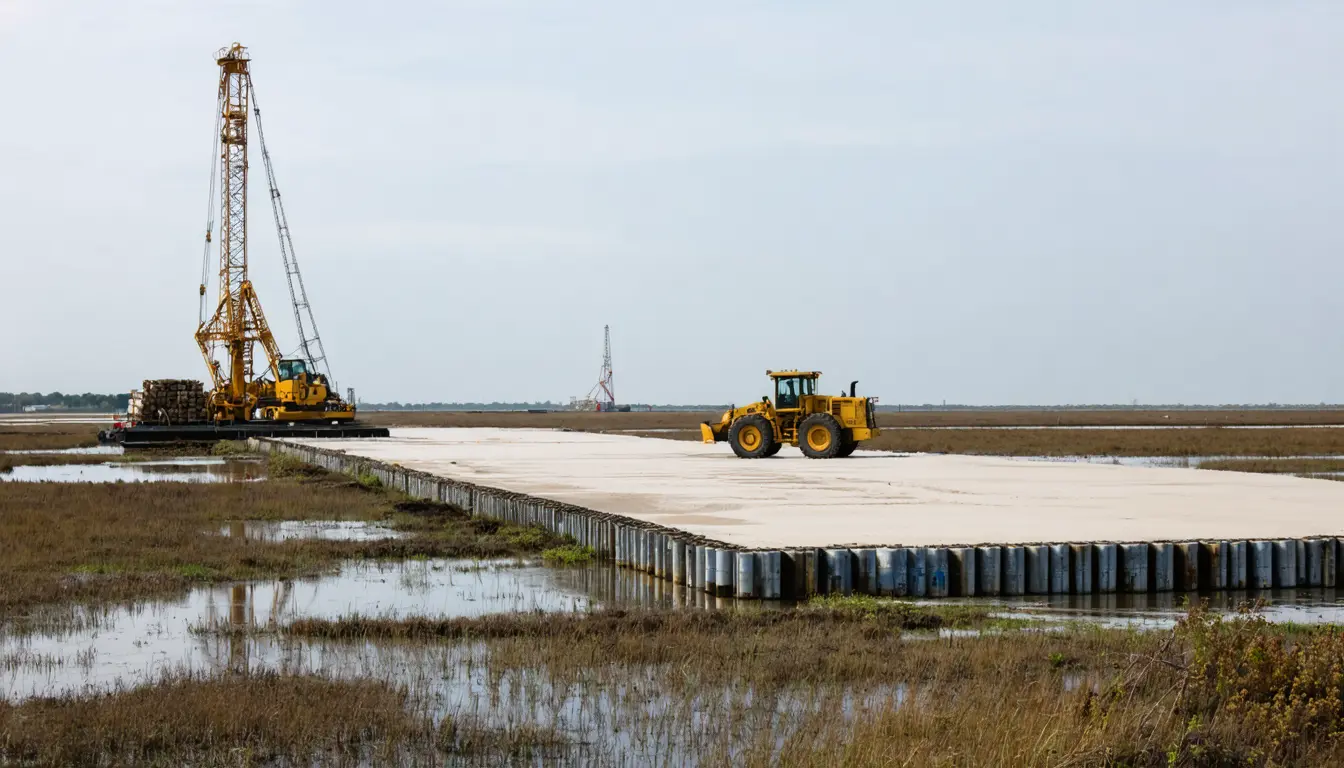
The $100bn Vermilion Parish plan prices out at roughly $800,000 an acre and $10m per job. Suppliers should read it as a two-year construction programme with launch pads attached.
The Investor · Invest desk
What happened
- SpaceX and Governor Jeff Landry announced a $100bn, 125,000-acre launch complex in coastal Vermilion Parish, which the company says will be the world's largest launch site.
- The land sits roughly 50 miles south of Lafayette, Louisiana.
- The plan runs to five pads plus mission control, offices, power plants, a propellant factory, worker housing, deep-water shipping and an airport.
- Gwynne Shotwell raised her hiring estimate from about 3,000 to nearer 10,000, citing 60 to 80% local hiring at the Texas site.
- Louisiana passed rocket-industry tax breaks and shields against public records requests and suits over environmental harm, noise and lost property value.
Why it matters
- cost Noise, environmental damage and lost property value become the neighbours' bill to absorb, because the new statutes remove the courtroom that would otherwise have priced them.
- constraint With three conservation groups pressing the FAA to revisit its pause on environmental reviews, the schedule risk to a 2029 flight sits in permitting rather than in construction.
- decision Anyone sizing camps, catering, transport or rental housing has to commit to a headcount somewhere inside a three-fold band before a single package is awarded.
- contradiction Landry's figure of more than $250bn in new investment is never reconciled with SpaceX's $100bn, so state-level totals cannot be read as capital available to bid against on this site.
Divide $100bn by 125,000 acres and the plan carries about $800,000 an acre of intended capital [16][2]. Divide it by the higher of SpaceX president Gwynne Shotwell's two hiring estimates and it comes to roughly $10m per job [17]. Those are not aerospace ratios. They are the ratios of marine and process construction, and the first packages let on this site will be utilities, tankage, dredging and dirt.
Governor Jeff Landry framed the deal as a move away from the state's history of oil and gas extraction [24]. The scope points the other way. On-site propellant manufacture, power generation and deep-water shipping are the work that extraction contractors in south Louisiana already sell, and anyone reading the announcement as an opening in aerospace fabrication is bidding into the wrong package at the wrong time.
The announcement shared a day with SpaceX's 100th Falcon 9 launch of 2026, a mission whose booster flew for the 37th time [10]. That dates the calendar precisely: groundwork is about a year away and the first Starship flight about three [21], with only two years between the 2027 start and the 2029 target [22]. Two years is thin for a first pad plus the power and propellant plant behind it, which means early awards move quickly and prequalification will close well before scopes become visible from outside.
Elon Musk's throughput claim on X, more than a dozen launch towers and over 30 Starship flights a day [25], annualises to about 10,950 flights [18]. That is roughly 11 times the 1,000-launch floor the August 20 national security memorandum tells federal agencies to accommodate by 2030 [7][18], and about 61 times the 178 orbital launches logged in 2025 [19]. The memorandum speeds permits, shares infrastructure and protects spectrum, but carries no funding [7]. The number worth pricing is the build, and $100bn is already about 6.7 times the more than $15bn SpaceX says it has spent on Starship to date [9][20].
How the deal surfaced tells suppliers how the rest of it will run. Louisiana Economic Development secretary Susan Bourgeois traces the project to a single phone call on February 5, with months of talks held under nondisclosure agreements [6], and it was disclosed through a pre-recorded video played to an invitation-only room of more than 450 officials and business leaders [15]. The land came from a courtroom rather than a listing: a federal judge's dismissal of a case against ExxonMobil freed roughly 130,000 acres in Vermilion Parish for purchase [12]. SpaceX has separately said it will help protect and restore coastal wetlands and leave part of Pecan Island undeveloped [14]. None of that assembly ran through a channel a contractor could have watched, and the contracting is unlikely to either.
What to watch
- Whether the FAA grants or refuses the conservation groups' request to reconsider pausing environmental reviews.
- The first recorded land transfers inside the roughly 130,000 acres freed by the ExxonMobil dismissal, which will show the footprint SpaceX actually buys.
- Any disclosure of incentive terms by Louisiana Economic Development, now that rocket companies are shielded from public records requests.
Clarity's read
What the record supports and how the coverage leans. The claims behind it follow.
Reality
- Evidence32
- Adoption18
- Hype gap+58
- Incentives82
- Confidence38
Claim ledger
Ranked by verification strength, evidence, and original report placement.
- [1]
SpaceX president Gwynne Shotwell initially said the project would hire about 3,000, then said the figure would likely be closer to 10,000, and that most hires would be local, noting 60 to 80% of workers at the Texas site are local residents.
- [2]
SpaceX plans a $100 billion, 125,000-acre spaceport in coastal Vermilion Parish, Louisiana, which it says will be the world's largest launch site.
- [3]
The site sits on coastal land roughly 50 miles south of Lafayette, Louisiana.
- [4]
Construction is set to start in 2027, with the first Starship flight targeted for 2029.
- [5]
SpaceX plans five launch pads on the land plus a mission-control center, office buildings, power plants, a propellant factory, worker housing, deep-water shipping and an airport.
- [6]
Louisiana Economic Development Secretary Susan Bourgeois traced the deal to a single phone call on February 5 and noted that months of talks had been kept quiet under nondisclosure agreements.
- [7]
On August 20 President Donald Trump signed a national security memorandum directing federal agencies to make room for more than 1,000 rocket launches and reentries annually by 2030; it speeds permits, shares infrastructure and protects radio spectrum, but provides no new funding.
- [8]
Cryptopolitan reported the target is a fivefold jump from the 178 orbital launches logged in 2025.
- [9]
SpaceX has already spent over $15 billion on its Starship program.
- [10]
On the Tuesday of the announcement, SpaceX completed its 100th Falcon 9 launch of 2026, a mission that broke a reuse record with a booster flying for the 37th time.
- [11]
During the last legislative session Louisiana's governor signed bills giving tax breaks to rocket companies and protecting them from public records requests and from lawsuits over environmental harm, noise and lost property value.
- [12]
A federal judge dismissed a case against ExxonMobil, freeing about 130,000 acres in Vermilion Parish for purchase.
- [13]
The Louisiana Wildlife Federation, National Wildlife Federation and Pontchartrain Conservancy have asked the FAA to reconsider its plan to pause environmental reviews.
- [14]
SpaceX has said it will help protect and restore coastal wetlands, work with conservation agencies, and keep part of Pecan Island undeveloped.
- [15]
Musk announced the plan in a pre-recorded video played to an invitation-only crowd of more than 450 officials and business leaders.
- [16]
$100bn spread over 125,000 acres is about $800,000 of planned capital per acre.
- [17]
$100bn against Shotwell's higher estimate of about 10,000 jobs is roughly $10m of capital per job.
- [18]
Over 30 Starship flights a day annualises to about 10,950 flights, roughly 11 times the 1,000-launch floor the August 20 memorandum sets for 2030.
- [19]
About 10,950 flights a year is roughly 61 times the 178 orbital launches logged in 2025.
- [20]
The $100bn spaceport budget is about 6.7 times the more than $15bn SpaceX says it has spent on Starship so far.
- [21]
Because the announcement coincided with the 100th Falcon 9 launch of 2026, the 2027 groundwork start is about one year out and the 2029 first flight about three.
- [22]
Two years separate the 2027 construction start from the 2029 first-flight target.
- [23]
Governor Jeff Landry called the deal a pivotal moment for Louisiana and said it brought in more than $250 billion in new investment.
- [24]
Governor Landry said the project moves Louisiana away from its history of oil and gas extraction and called it a chance for a permanent future and lasting prosperity.
- [25]
On X, Elon Musk wrote that Starbase Louisiana would eventually hold more than a dozen launch towers and support over 30 Starship flights a day.
Sources
1 independent publisher whose own reporting we read for this story.
- cryptopolitan.comSpaceX commits $100 billion to build world's largest spaceport in Louisiana
1 article · August 25, 2026
Topics and entities
Follow any of these and your For You feed starts watching them — no settings page required.
Topics
Entities
- National Wildlife FederationFollow
- ExxonMobil Holdings Corp.Follow
- Jeff LandryFollow
- Vermilion ParishFollow
- Elon MuskFollow
- Louisiana Economic DevelopmentFollow
- Donald TrumpFollow
- Falcon 9Follow
- Gwynne ShotwellFollow
- StarshipFollow
- Federal Aviation AdministrationFollow
- Louisiana Wildlife FederationFollow
- Susan BourgeoisFollow
- Pontchartrain ConservancyFollow
- Starbase, LouisianaFollow
- SpaceXFollow
- CryptopolitanFollow