Invest1 publisher3 min readPublished
Serve cuts 2026 guidance to $9M and signs Grubhub: the robots were never the scarce asset
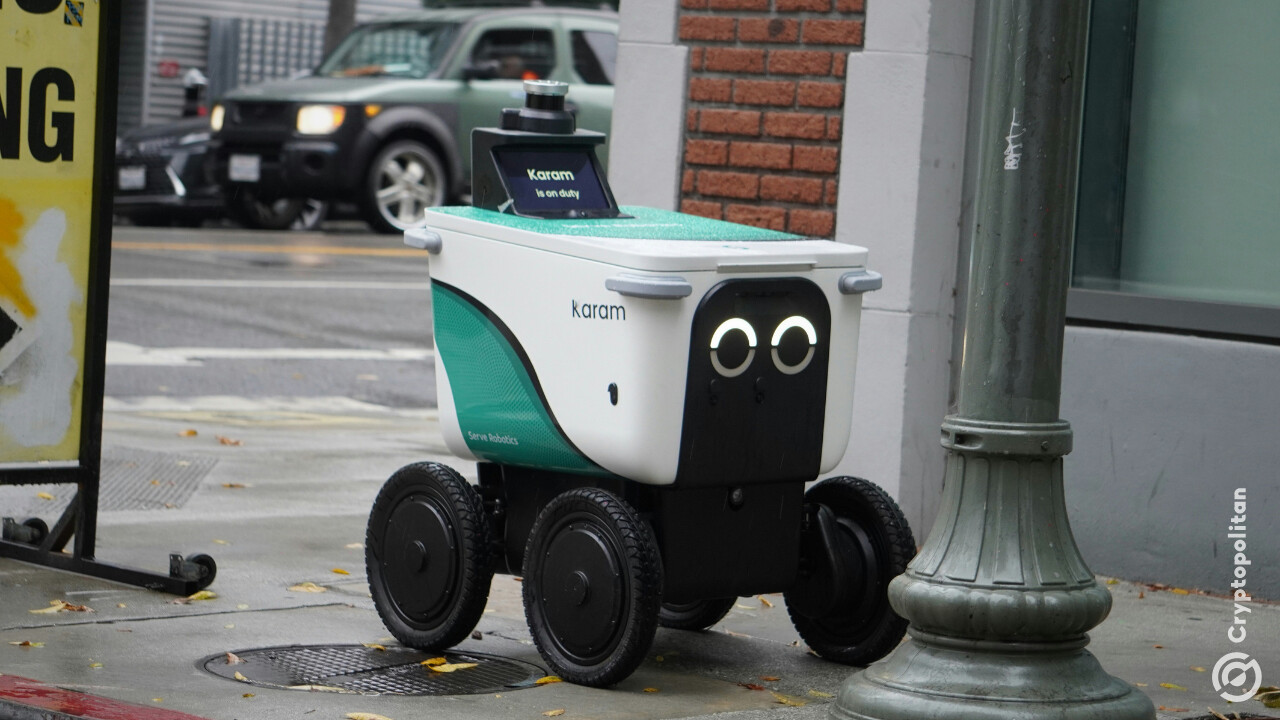
Serve Robotics lost Uber Eats, cut next year's revenue guidance by roughly two thirds, and is now renting demand from DoorDash and Grubhub. The fleet did not shrink. The order flow did.
The Investor · Invest desk
Drafted by a language model from the sources cited here and checked against its claim ledger before publication. How we use AISend a correction
What happened
- Serve Robotics signed Grubhub as a delivery partner in Chicago, Los Angeles and Alexandria, Virginia, announced Monday.
- Serve opened San Jose, California, and Washington, D.C. as its seventh and eighth U.S. markets, both via DoorDash.
- Serve cut its 2026 revenue guidance from $26 million to a range of $9 million to $10 million, disclosed on last week's second-quarter earnings call, as it works to replace revenue lost when its Uber Eats deal fell apart.
- Serve operates approximately 2,000 robots, according to CEO Ali Kashani.
- Kashani said the volume of deliveries running through Uber fell for the first time since 2022.
Compiled by The InvestorSomething wrong?How this is made
Why it matters
Serve Robotics said Monday that it has signed Grubhub as a delivery partner in Chicago, Los Angeles and Alexandria, Virginia, and opened San Jose and Washington, D.C. as its seventh and eighth markets through DoorDash [1][5]. The announcements land days after the company cut its 2026 revenue guidance from $26 million to a range of $9 million to $10 million on its second-quarter earnings call, following the collapse of its Uber Eats arrangement [6].
Put the two numbers next to each other. Serve operates roughly 2,000 robots [7], so the new guidance implies about $4,500 to $5,000 of annual revenue per robot [20], against a prior plan that was 62 to 65 percent higher [19]. Nothing mechanical changed between those two forecasts. What changed was who was feeding the fleet.
CEO Ali Kashani told investors that delivery volume running through Uber fell for the first time since 2022, and that Serve does not plan to renew the Uber deal in 2027, citing what he described as "differing views" on how the robots should be deployed [8][2]. The day after that call, Uber said it had sold its entire stake in Serve, a company it spun out more than five years ago [9][10]. "I have a lot of respect for Uber. They kind of helped us bootstrap this," Kashani said. "We just have a different idea for what we want next" [3].
The Grubhub deal is the replacement, and Kashani framed it in terms of reach: each platform Serve plugs into expands the number of restaurants and neighborhoods its fleet can serve [11]. At launch that means more than 100 participating restaurants in Chicago and almost 200 in Los Angeles [12]. Grubhub is owned by Wonder, which operates its own restaurant brand and whose Alexandria kitchen will dispatch orders to Serve robots [13]. PJ Poykayil, Wonder's EVP of Customer Delivery Operations, said the partnership brings autonomous delivery to Grubhub customers in the three cities while also enabling robot delivery from the Alexandria location [4].
So Serve has swapped one aggregator dependency for two. That is better than one, and it is not the same as owning demand. DoorDash, now the channel for San Jose and Washington, introduced its own in-house delivery robot, Dot, in Phoenix [21]. The distributor is also a potential substitute manufacturer, which is a familiar position for a hardware supplier and a poor one.
The cost side is where Serve retains some control. The company is using small existing sites for staging, charging, dispatch and maintenance, including established parking structures for the Washington rollout, with the first such site opening in Miami [14][15]. San Jose, its first Bay Area location, has completed a month of deliveries, and the Washington rollout covers Dupont Circle and parts of downtown, with Talkin' Tacos among the first restaurants signed [16][17]. The two new metros hold about 8 million people between them [18].
Watch three things. First, whether the $9 million to $10 million range holds through the Uber wind-down, since it was set with Uber volumes already falling [6][8]. Second, whether Grubhub and Wonder order density in three cities produces measurable revenue per robot rather than restaurant counts [12][20]. Third, how far DoorDash pushes Dot [21]: if the largest aggregator in Serve's new mix scales its own hardware, the pricing conversation in 2027 will not be about robots.