Data centre backlash pushes a longtime Democratic senator to draft curbs on expansion
A longtime Democratic senator is drafting curbs on US data centres, his adviser told the BBC, as Data Center Watch counts 833 opposition groups. For operators planning new AI capacity, the risk this year is political pressure on local approvals; what the bill would require has not been reported.
The Board Room · Leadership desk
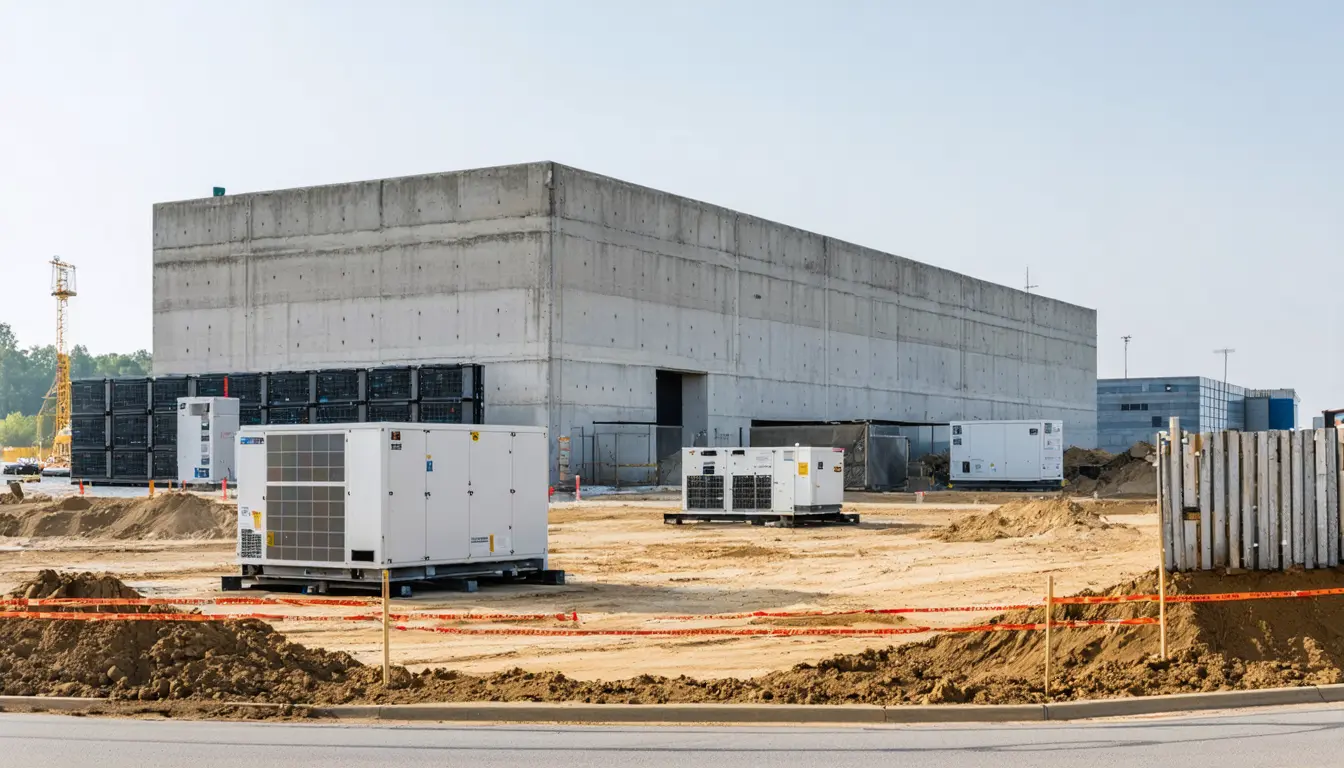
833 community groups organise against data centres, more than double earlier this year, per Data Center Watch; about 3,000 data centres operate in the US and could double, per Pew; an Amazon complex in Indiana will have 782 diesel generators.
| Figure | Value | Note | Claim |
|---|---|---|---|
| Community groups organising against data centres | 833 groups | 7 | |
| Data centres operating in the US, about | 3,000 data centres | could double in the next few years | 9 |
| Diesel generators at one Amazon complex in Indiana | 782 generators | 26 buildings, over a square mile | 10 |
What happened
- Pew Research Center counts about 3,000 data centres operating in the US, a number that could double in the next few years.
- In Indiana, an Amazon complex going up across the street from resident Angelita Soriano will have 26 buildings, cover more than a square mile and maintain 782 diesel generators.
- President Donald Trump has called the backlash a "sick conspiracy" and described towns trying to keep data centres out as "backwards and poor".
- National polling ranks AI regulation and data centres among voters' top issues this cycle, behind the Iran War and several economic concerns.
Why it matters
- constraint A Senate bill has little direct reach over a given site, because permits come from local rules, so the nearer-term hurdle for new capacity is local approval.
- exposure Moving a project to another state does not escape organised opposition, since groups are now active in almost every state.
- contradiction The White House backs unrestrained AI growth while lawmakers, Republicans among them, are in direct conflict with it, so federal direction is split.
By his adviser's account, the senator now meets staff regularly to track the impact of data centres [1]. A year ago he was not thinking much about them [2]. "This happens sometimes, something starts slow and then it goes fast," the adviser said [3]. The count of organised opposition comes from Data Center Watch, which collects data for AI industry stakeholders and is part of the AI startup 10a Labs [8]. It says groups more than doubled in the first few months of this year [7], so the earlier figure was below about 417 (833 divided by two is 416.5) [18].
A skeptic would say a draft from one senator is a signal, not a siting rule, and that the only account of it comes from an anonymous source. The second point is accurate. The adviser spoke on condition of anonymity because he is not permitted to speak to the press [4], and the BBC identifies the senator only as a longtime Democratic senator [5].
The first point holds less well, because the incentive is what travels. Chloe Autio, an AI policy adviser, said: "This isn't just an issue on the left, there is huge pushback among conservatives to data centres" [13]. She added: "Whoever articulates a clear position and sticks to it, in either party, really stands to benefit" [14]. The BBC reports that politicians at all levels are now all but required to take a stand [15]. We'd expect a position that earns votes in a midterm season to be copied by local officials first.
For an operator the sequencing is a trade-off between schedule and consent. This quarter's site choice fixes which local authority issues the permits [6]. Next quarter's hearings are where organised residents appear. Residents in Indiana, Arizona, Michigan, Pennsylvania and Oregon list the speed at which projects seem to be approved among their complaints, alongside size, noise and effects on air, water and energy [12]. A fast approval shortens the schedule and matches the complaint those residents describe.
We do not know yet whether the growth in groups continued after the first few months of the year, since the report cites only that period. Proponents of the projects argue they create more, and better paying, local jobs, according to the BBC [17].
What to watch
- The text of the senator's bill, and whether it reaches permitting, power or water use.
- Data Center Watch's next count of opposition groups, to show whether growth continued past the first few months of the year.
- Whether candidates in both parties adopt explicit data centre positions, as Chloe Autio expects the winners to.
Clarity's read
What the record supports and how the coverage leans. The claims behind it follow.
Reality
- Evidence45
- Adoption
- Insufficient
- Hype gap+15
- Incentives55
- Confidence50
Claim ledger
Ranked by verification strength, evidence, and original report placement.
- [1]
A senior policy adviser to a longtime Democratic senator told the BBC the senator is having regular meetings with staff to track the impact of data centres and is working on new legislation aimed at curbing their rapid expansion across the country.
- [2]
A year ago, the senator was not thinking much about data centres.
- [3]
"This happens sometimes, something starts slow and then it goes fast", the senior policy adviser to the Democratic senator told the BBC.
- [4]
The adviser spoke to the BBC on condition of anonymity because he is not permitted to speak to the press.
- [5]
The BBC's report identifies the senator only as a longtime US Democratic senator and does not name him.
- [6]
Data centres are built through very local rules and permits, meaning federal lawmakers like US senators have little say in the process.
- [7]
During the first few months of this year, community groups organising against data centres more than doubled to 833, cropping up in almost every US state.
- [8]
Data Center Watch collects data for AI industry stakeholders and is part of an AI startup, 10a Labs.
- [9]
There are about 3,000 data centres currently operating in the US, with that number potentially doubling in the next few years.
- [10]
A new Amazon data centre is being built across the street from Indiana resident Angelita Soriano's home; when complete, the 26-building structure will take up more than a square mile and maintain 782 diesel-powered generators.
- [11]
President Donald Trump has dubbed the backlash to data centres a "sick conspiracy" and said people and towns working to keep the buildings out are "backwards and poor".
- [12]
Residents the BBC spoke to in Indiana, Arizona, Michigan, Pennsylvania and Oregon, all organising locally against data centres, cited concerns including size, construction and operational noise, impact on air, water and energy resources, and the speed at which projects seem to be approved by local authorities.
- [13]
"This isn't just an issue on the left, there is huge pushback among conservatives to data centres," Chloe Autio, an AI policy adviser, said.
- [14]
"Whoever articulates a clear position and sticks to it, in either party, really stands to benefit," Chloe Autio said.
- [15]
Opposition has become so strong so quickly that politicians at all levels are now all but required to take a stand.
- [16]
The backlash has put many on Capitol Hill, even Republicans, in direct conflict with President Trump, who has championed the unrestrained growth of AI technology.
- [17]
Proponents of building data centres often argue the projects will create more, and better paying, local jobs.
- [18]
Because groups more than doubled to 833, the earlier count was below about 417.
- [19]
New national polling shows AI regulation and data centres are among the top issues for voters this election cycle, behind the ongoing Iran War and various aspects of the economy.
Get this ledger inside ChatGPT. Ask about any of our stories and the answer brings its figure, each claim’s verdict and the sources. Free, no account.
Sources
1 independent publisher whose own reporting we read for this story.
- bbc.co.ukHow backlash against data centres could shape the US midterm elections
1 article · October 14, 2026
Topics and entities
Follow any of these and your For You feed starts watching them — no settings page required.
Topics
- AI Infrastructure PolicyFollow
- US Midterm ElectionsFollow
- Data Centre BacklashFollow