Select earthquake forecast models held up through a decade of California quakes
Bristol-led researchers found select models among 27 stayed consistent with almost 600 California earthquakes of M3.95 or greater. These are probabilistic forecasts, and lead author José Bayona says the test supports operational use.
The Scientist · Science desk
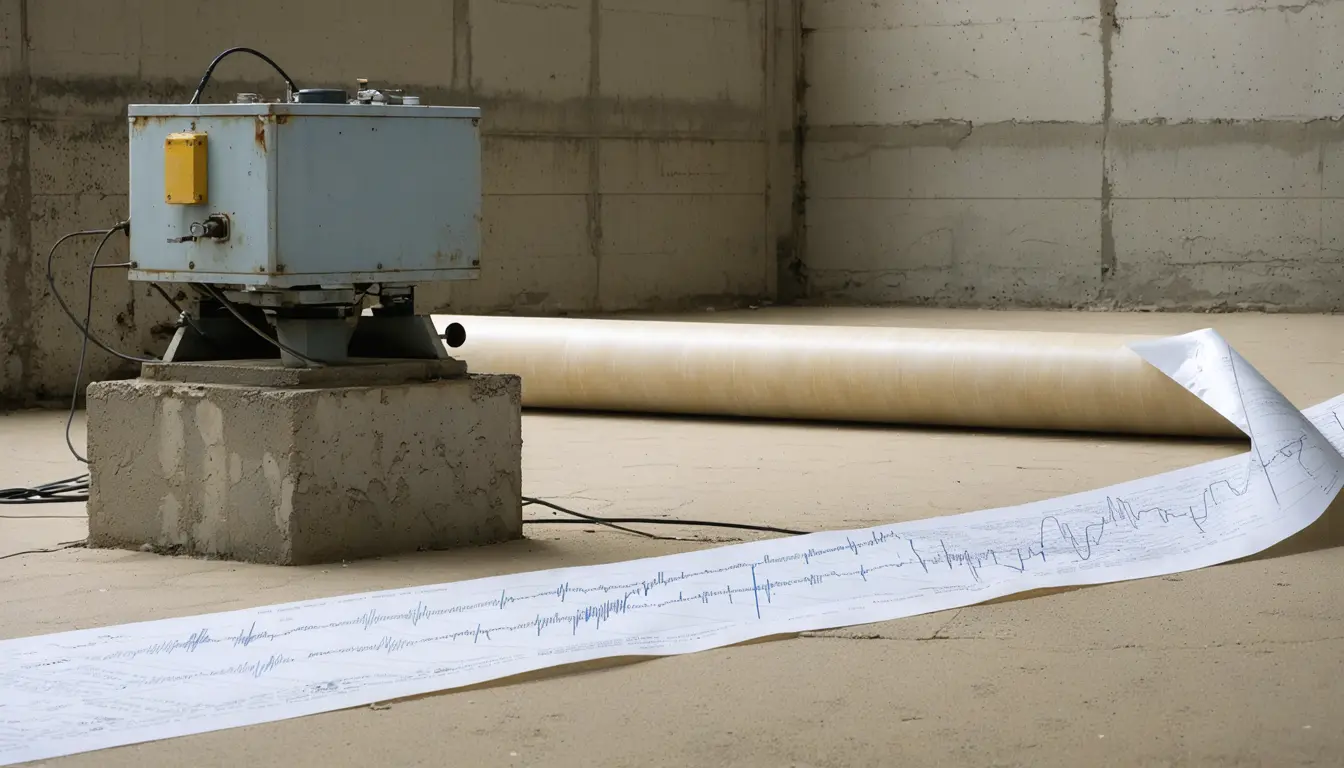
Key figures: more than 50,000 next-day forecasts for California, produced by 27 forecasting models over more than a decade, were compared with almost 600 earthquakes of magnitude 3.95 or greater recorded over the testing period.
| Figure | Value | Note | Claim |
|---|---|---|---|
| Next-day forecasts for California, more than | 50,000 forecasts | 1 | |
| Earthquakes of M3.95 or greater, almost | 600 earthquakes | recorded over the testing period | 2 |
| Models that made them | 27 models | 1 |
What happened
- Over more than a decade the models automatically produced a database of more than 50,000 next-day forecasts for California.
- The Collaboratory for the Study of Earthquake Predictability generated the forecasts automatically and fully prospectively.
- Earlier Collaboratory experiments covered Japan, New Zealand and Italy, but the California run stands out for its number of models, its length and its volume of prospective observations.
- The team released an open-source package with the code, data and documentation needed to replicate its analyses, figures and results.
Why it matters
- What it limits constraint The finding covers select models only, so it does not extend to the other models among the 27.
- Who has to decide decision Agencies and scientific organizations building or weighing operational forecasting systems now have a prospective California record to set against their own design choices.
- What's now possible capability The authors say the work could help people in earthquake-prone countries decide during periods of increased activity, and the forecasts tested look one day ahead.
Lead author José Bayona drew the line on prediction himself. "No scientific method can currently predict exactly when and where the next earthquake will occur. However, probabilistic forecasting can provide useful information about where, when and how large earthquakes are more likely over a defined period," he said. [4] The models give odds for a window of time. The paper asks whether those odds matched what was later observed, and for select models the answer was yes. [3]
The design is the strong part. Because the forecasts were issued ahead of the quakes they are scored against, none could have been tuned to them after the fact. [5]
The sample size to keep in mind is the almost 600 quakes of M3.95 or greater. [2] The more than 50,000 forecasts [1] come from 27 models scored against the same events, and we would not count them as 50,000 independent tests.
Bayona describes the target this way: "We've provided a model 'recipe' identifying elements that can be considered when developing forecasts consistent with the observed number, spatial locations and magnitude distribution of earthquakes." [7] That is a check on counts, places and sizes. The thing this doesn't tell you is whether any model beat a simple reference forecast, or how many of the almost 600 quakes were big enough to damage anything; the summary of the paper reports neither.
Bayona's verdict goes further than the check. "This provides strong evidence for their use in public operational forecasting systems," he said. [11] That is the lead author's judgement of his own study.
In our view the evidence supports using forecasts of this type as probabilities in California. Whether it carries to places with fewer M3.95 quakes is a separate question, because the authors single out the volume of prospective observations as what makes the California run distinctive. [6]
The paper is José A. Bayona et al., "Select earthquake forecasting models demonstrate consistency with prospective decadal observations in California", Nature Communications (2026), DOI 10.1038/s41467-026-76243-7. [9]
What to watch
- Whether the full paper reports which models counted as select and how they compared with a simple reference forecast.
- Whether groups outside Bristol re-run the analysis with the released open-source package and reach the same California result.
- Whether any government agency or civil protection authority adopts the published model recipe in an operational forecasting system.
Clarity's read
What the record supports and how the coverage leans. The claims behind it follow.
Reality
- Evidence68
- Adoption
- Not scored
- Hype gap+15
- Incentives
- Not scored
- Confidence55
Claim ledger
Ranked by verification strength, evidence, and original report placement.
- [1]
Over more than a decade, 27 earthquake forecasting models automatically generated a database of more than 50,000 next-day forecasts for California.
- [2]
The forecasts were contrasted against almost 600 earthquakes of magnitude 3.95 or greater recorded over the testing period.
- [3]
The results show that select models described the location, timing and magnitude of earthquake activity consistently, as measured against observations collected prospectively.
- [4]
Bayona said: "No scientific method can currently predict exactly when and where the next earthquake will occur. However, probabilistic forecasting can provide useful information about where, when and how large earthquakes are more likely over a defined period."
- [5]
The forecasts were generated automatically and fully prospectively by the Collaboratory for the Study of Earthquake Predictability (CSEP), a global community of scientists dedicated to advancing earthquake predictability research through prospective evaluation of probabilistic seismicity models.
- [6]
Previous CSEP experiments have evaluated earthquake forecasts in regions such as Japan, New Zealand and Italy, but the California experiment is distinctive because of its combination of the number of models tested, the length of the experiment and the quantity of prospective earthquake observations available for evaluation.
- [7]
Bayona said: "We've provided a model 'recipe' identifying elements that can be considered when developing forecasts consistent with the observed number, spatial locations and magnitude distribution of earthquakes."
- [8]
The team provided an open-source software package containing the code, data and documentation needed to transparently replicate the study's analyses, figures and results.
- [9]
The paper is José A. Bayona et al., Select earthquake forecasting models demonstrate consistency with prospective decadal observations in California, Nature Communications (2026), DOI 10.1038/s41467-026-76243-7.
- [10]
The University of Bristol-led study, published in Nature Communications, could help millions of people living in earthquake-prone countries make better-informed decisions about seismic risk, particularly during ongoing periods of increased earthquake activity.
- [11]
Bayona said: "Our study shows that the type of models currently used for operational earthquake forecasting in some countries can produce forecasts that remain consistent with observations over long periods of prospective testing. This provides strong evidence for their use in public operational forecasting systems."
- [12]
The findings could have practical implications for government agencies, civil protection authorities and scientific organizations developing or considering developing operational earthquake forecasting systems.
Get this ledger inside ChatGPT. Ask about any of our stories and the answer brings its figure, each claim’s verdict and the sources. Free, no account.
Sources
1 independent publisher whose own reporting we read for this story.
- phys.orgNearly 600 California earthquakes help validate models that forecast next-day seismic risk
1 article · October 15, 2026
Topics and entities
Follow any of these and your For You feed starts watching them — no settings page required.
Topics
- Earthquake forecastingFollow
- SeismologyFollow
Entities
- Collaboratory for the Study of Earthquake PredictabilityFollow
- University of BristolFollow
- Nature CommunicationsFollow
- José A. BayonaFollow