Samsung's Galaxy S26 FE carries the memory shortage into its entry price
The Fan Edition keeps last year's screen, sensors and 8GB of memory while starting $50 higher, and the explanation on offer comes from three reviewers reading the memory market rather than from Samsung itself.
The Product Desk
What happened
- Samsung introduced the Galaxy S26 FE at its August 2026 Unpacked event starting at $699, fifty dollars above the $649 entry price of the S25 FE it replaces.
- The 6.7-inch FHD+ AMOLED panel at up to 120Hz and the camera array of 12MP ultrawide, 50MP main, 8MP 3x telephoto and 12MP front all carry over unchanged from last year.
- Both US storage tiers, 128GB and 256GB, still top out at 8GB of RAM, the same as the S25 FE, while every other phone in the S26 family ships with 12GB.
- The substantive changes are a 3nm Exynos 2500 in place of the 4nm Exynos 2400, plus Android 17 and One UI 9 out of the box instead of Android 16 and One UI 8.
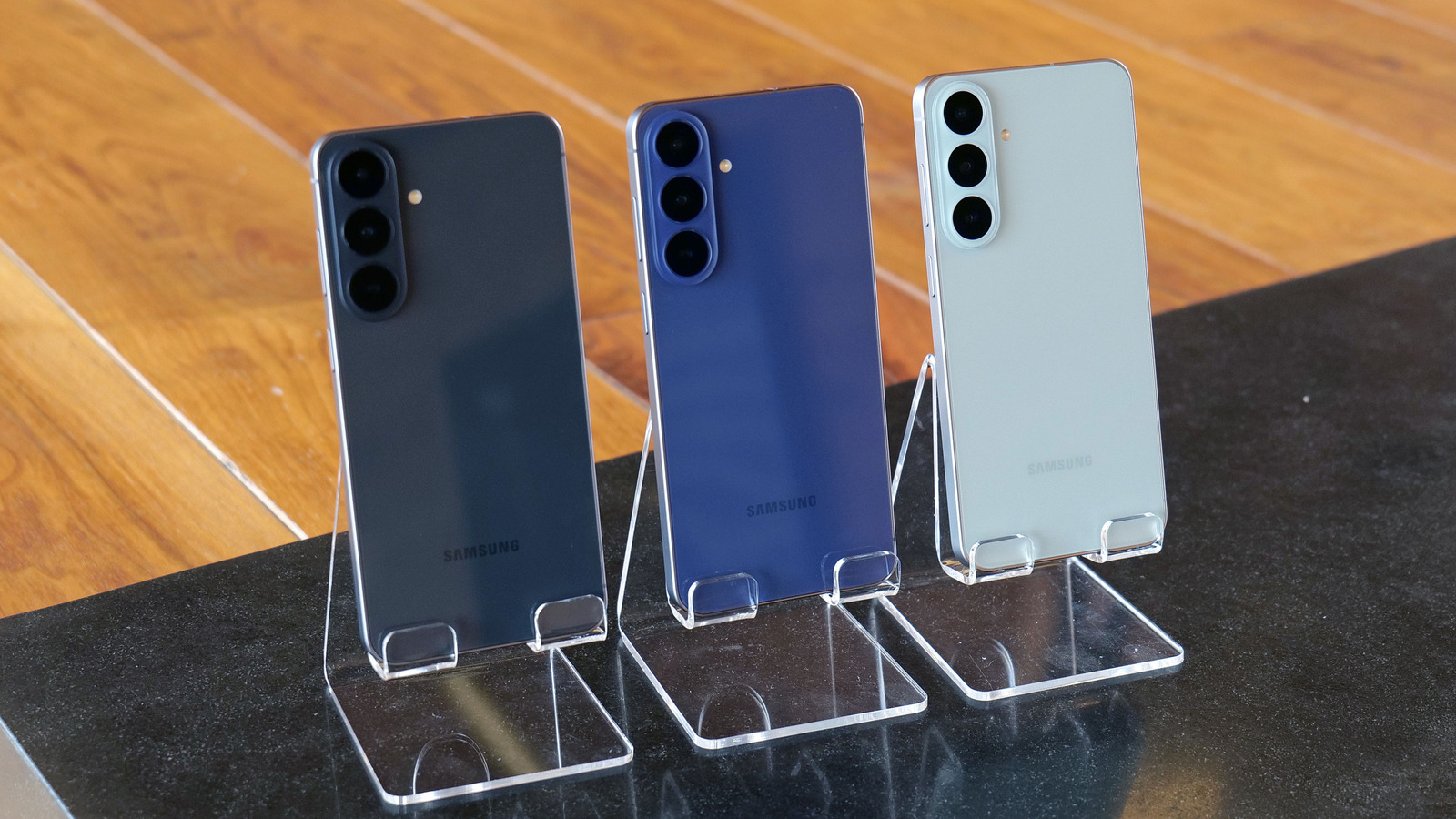
- Shipments start September 3 from select carriers in pistachio, blueberry and graphite, completing the Galaxy S26 line that launched in March 2026.
Why it matters
- cost The increase lands on the cheapest phone in the range, whose buyers receive the same panel and the same sensors as last year's model and pay more for them.
- decision With Engadget reporting used S26+ units around $700, the FE's remaining pitch to a buyer at that price is a warranty and a fresh unit rather than better hardware.
- precedent The rise appears as GBP 50 in the UK and $50 in the US, so it reads as a cost applied per market rather than a currency artefact, which is how the next entry-level launches are likely to be priced.
- constraint Samsung defended the memory floor and let the price float, which leaves 8GB as the fixed quantity on a phone sold with a seven-year support commitment.
Seven point seven percent is the real size of this. Fifty dollars on a $649 starting price works out to a 7.7 percent increase [32], and in a spec upgrade the line you pay more for is the line that got bigger. Here the memory line is identical and the price line moved [10][4], which is the shape of a cost being handed down rather than a feature being added.
What the increase buys in hardware is thin enough to inventory. The chip is the one substantive change, and Engadget says it has not yet run the Exynos 2500 against the 2400 head to head and is going on published benchmarks [14]. The selfie camera widened to an 85-degree field of view from 80, according to The Verge [22]. A 30-minute charge reaches 69 percent instead of 65 percent, on the same 4,900mAh battery and the same 45W wired charging [20]. Engadget's hands-on writer also reports the rear panel feels like polycarbonate rather than glass [24].
Samsung has not said the word RAM. Engadget writes that the rise "likely" has something to do with the RAM supply crisis [6]; its hands-on says "most likely" the ongoing global shortage [7]; The Verge pins the hike on what it calls RAMageddon and notes Samsung would not give it US pricing before launch [8][9]. The company statement that did arrive, from MX executive Jay Kim, describes a phone "purposefully designed to deliver the signature strengths of the Galaxy S series" [28]. So the memory story is inference held in common by three outlets, not disclosure [25].
There is an offset, and it belongs to Google. Every purchase includes six months of Google AI Pro, listed at $19.99 a month [29], which is $119.94 of nominal value against a $50 increase, roughly 2.4 times the size of it [31]. The trial ends after six months while $699.99 stays on the price list [5].
When an input cost rises there are three levers: price, spec, or margin. Samsung pulled price and left the memory alone, and Engadget's hands-on gives it credit for not going lower [7], which matters because 8GB is already a third less than the 12GB in every other S26 model [11][26].
For the person choosing on Monday, the exercise is two columns. Left: what the new unit does that a software update to last year's cannot. That column is short. Most of the AI features reach the S25 FE with One UI 9, My FanCam does not because it needs newer neural processing [18], and Horizontal Lock for the S25 series is unconfirmed [19]. Right: what the same money reaches elsewhere. The S26+ that the FE closely resembles launched at $1,099.99 and is currently $899.99 direct from Samsung [16], a $200 gap [27] for a brighter panel and better telephoto and ultrawide [24][16]. Both phones carry seven-year support commitments, so the FE's window ends a year later on the calendar rather than running longer [23][30].
If the left column holds one camera trick and the right column holds a $200 step up to better optics, then the $50 is best read as the 2026 memory market showing up in the one place buyers actually look.
What to watch
- Real-world benchmarks of the Exynos 2500 against the 2400, which Engadget says it has not yet run head to head, would show how much of the $50 the chip earns.
- Whether One UI 9 brings Horizontal Lock to the S25 series, which Samsung has not confirmed, decides how short the S26 FE's exclusive feature list really is.
- Whether carrier promotions and trade-in credits quietly absorb the $50, leaving the list price as the only place the memory shortage is visible.
Clarity's read
What the record supports and how the coverage leans. The claims behind it follow.
Reality
- Evidence64
- Adoption
- Insufficient
- Hype gap+25
- Incentives45
- Confidence62
Perspective Coverage
4 publishers- Builder
- Builder 16%
- Operator
- Operator 65%
- Investor
- Investor 19%
Claim ledger
Ranked by verification strength, evidence, and original report placement.
- [1]
Both phones have identical screens with the same specs, including a 6.7-inch FHD+ Dynamic AMOLED 2x display with up to 120Hz refresh rate.
- [2]
There is no bump to camera specs: both have a 12MP ultrawide, 50MP main, 8MP telephoto with 3x optical zoom and 12MP front camera.
- [3]
Samsung introduced the Galaxy S26 FE at its Unpacked August 2026 event, following the Galaxy S25 FE introduced in September 2025.
- [4]
The Galaxy S25 FE started at $649 while the Galaxy S26 FE starts at $699, which is $50 more.
- [5]
The $699.99 Galaxy S26 FE completes the Galaxy S26 series that launched in March 2026, with shipments from select carriers starting September 3.
- [6]
Engadget says the price increase likely has something to do with the RAM supply crisis, which has resulted in rising prices for tech across the board.
- [7]
Engadget's hands-on says the price has increased by $50 from the S25 FE, most likely due to the ongoing global RAM shortage, and that at least Samsung did not go lower on memory year over year.
- [8]
The Verge attributes the price hike to "RAMageddon" and reports the S26 FE at GBP 699 in the UK with 8GB of RAM and 128GB of storage, GBP 50 more than the S25 FE.
- [9]
The Verge reports Samsung would not tell it US pricing in advance of the launch.
- [10]
Both US storage options for the S26 FE (128GB and 256GB) tap out at 8GB of RAM, like the S25 FE.
- [11]
The FE's 8GB of RAM is light considering every other member of the S26 family comes with 12GB.
- [12]
The Verge says little has changed hardware-wise since the S25 FE launched 12 months ago, with the 6.7-inch OLED display, 4,900mAh battery and triple rear camera all identical.
- [13]
The S26 FE runs a slightly boosted Exynos 2500 (3nm) processor compared with the Exynos 2400 (4nm) in the S25 FE.
- [14]
Engadget says it has not yet tested the two processors against one another, and that head-to-head benchmarks suggest better gaming performance and slightly improved battery efficiency from the Exynos 2500.
- [15]
The Galaxy S26 FE will be available in three colors, pistachio, blueberry and graphite.
- [16]
The Verge reports the FE looks almost identical to the S26 Plus, which cost $1,099.99 at launch but can currently be had for $899.99 direct from Samsung, and that the mainline S26 phones have more RAM, a faster chip, better build quality and superior telephoto and ultrawide cameras.
- [17]
Engadget reports the S26+ starts at $900 new and that used models can already be had for around $700.
- [18]
My FanCam comes natively with the S26 FE and requires advanced neural processing, so it will not run on the S25 FE, while most other Galaxy AI features arrive on the S25 FE with the OS update.
- [19]
Horizontal Lock, an upgrade to Super Steady introduced with the S26 series, might come to the S25 series but is not confirmed.
- [20]
Both phones have 4,900mAh batteries and 45W wired charging, but a 30-minute charge reaches 69 percent on the S26 FE versus 65 percent on the S25 FE.
- [21]
The S26 FE ships with Android 17 and One UI 9 out of the box, while the S25 FE shipped with Android 16 and One UI 8 and can be updated.
- [22]
The Verge reports the 12-megapixel selfie camera is a little wider, with an 85-degree field of view, up from 80.
- [23]
The S26 FE comes with seven years of software support, just like the previous model.
- [24]
Engadget's hands-on reports the FE's rear panel feels like polycarbonate rather than glass, and its display peaks at 1,900 nits compared with 2,600 for the S26+.
- [25]
No source reports Samsung attributing the $50 increase to memory prices; the attribution comes from Engadget and The Verge in hedged terms, while the company statement supplied at launch discusses design and features only.
- [26]
The FE's 8GB of RAM is one third less than the 12GB fitted to every other S26 model.
- [27]
The gap between the S26 FE's $699.99 price and the S26+ at its current $899.99 direct price is $200.
- [28]
Jay Kim, EVP and Head of Customer Experience Office, Mobile eXperience Business at Samsung Electronics, said the S26 FE is "purposefully designed to deliver the signature strengths of the Galaxy S series, ensuring that every feature makes a meaningful difference in users' daily lives."
- [29]
Samsung will offer a 6-month free trial of Google AI Pro ($19.99/month) with every purchase.
- [30]
Because both FE generations carry seven-year support windows and launched a year apart, the S26 FE's support end date falls one year later on the calendar rather than covering a longer period.
- [31]
Six months of Google AI Pro at $19.99 a month is $119.94 of nominal value, about 2.4 times the $50 price increase.
- [32]
A $50 rise on a $649 starting price is a 7.7 percent increase.
Get this ledger inside ChatGPT. Ask about any of our stories and the answer brings its figure, each claim’s verdict and the sources. Free, no account.
Sources
4 independent publishers whose own reporting we read for this story.
- engadget.comThe Samsung Galaxy S26 FE looks like a perfectly cromulent budget flagship
2 articles · August 27, 2026
- gizmodo.comSamsung’s Galaxy S26 FE Strips the S26+ Down to Its Basics
1 article · August 27, 2026
- theverge.comSamsung’s Galaxy S26 FE pairs last year’s hardware with last month’s software
1 article · August 27, 2026
- thurrott.comSamsung's More Affordable Galaxy S26 FE Launches on September 3 for $700
1 article · August 27, 2026
Topics and entities
Follow any of these and your For You feed starts watching them — no settings page required.
Topics
- Android SmartphonesFollow
- Memory Chip ShortageFollow