Product1 publisherNot yet confirmed elsewhere3 min readPublished
Hydrogen through a whole flight cycle: Rolls-Royce moves on to the integration problem
The company says a modified aero gas turbine ran on 100% hydrogen from take-off to landing. Storage, fuel delivery, airframe integration and infrastructure remain unsolved.
The Product Desk
What happened
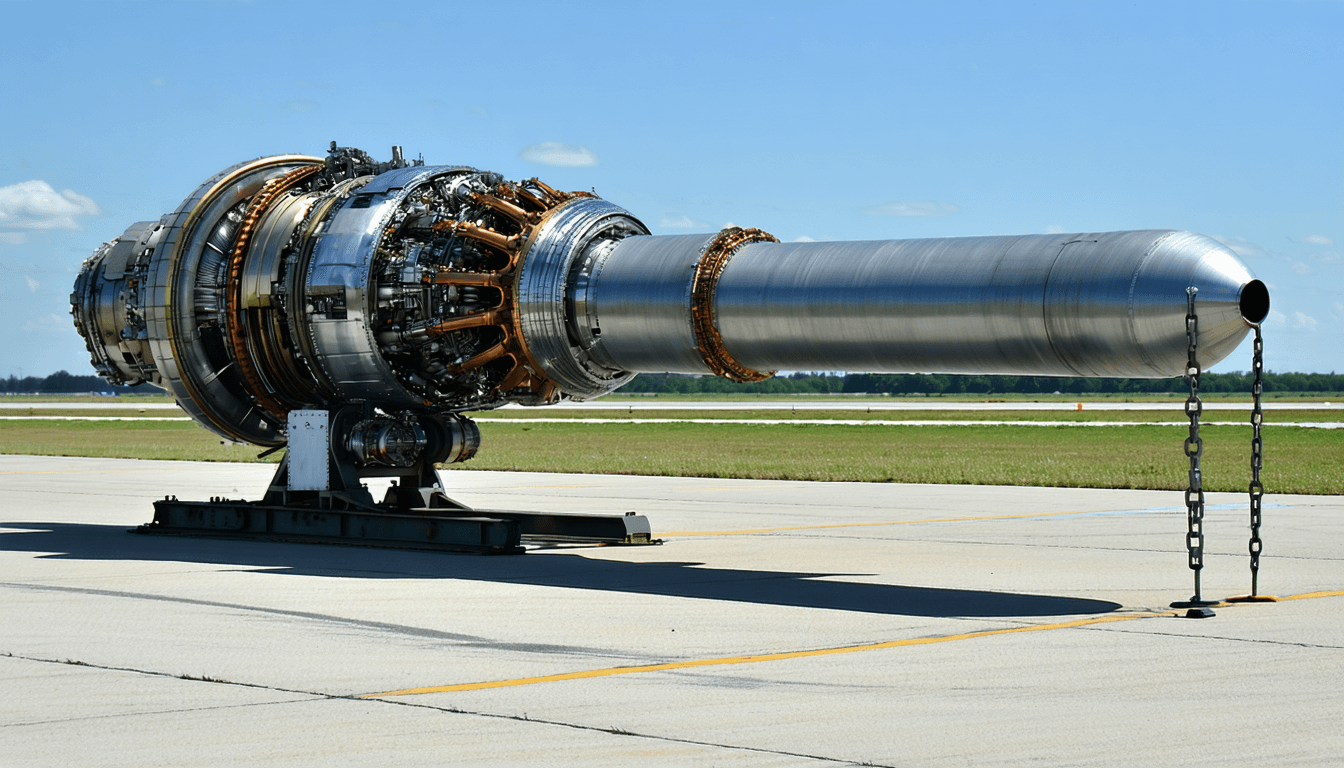
- Rolls-Royce demonstrated a modern aero gas turbine running on 100 percent hydrogen across a simulated flight cycle, completing tests covering take-off, cruise and landing.
- Tata Consultancy Services joined the Rolls-Royce hydrogen propulsion programme as an engineering and technology partner in 2024.
- The programme began in 2022 with Rolls-Royce and easyJet and has focused on proving whether hydrogen can be used reliably in an aircraft gas turbine across different phases of flight.
- TCS supported Rolls-Royce with fuel system and engine controls integration, hydrogen combustion analysis, test preparation, validation, data analytics, risk management and detailed design.
- The modified engine was operated entirely on hydrogen during the demonstration, and engineers tested how its combustion, fuel delivery and control systems performed as operating conditions changed from take-off through cruise and landing.
Compiled by The Product DeskSomething wrong?How this is made
Why it matters
Rolls-Royce says it has run a modern aero gas turbine on 100 percent hydrogen through a simulated flight cycle covering take-off, cruise and landing [1]. That framing is the news: getting hydrogen to burn in a combustor is a chemistry result, while keeping it stable and controllable through the throttle transitions of an entire flight is a fuel-system and controls result, and the second one is what sets a certification timeline.
The programme started in 2022 with Rolls-Royce and easyJet, aimed at whether hydrogen can be used reliably in an aircraft gas turbine across different phases of flight [5]. Tata Consultancy Services joined in 2024 as an engineering and technology partner [4], two years into the effort [16], and its declared scope reads like an integration contract rather than a research one: fuel system and engine controls integration, hydrogen combustion analysis, test preparation, validation, data analytics, risk management and detailed design [6]. The engine used was modified and ran entirely on hydrogen, with engineers watching combustion, fuel delivery and control systems as operating conditions changed [2].
Adam Newman, chief engineer of the hydrogen demonstrator programme at Rolls-Royce, said the tests produced insights into how 100% hydrogen behaves in a modern aero gas turbine across a full flight cycle while validating combustion, fuel and control system technologies [7]. He said the findings will feed future propulsion work including UltraFan [8]. The company frames the value of the test as data across a complete simulated flight rather than an isolated engine operating condition [3], which is a fair description of the difference between a rig point and a duty cycle.
Hydrogen's combustion and storage behaviour differs from jet fuel, so the systems that deliver and burn it have to change, and the programme was therefore built around integrating several technologies rather than showing that hydrogen can burn inside an engine [9]. The demonstration involved Rolls-Royce, TCS, easyJet, NASA and the UK Health and Safety Executive along with other industry partners, covering propulsion development plus testing and safety [11]. TCS says it will continue on hydrogen aviation technologies with Rolls-Royce [13]. Anupam Singhal, TCS president for manufacturing, described the milestone as showing what is possible when advanced engineering is combined with digital capabilities and deep ecosystem collaboration [12]; that sentence contains no engineering content and should be read as such.
The caveats are stated plainly, which is worth noting. The test does not mean hydrogen commercial aircraft are ready for service, and storage, fuel delivery, aircraft integration and infrastructure all still need to be addressed before deployment at scale [10]. The environmental case is framed as eliminating in-flight carbon dioxide emissions when deployed at scale, against aviation's roughly 2-3% share of global CO2 emissions [14][15]. In-flight is the operative qualifier: nothing here speaks to how the hydrogen is produced or delivered to an apron.
What to watch: whether Rolls-Royce names the engine, the test dates and measured numbers, none of which appear in the account released [17]. Watch for nitrogen oxide and combustor durability data, since a full-cycle test generates exactly that and its absence from the announcement is a choice. Watch the UltraFan connection, which is the tell for whether this is a technology feeder or a separate hydrogen product line. And watch easyJet, the only airline in the partner list and therefore the only party with a fleet plan attached.
Clarity's read
What the record supports and how the coverage leans. The claims behind it follow.
Reality
- Evidence34
- Adoption11
- Hype gap+22
- Incentives74
- Confidence42
Claim ledger
Ranked by verification strength, evidence, and original report placement.
- [1]
Rolls-Royce demonstrated a modern aero gas turbine running on 100 percent hydrogen across a simulated flight cycle, completing tests covering take-off, cruise and landing.
ReportedSupportedSource: Rolls-Royce, via Interesting Engineering2 sources— create a free account to open themView cited source - [2]
The modified engine was operated entirely on hydrogen during the demonstration, and engineers tested how its combustion, fuel delivery and control systems performed as operating conditions changed from take-off through cruise and landing.
- [3]
Rolls-Royce says the test provides data on how hydrogen behaves across a complete simulated flight rather than during an isolated engine operating condition.
- [4]
Tata Consultancy Services joined the Rolls-Royce hydrogen propulsion programme as an engineering and technology partner in 2024.
- [5]
The programme began in 2022 with Rolls-Royce and easyJet and has focused on proving whether hydrogen can be used reliably in an aircraft gas turbine across different phases of flight.
- [6]
TCS supported Rolls-Royce with fuel system and engine controls integration, hydrogen combustion analysis, test preparation, validation, data analytics, risk management and detailed design.
- [7]
Adam Newman, Chief Engineer, Hydrogen Demonstrator Program, Rolls-Royce, said: "Through a rigorous and carefully staged testing approach, we have gained valuable insights into how 100% hydrogen behaves in a modern aero gas turbine across a full flight cycle while validating critical combustion, fuel and control system technologies."
- [8]
Newman said the findings will support future propulsion innovations, including UltraFan.
- [9]
Unlike conventional jet fuel, hydrogen has different combustion and storage characteristics, requiring changes to the systems that deliver and burn it; the programme therefore focused on integrating multiple technologies rather than simply demonstrating that hydrogen could burn inside an engine.
- [10]
The test does not mean hydrogen-powered commercial aircraft are ready for service; engineers still need to address hydrogen storage, fuel delivery, aircraft integration and infrastructure before deployment at scale.
- [11]
The demonstration brought together Rolls-Royce, TCS, easyJet, NASA, the UK's Health and Safety Executive and other industry partners, covering propulsion development as well as testing and safety considerations.
- [12]
Anupam Singhal, President - Manufacturing, Tata Consultancy Services, said: "This milestone reflects what becomes possible when advanced engineering is combined with digital capabilities and deep ecosystem collaboration to move breakthrough innovation closer to real-world."
- [13]
TCS will continue working with Rolls-Royce on hydrogen-powered aviation technologies as the partners build on the demonstration.
- [14]
The demonstration is described as significant because hydrogen-powered propulsion could eliminate in-flight carbon dioxide emissions when deployed at scale.
- [15]
Aviation currently accounts for about 2-3% of global CO2 emissions.
- [16]
TCS joined the programme two years after it started.
- [17]
The published account of the demonstration gives no engine designation, no test date, and no measured emissions or performance figures.
Sources
1 independent publisher whose own reporting we read for this story.
- interestingengineering.comRolls-Royce runs modern aero gas turbine on 100% hydrogen across flight cycle
1 article · August 14, 2026
Topics and entities
Follow any of these and your For You feed starts watching them — no settings page required.