Product2 publishers3 min readPublished
The Williams estate's answer to AI slop is a live Instagram account, not a takedown queue
Robin Williams' children reactivated his dormant profile to supply authentic footage where the fakes circulate. It is cheaper than chasing recreations, and other rights holders will copy it.
The Product Desk · Product desk
Drafted by a language model from the sources cited here and checked against its claim ledger before publication. How we use AISend a correction
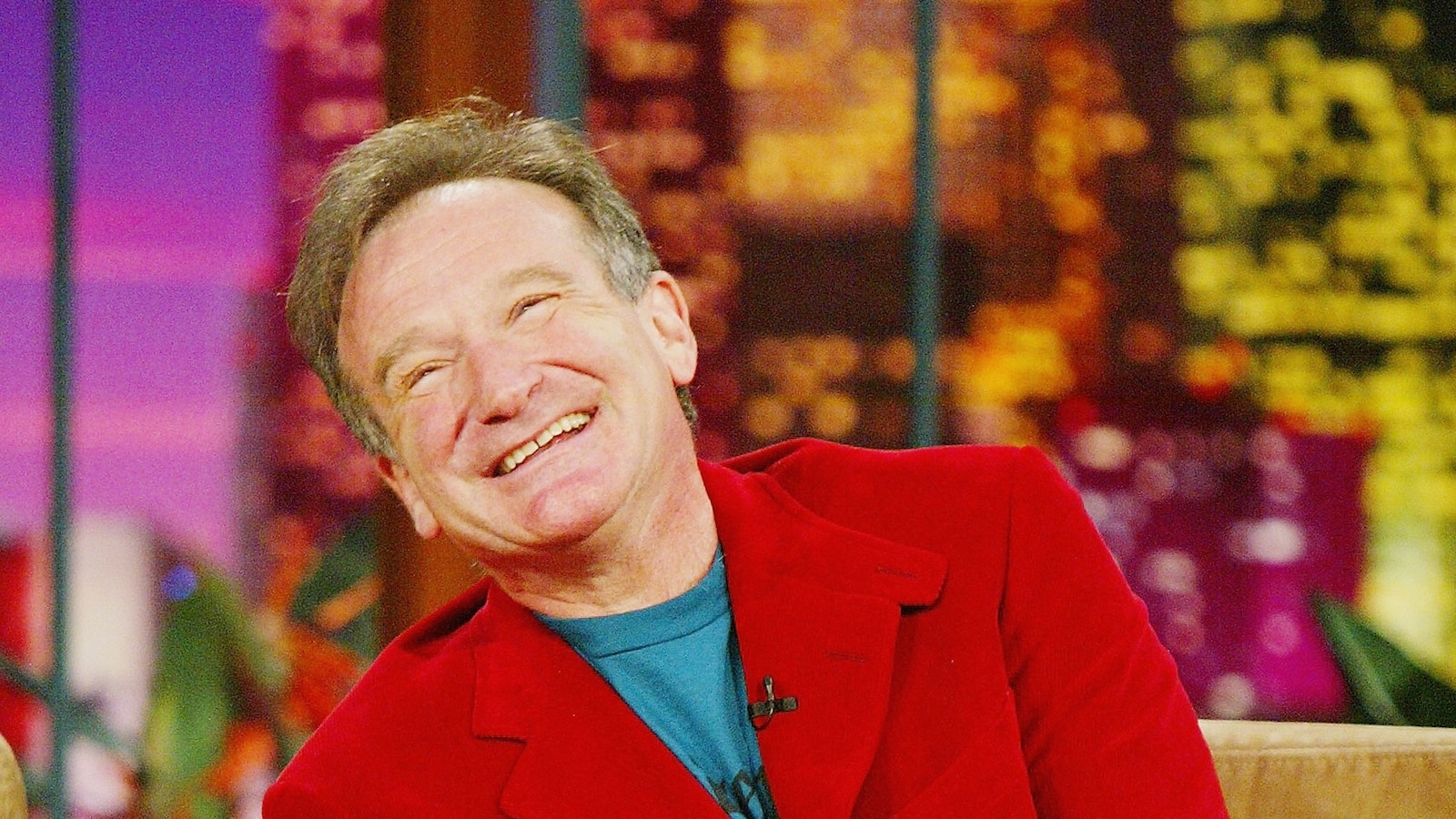
What happened
- Robin Williams' children Zak, Zelda and Cody revived the late actor's Instagram account more than a decade after his death, to preserve his legacy and combat unauthorized AI recreations of his voice and likeness; the family says advances in AI and the growing number of artificial recreations gave them reason to bring it back.
- The account returned nearly a month after what would have been Williams' 75th birthday.
- Williams died in August 2014 at the age of 63, and his Instagram account had remained dormant since his death.
- In a post on Tuesday, Zak, Zelda and Cody Williams wrote that they want their father's Instagram profile to be a "safe, trusted place where the stories, photos, videos, and memories shared reflect his legacy with authenticity, warmth, and care."
- According to Variety, Zelda Williams explained the decision in a now-deleted Instagram Story: "Believe me, I know it's a little strange. Making that space into one where people can find authentic clips and photos of him is one of the best ways we've now found to fight back against rampant AI abuse of his voice and likeness on here."
Compiled by The Product DeskSomething wrong?How this is made
Why it matters
Robin Williams' children have reactivated their father's Instagram account, dormant since his death in August 2014, saying they want it to be a "safe, trusted place where the stories, photos, videos, and memories shared reflect his legacy with authenticity, warmth, and care" [1][3][4]. The stated reason is more interesting than the gesture: in a since-deleted Instagram Story reported by Variety, Zelda Williams wrote that filling that space with real clips and photos is "one of the best ways we've now found to fight back against rampant AI abuse of his voice and likeness on here" [5].
That is a product decision dressed as a family announcement. Enforcement against synthetic likeness is per-item and retrospective: you find the video, you file, you wait, and the generator costs the other side nothing to run again. The family says the volume of artificial recreations is precisely what prompted the revival [1]. An account is a different mechanism. It is persistent, it sits on the same surface where the abuse happens, and it competes for the search and recommendation slots that fakes currently occupy uncontested. The phrase "on here" is the whole strategy.
The reason takedowns are losing is documented in the same reporting. Some AI systems restrict generation of public figures, but those guardrails can be bypassed [10]. OpenAI's now-shuttered Sora app became a hotbed for videos of copyrighted characters and celebrities [11]. Grok is still producing sexualized deepfakes of famous women, according to Wired [12]. ByteDance's Seedance reached an agreement with the Motion Picture Association after lax guardrails let users generate scenes with the likenesses of Hollywood stars [13]. Bad actors have used celebrity likenesses, including Taylor Swift's and Rihanna's, to push scams on TikTok [14]. Note who gets a negotiated deal in that list: a studio trade body. An individual estate has no equivalent leverage, which is why it ends up building its own signal instead.
The template that other rights holders will copy has three parts. First, an owned, continuously updated reference set of verified material, so that "is this real" has a cheap answer. Second, a single canonical destination, which makes off-platform recreations easier to characterize as impersonation rather than tribute. Third, an active publisher, because dormancy is what created the vacuum in the first place. Williams' account was inactive for more than a decade before this [1].
The costs are real and mostly operational. An anchor account has to be fed, moderated, and staffed indefinitely, and the family acknowledged that reactivating it would be difficult for some fans; Zelda wrote "I know it's a little strange" [5]. It also does nothing about distribution. It supplies a truth reference for people who go looking, and does not slow anyone who never checks. Zelda has been objecting publicly since the 2023 SAG-AFTRA strike, when she called videos using her father's voice "personally disturbing," and again in October 2025 when she asked people to stop sending her AI recreations [9][7], roughly two years of complaint that produced no platform remedy she found sufficient [15].
Watch whether Meta ships anything that makes this cheaper for estates: provenance labels on memorialized profiles, an estate-controlled verification path, or a claim process that treats a canonical account as evidence. Watch whether the MPA-style model deals extend past studios to individual likeness holders. And watch how many estates announce the same move in the next quarter, because the tooling gap is what they are all paying for.