Product1 publisher3 min readPublished
Infleqtion points quantum gravity sensing at mining's worst line item: drilling blind
A 2027 Colorado field test will try to show that quantum gravity gradiometry can rank targets before the rigs arrive. The site, the date and the success bar are all still unnamed.
The Product Desk · Product desk
Drafted by a language model from the sources cited here and checked against its claim ledger before publication. How we use AISend a correction
What happened
- Infleqtion is a neutral-atom quantum computing firm.
- Infleqtion plans to test a quantum sensing system in Colorado in 2027 that could help locate critical mineral deposits underground before exploration companies spend heavily on drilling.
- Infleqtion says its quantum gravity gradiometry (QGG) technology can detect extremely small variations in Earth's gravitational field.
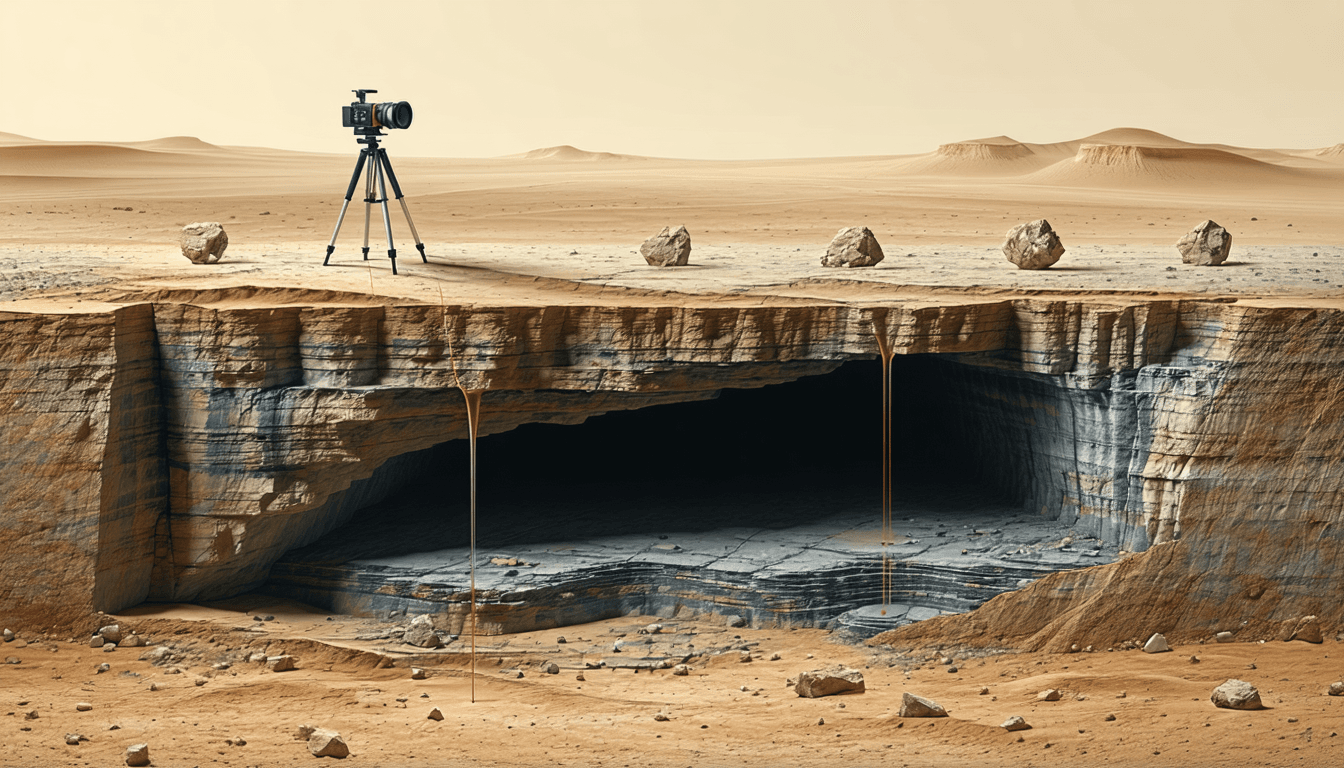
- QGG measures tiny changes in gravity caused by variations in the density of material beneath the ground; different geological formations produce different gravitational signatures, allowing sensors to build a picture of what may be below the surface.
- The technology does not replace drilling or existing geological surveys.
Compiled by The Product DeskSomething wrong?How this is made
Why it matters
Infleqtion, a neutral-atom quantum computing company, says it plans to test a quantum sensing system in Colorado in 2027 that could help locate critical mineral deposits underground before exploration companies spend heavily on drilling [1][2]. The notable choice here is not the physics but the budget line it targets: the stage where a company has to decide where to spend money on detailed data collection and test wells without yet knowing what is down there [7].
The technique is quantum gravity gradiometry, which measures very small variations in Earth's gravitational field [3]. Because different rock densities and geological structures produce different gravitational signatures, those variations can be assembled into a picture of what may lie beneath the surface [4]. Infleqtion is explicit that this does not replace drilling or existing geological surveys, and would instead sit alongside established geological and geophysical methods to flag areas worth closer investigation [5][6]. That framing is more useful than a bigger claim would be, because it puts the value in a measurable place: fewer low-potential sites promoted into the expensive stages of exploration [8].
Infleqtion's chief executive, Matt Kinsella, said the company plans to demonstrate that quantum sensing can provide better subsurface intelligence earlier in exploration, helping identify promising structures and prioritise where drilling should occur [16]. Everything operational about that demonstration is still open. The company is evaluating several possible sites in Colorado's Third Congressional District, with the final location and timing still to be announced [9]. The reporting carries no sensitivity figure for the sensor, no survey cost, no depth or resolution range, and no estimate of drilling spend avoided [17]. Without those, an exploration manager cannot price the tool against an airborne gravity survey or an extra hole, which is the comparison that decides adoption.
The other half of the story is procurement, not fieldwork. Infleqtion supports the Quantum-Enhanced Critical Minerals Mapping Act of 2026, a proposed measure that would direct the U.S. Geological Survey to incorporate quantum gravity gradiometry into its Earth Mapping Resources Initiative [10]. Congressman Jeff Hurd, who represents Colorado's Third District, said he introduced the bill to put American technology to work understanding domestic resources [11][12][13]. That is a demand channel: a federal mapping programme instructed to use a named method creates a buyer regardless of whether junior miners are convinced yet. It is also why the 2027 demonstration is being run in the district of the bill's sponsor.
Infleqtion is not starting from a standing position on sensing. It already develops quantum sensing technologies through programmes involving the U.S. Department of War, NASA and the UK Royal Navy, and its portfolio includes quantum computers, optical clocks, RF receivers and inertial sensors [14][15]. Defence and navigation customers, though, buy on different terms than mining companies, who will want cost per square kilometre and a hit rate.
Three things to watch. First, whether a named Colorado site and a firm date appear, since neither exists yet [9]. Second, whether the bill advances and whether USGS is given money as well as instructions [10]. Third, whether Infleqtion publishes a success criterion in exploration terms rather than physics terms: targets ranked, targets dropped, and how the ranking held up when someone eventually drilled.