Product1 publisher2 min readPublished
Pentagon task force to supply Cape Canaveral with new counter-drone capability, integrated with existing systems
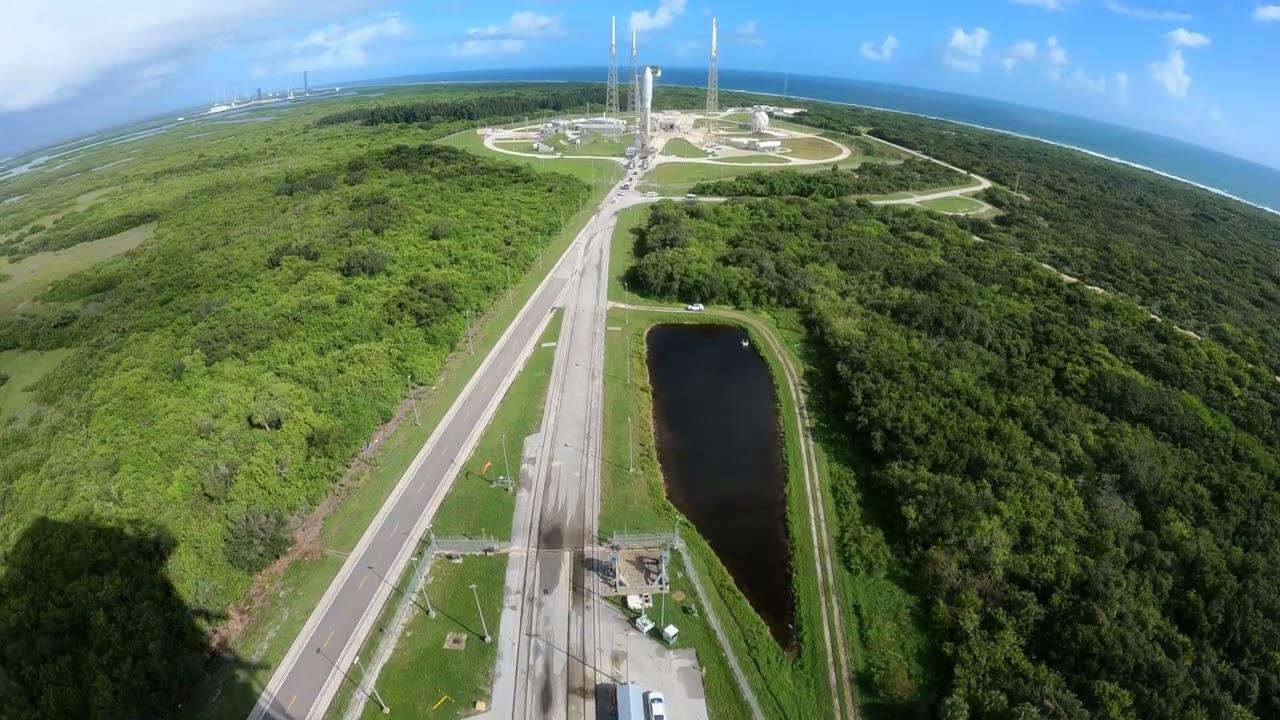
Cape Canaveral's counter-drone capability will come from a Pentagon task force that selects and fields it, while the station supplies the integration and the shift crews it is still asking the Air Force to provide.
The Product Desk · Product desk
What happened
- Cape Canaveral's air-defense and surveillance setup is tuned for fixed-wing aircraft and is not designed to reliably spot, identify or stop a DJI-sized quadcopter flying low and slow among buildings or clutter.
- Joint Interagency Task Force 401, the Pentagon's specialist counterdrone task force, will supply the upgrades, as part of a larger program to overhaul security at many of the country's spaceports.
- Space Force Colonel Brian Chatman told Defense One that an injection of new capability from JIATF 401 is coming in the very short term, based on the latest technology available.
Compiled by The Product DeskSomething wrong?How this is made
Why it matters
- constraint The new feeds arrive at a station whose commander is still lobbying the Air Force for more security forces and engineers, so the limit on what the gear buys is who is available to watch it.
- decision With the task force selecting and fielding, the Cape's real choice narrows to integration sequencing and where the new alarms sit in an existing watch routine.
- exposure As the launch rate climbs toward the 2030 target, every day of range disruption displaces more flights, so a cheap drone becomes a bigger threat to the schedule.
- precedent Scher's phrasing puts strategic installations in a priority order. One task force's fielding queue now sets the counter-drone timeline for other spaceports too.
Integration is the part that lands on the base. "That'll be integrated in with everything we have today," Space Force Colonel Brian Chatman told Defense One [5]. Equipment that arrives from a Pentagon task force comes as a set of new feeds that someone at the Cape has to merge into a surveillance picture tuned for fixed-wing aircraft [2], and then watch on shift.
The people for that are not in hand. "The Space Force can't do it alone. It relies heavily on a partnership with the Air Force for base operations support personnel, and so we are advocating across the Air Force for additional bodies, whether it's firefighters or security forces or civil engineers, to come in and continue support as we have this expansive growth," Chatman said [11]. By his own account the new capability shows up in the very short term [4].
The timing matters because launch traffic is rising. Interesting Engineering counts around 109 launches last year and cites plans for roughly 1,000 a year by 2030 [9][10], about nine times as many, since 1,000 divided by 109 is 9.2 [15]. In daily terms that is about 2.7 launches a day against one every 3.3 days now [16]. The same report argues a relatively cheap drone could cause damage vastly disproportionate to its cost, and that harm to a rocket, to fuel infrastructure or to a power supply could disrupt launches for a long time [14].
The task force would not say what is going in. "While I will not speak to specific capabilities at specific locations, our strategic installations are prioritized for c-UAS fielding," Lieutenant Colonel Adam Scher, a JIATF 401 spokesperson, told Defense One [6]. The equipment list in the Interesting Engineering write-up, small-target radar, radio-frequency detection of control links, optical and infrared cameras, and some kinetic or electronic means of defeat, is that publication's own speculation, and it labels it as such [13]. The report does not include a vendor, a contract value or a fielding date.
Two questions sort how any pushed-down capability lands: whether the receiving unit picked the tool, and whether it pays for the people who run it. Cape Canaveral answers no to the first and yes to the second. JIATF 401 chooses and fields [3]. The station integrates [5] and staffs, and the staffing is still a request working its way through the Air Force [11].
Scher set the ceiling on expectations himself. "There is no silver bullet, and we remain focused on accelerating the delivery of innovative capabilities at speed and scale," he told Defense One [8].
What to watch
- Whether the Air Force funds the extra security forces, firefighters and civil engineers Chatman says he is advocating for.
- Whether other spaceports in the wider security program get fielding ahead of Cape Canaveral.
- Whether the 2030 target of roughly 1,000 launches a year holds, since it is what makes any range disruption expensive.